One day in mid-2014, my friend Carlos Manuel Álvarez asked me to join him on the newsroom balcony. The wind was blowing hard in our faces. We leaned on the railing, looking out at the sea as we talked. We were just killing time because neither of us had a computer to work on—they were all taken. At OnCuba, the magazine in Havana where we worked, only the editors had their own computers. The rest of us had to share, which sometimes meant waiting an hour. A few of my university friends and I had been lucky enough to get contributing roles at OnCuba, and even though we weren’t on staff, we were always in the newsroom. It was a way to keep our group together.
Sometimes, over beers, we’d dream out loud about taking over the newsroom. We wanted to overthrow Hugo Cancio, the publisher, and turn his resources—a huge office with several rooms and a balcony overlooking the sea; computers and internet; money; connections—into the kind of media outlet we wanted. Something with our own stamp on it.
We agreed that our main focus would be investigative journalism. We’d skip breaking news. Instead, we’d dig, analyze, identify, reconstruct, reveal—and above all, tell stories. Storytelling would be our foundation and our trademark, our flag and our seal. And it would be our kind of storytelling. We thought reporting without depth was pointless. Our country’s history is dying because no one’s telling it, we’d say.
Our second goal came from the first. We’d write features. We read, picked apart, and envied every piece in the major Latin American magazines of the time: Malpensante, Gatopardo, Etiqueta Negra, SoHo, Anfibia. We were sure that rigorous longform journalism—work that blended reporting, essays, and criticism—could untangle the complexities of modern Cuban life.
Every night, the dream ended when we got into bed and remembered the reality waiting for us in the morning. To fulfill the social service required after graduation, Carla Colomé worked at the state theater magazine, Tablas; Jorge Carrasco at the website of Radio Reloj, a station that broadcasts the time; Maykel González Vivero at Granma, the newspaper of the Communist Party and Cuba’s main outlet, also online; Carlos Manuel Álvarez at the Ministry of Culture’s communications office; and I worked at the Ministry of the Interior.
OnCuba gave us a chance to express ourselves, but as it changed, we became outdated. We criticized Cuban reality, which no longer suited the publisher, who wanted to keep an office in Havana. We started clashing with our editors. I covered sports, and one day I was told that if I wanted to keep doing that, I had to focus on teams and athletes in Cuba, not abroad.
“Why?” I asked.
“We want to focus on the players who are still here,” they said. “They’re the ones who matter.” The explanation reeked of the government. I quit the magazine.
I left OnCuba just a few weeks after my conversation with Carlos Manuel on the balcony. He had just returned from Colombia, where he attended a journalism workshop at the Fundación Gabo. He had never left Cuba before. Along with another friend, who drove us in his father’s car, I went with him to the airport for his early morning flight.
Carlos Manuel came back with a virus. At the Fundación Gabo, he caught the idea that there’s no such thing as a good time and place to be a journalist. He got it by listening to writers from across Latin America describe working under conditions at least as tough as ours—people drawn to the profession because they wanted to be the guardians of truth in their countries. The region’s turmoil was creating a new generation of independent media. New outlets like Brazil’s Agência Pública, Venezuela’s Efecto Cocuyo, and Mexico’s Periodistas de a Pie were pioneering an unconventional way of reporting. They didn’t just relay the news coolly, without getting their hands dirty. They judged the powerful and held them accountable.I couldn’t access El Estornudo without using tech tricks like VPNs to change my location. We lost a lot of readers that way, but it also showed us our work mattered. We kept reporting our stories.
I hadn’t written about sports since OnCuba, but in 2017, the Houston Astros and LA Dodgers were in the World Series, and each team had a Cuban player: Yulieski Gurriel and Yasiel Puig. Both had played for Cuba, but after they left for the US, the government called them traitors and wiped them from history. Still, the whole country was thrilled that Gurriel and Puig were facing off for the biggest prize in baseball, our national sport. I wanted to write about our shared excitement, our refusal to forget our stars. It felt like the perfect chance to get back into sports reporting.
My plan was to watch the game surrounded by fans. I had two choices: go to a hotel bar where everyone pays to get in and then has to spend money on food and drinks, or go to one of the many homes with an illegal satellite dish—something the government banned because it picked up international TV channels. I chose the second option.
In Old Havana, I found a cluster of poor, crumbling buildings packed with hidden satellite dishes. Fans were crammed into tiny rooms to watch the game, and I squeezed in with them. I didn’t get home until 2am. I’d promised to write a feature about my night, but I was exhausted and smelled like a nightclub. I took a bath to wash off the cigarette smoke, then thought: if I start writing now, I’ll lose steam halfway through. I should just get a couple of hours of sleep.
I set my alarm for 5am, and when it woke me, I started writing. I poured myself a cup of coffee and worked until 7am, when I noticed the fan wasn’t spinning. My power was out. Whenever my neighborhood lost electricity early in the day, it wouldn’t come back until 4pm or 5pm. I gathered my things and went to my mother’s house in central Havana to write.
I got into an empty 1957 Chevrolet shared taxi. On the way, an unknown number called me. “Hello, Abraham,” the caller said. “This is Major Roberto Carlos.”
“I don’t know any Major Roberto Carlos.”
“I need to see you.”
“I’m out. I can’t talk today. Tomorrow would work, but who are you?”
“I know you’re out. I knocked on your door and no one answered. Tell me where you are.”
“I’m telling you, I’m busy.”
“Abraham, you seem to be missing the point. This is a police summons. Tell me where you are, and I’ll come to you.”
“But why? What’s the problem?”
“Tell me where you are, and I’ll explain.”
I arrived at my mother’s house. Ten minutes later, I saw a white Lada with the Ministry of the Interior’s crest park outside the building next door. I stuck my head out the window and saw a man in hiking boots and greenish, worn-out jeans, patched at the thighs and crotch. Major Roberto Carlos. With him was a young man with big teeth, no older than 25. A sidekick. Over the next few hours, he didn’t say a word.
The only people home were my grandparents. My mother was at work, my little sister was at university, and my older sister—who was very pregnant and on maternity leave (in Cuba, you get six weeks before the birth)—had gone to spend a few days with my father. Instead of waiting anxiously upstairs, I went down to the street.
“Abraham, we need you to answer some questions at the station. We also need to look at your laptop and phone, so if you don’t have them here, we’ll have to go get them right now,” Carlos said calmly. “Let your grandparents know everything’s fine. Make something up for them, and then come with me.”I took my chance to go upstairs and call my father, who had retired from the Ministry of the Interior a few months earlier. I explained what was happening, and he told me not to let them take me. He said he’d come right away with my sister, who also worked at the ministry. Her boss had called that morning to say he and two colleagues wanted to check on her.
My sister’s boss told me I’d been under surveillance for months and was about to be detained. He said they had proof that I, her brother, was heading down the wrong path—that I was part of a subversive project, that I made a living freelancing for foreign media instead of writing for Granma, that I wrote harshly about the government and then went out to dinner with foreign friends and diplomats. He said I had become dangerous.
My father and sister arrived quickly. I went downstairs. They asked me what I had done, and I said, “Nothing.” My father then went to Carlos and asked if I had committed a crime, what was going on, and where they wanted to take me. Carlos said again that they just needed to ask me some questions and that I’d be back in a few hours. My father replied that he had spent 39 years working for state security and knew very well how often they said one thing and did another. He knew of many cases where people were told they were just going to clear something up and then didn’t see daylight for years. He knew that could happen to me.
I watched them talk for half an hour before I got tired of it. I stood up from my chair, grabbed my backpack, and said I was ready to go wherever they wanted, answer their questions, and get it over with.
The silent henchmen opened the back door of the Lada and got in beside me, leaving the passenger seat empty. The windows of the Soviet-era car were shut, and it was stifling inside. Out of the corner of my eye, I saw my father, sisters, and grandparents standing in front of the house as we drove away. I waved as if I were leaving the country for a long time.
We drove to a police station on the edge of Havana, at Calles 100 and Avenida Aldabo. Carlos told the silent henchman to sit me down at the back of the building. Another agent came and took my phone and laptop down a long hall. Fifteen minutes later, Carlos came back. “Come with me,” he said, and led me to a very small room with two armchairs, a sofa (which he sat on), a desktop computer on a glass table, and a huge air conditioner that claimed it was set to a reasonable 23°C—though the room was so cold I felt like I had just arrived in Alaska.
I spent my 11 hours of detention listening to threats, blackmail, and nonsense. The major made it clear that if I kept writing, the state would prosecute and imprison me. He also showed how much they knew about me: every step I took, every word I spoke. It was humiliating. I felt exposed.
When I entered the police station, I had to hand over my watch. Inside, with no natural light, it was impossible to tell how much time had passed. Eventually, the interrogation turned into a monologue about the revolution and its historical enemy, the US, Fidel and Raúl, and the great humanity of the Ministry of the Interior. He told me to think of my mother and father, my sisters, and my relatives. My attitude wasn’t good for them.
They made me write the record of the moral outrage they had put me through: every ultimatum, every bit of extortion, every second of those 11 hours. It’s illegal for a detainee to write their own statement. It’s also a clever shortcut for a lazy, under-resourced repressor with a broken computer or maybe a printer without ink.
I left exhausted and paranoid. I knew I had no privacy and no protection from the arbitrary regime. It was destabilizing. For the first time in my life, I felt defenseless and abandoned. It was my first interrogation, my first detention, my first time seeing that kind of cruelty up close.The eyes and tentacles of state security—Cuba’s jailer.
That day was a turning point in my life. Something inside me broke. From then on, I acted differently, pulling away from my family, friends, and colleagues. I became a lone wolf. I was trying to protect my life, my work, and my privacy, but I also couldn’t walk more than a few feet without checking both sides and looking behind me. I rarely answered calls and avoided unnecessary conversations in person, even with the rest of the magazine staff. I decided not to have relationships after a few went badly because I was so withdrawn and uncommunicative. I bought a bicycle to avoid buses and taxis. When I was reporting, I told sources I would call them, since I didn’t have a phone. I never even used the same public phone twice. That was my strategy for protecting myself from state security.
By the end of 2018, the only Estornudo founders still in Cuba were me and Maykel González Vivero. The others hadn’t left the magazine, but they had all emigrated. Like most Cubans who leave, they wanted better lives and hope for the future. We had added three young reporters to our team, which brought a welcome breath of fresh air.
After that year, things got worse. The government expanded internet access so that Cubans could go online on their phones instead of gathering in parks. The internet quickly became a force for change, connecting activists and opposition groups from communities across the island and in exile. To counter this unwanted side effect—freedom of thought—the regime cranked up its repressive tactics to an absurd level.
It became a pattern: when I tried to take out the trash or buy groceries, plainclothes agents would block me from leaving the street. I never got an arrest warrant, but I couldn’t leave my house. A police cordon kept me inside. The government cut off my internet, mobile phone, and landline. I was isolated and watched by police officers who monitored me through the windows. I couldn’t visit sick relatives; if I didn’t have food at home, I didn’t eat.
The Washington Post made me a columnist in 2020, though I had been writing for them since 2019. Their reputation lifted me up, but it annoyed the regime. One morning, a police officer knocked on my door with a summons. I had to report to a police station within 24 hours for questioning. I had just woken up and didn’t bother asking why.
The next day, I got up, tried to relax with a cup of tea on the balcony, got dressed, and left without my phone, keys, wallet, or anything else the cops could steal or confiscate. I arrived at the station half an hour early and sat on the curb down the street. After 20 minutes, two cars pulled up, so I approached. To my surprise, through the windows I saw that the building was full of construction workers, not police officers. I checked the warrant: I hadn’t mixed up the address. I was in the right place. I went in.
View image in fullscreen: Streets near the Capitolio, Havana, in April 2026. Photograph: Jason P Howe/The Guardian
Behind me, a man asked: “Abraham?”
I turned. Five men were watching me. “Go ahead,” one said. I walked through cement dust, broken blocks, sacks of gravel, and tools scattered on the floor. My legs were shaking. They led me to a room with a single window. One of the men closed the blinds.
“Sit down,” another said. They surrounded my chair. The room was stuffy. No one spoke. They watched me. I was extremely nervous. Finally, the oldest man, who I assumed was in charge, said: “Take off your clothes. We need to make sure you’re not wearing a wire.”
“That’s not going to happen,” I managed to say. “It’s a violation of my rights.”
“It’s happening,” said the man I thought was the boss. Then he signaled to one of his colleagues, a heavily muscled man over six feet tall. When the enforcer took a step toward me, the others stepped back. He stared hard into my eyes. I forced myself to hold his gaze. Then he…I put on a pair of rubber gloves.
“What are those for?” I asked.
“Take off your clothes,” he said. I saw the anger in his eyes and obeyed.
It was the worst humiliation of my life. I felt like garbage, like a piece of meat, like a corpse washed up on the beach. Once I was naked, the other four men watched as the enforcer ordered me to put my hands against the wall and spread my legs. My nose, mouth, and eyes brushed against the concrete wall. I wanted to cry, or die. Then I felt the enforcer’s hand in my hair. He searched wherever he wanted.
“Get dressed,” he said when he was done, “but don’t sit down.” As I put my clothes back on, he took out handcuffs. When I was finished, he said, “turn around,” then roughly locked my hands behind my back and led me, along with the other agents, to one of the cars I’d seen earlier.
We eventually pulled up at Villa Marista, the notorious headquarters of state security, the regime’s political police force. It’s a shadowy, semi-official institution designed to protect the regime, even though legally it doesn’t exist. Like the mafia, it operates in secrecy, but its power and reach are obvious. No one knows how many agents are on its payroll, but any Cuban can tell you its real list of workers is endless. One of state security’s main goals—and a key source of its strength—is turning ordinary people into informants.
State security is in every town, every province, every workplace, and every public employee is a potential collaborator. It watches everyone, from government ministers to street vendors. It’s Fidel Castro’s monster, created in the image of the Stasi and KGB to maintain the conditions he wanted. But like any monster, it outgrew the need for a master. No one tells it what to do anymore. It devours every bit of freedom in Cuba on its own.
Villa Marista creates more fear than anywhere else in the country. No one wants to go there or even hear about it. Cubans say that, there, “even mute people talk.”
An enforcer led me through the entrance. Then he uncuffed my wrists and left me alone in a room for 10 minutes. A very young agent, maybe 20, came in, along with Lt. Col. Kenia Maria Morales Larrea. She was infamous. Two gold chains hung outside her uniform. Her nails were long pink claws, and her hands were covered in more gold. For years, she had interrogated any dissident or artist who challenged the regime. She looked at me as if she wanted to slit my throat. Her manner made it clear she hated me and found me disgusting. Likewise, ma’am, I thought.
Then the interrogation began. It was a joke. The agents took turns, one repressor giving way to the next. Each had their own strategy—good cop or bad cop—but the questions never changed, and neither did their main accusation: that I was a U.S. asset recruited by the Washington Post.
Eventually, I was left alone long enough to fall asleep. Four agents woke me up. Now they’re bringing in gangs, I thought. They shouted, insulted me, twisted my words. I started to think I’d end up in jail, but then Morales pulled out a document and said: “Sign this and you can leave.”
The statement said that if I ever wrote for the Post again, they’d start the process to declare me an “enemy propagandist.” I read it several times before refusing to sign.
Morales exploded. She got in my face, yelling and slashing at me with her sword-like nails, threatening: “Your family is finished.” I forced myself to stay silent and still. “You’re going to prison,” she spat, finally, then stormed out and slammed the door. Three other agents followed her, and I was alone again.
After a while, the enforcer and his colleagues from the morning came back. The enforcer handcuffed me and shoved me into the same car. They took me back to the construction-site station and let me go.
I walked home.I was devastated. My hands were shaking. I was sweating. There were marks on my wrists. Now what? I asked myself.
That night, I wrote a column for the Washington Post titled: “If this is my last column here, it’s because I’ve been imprisoned in Cuba.” It was published the next day. In it, I described what had happened to me and explained the reason to my readers: “The stories about life in Cuba that I publish every month are part of what the Cuban government wants to keep hidden to protect the progressive image it tries to project worldwide. A key feature of totalitarian regimes is silencing the voices that tell the most unsettling truths about daily life.” I was one of those voices, and I knew they could lock me up if I didn’t stay quiet.
A few days later, at home one night with nothing to do, I turned on the TV and saw my face on the screen. The evening news was broadcasting my interrogation. State security had secretly recorded it, and now they were showing it across the island.
I had been on national TV once before. That was when I played baseball as a kid. A U.S. team came to play against mine as part of the Pastors for Peace caravan, a nonprofit based in New York. I was an outfielder, but for some reason I played first base that game. My first time at bat, I struck out. My second time, I got a hit to right field, but that’s not what ended up on TV.
I still remember exactly what happened from watching it later. A blond American kid hit a grounder to third. The camera followed the ball to my friend Ernesto’s glove, then to mine, and the game ended. The camera stayed on me as I ran to the batter’s box to celebrate with Eloy – a great left-handed pitcher; I lost touch with him and Ernesto – and the rest of the team. The broadcast ended with a shot of us holding a Cuban flag that our coach, Máximo García, a legend of Cuban baseball, ran to bring us.
I knew I was being filmed that day. I was fully aware that I was part of a public event with cameras, and later I sat at my grandfather’s feet to watch myself on the news. The second time I was on TV, that same news program showed my image without my permission. I looked at the screen and didn’t recognize myself. It wasn’t me; it was my body. My gestures and voice made it clear I was under pressure. Under interrogation, no one can be their true self. Especially not if you haven’t committed a crime, or if you know every word you say will be used against you.
The government wanted to destroy my reputation. It wanted to convince the Cuban public that I was a CIA agent. The banner under my image said so. When the show ended, I went out to the balcony. I hadn’t prepared for that. That broadcast put my sources, family, and friends in danger. From that moment on, talking to me meant talking to a national enemy. I was a political outcast. I had just been sentenced to civic death.
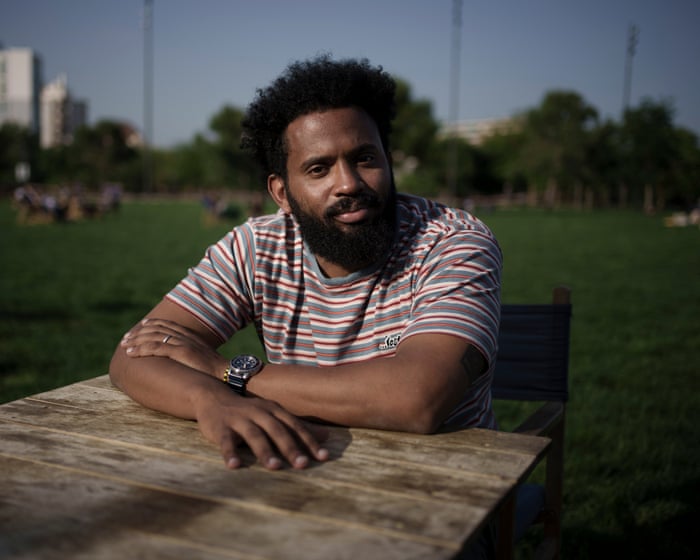
Abraham Jimenéz Enoa was forced to leave Cuba and now lives in exile in Spain.
Translation by Lily Meyer. This essay is an edited excerpt from Aterrizar en el mundo (Landing in the World), published in Spanish by Libros del KO. A version of this piece appeared in the Dial (thedial.world). Listen to our podcasts here and sign up to the long read weekly email here.
Frequently Asked Questions
Here is a list of FAQs based on the statement I launched Cubas first independent magazine And thats when my troubles started
BeginnerLevel Questions
Q What is an independent magazine in Cuba
A Its a publication created and run by private citizens not by the government In Cuba most media is statecontrolled so an independent magazine operates outside that system
Q Why would launching a magazine cause trouble in Cuba
A Because the Cuban government strictly controls media and freedom of speech Creating an independent publication can be seen as a challenge to state authority leading to censorship fines or even arrest
Q What kind of troubles did the person face
A They likely faced government harassment lack of access to printing materials threats of legal action surveillance or difficulty distributing copies to readers
IntermediateLevel Questions
Q Is it illegal to publish an independent magazine in Cuba
A Its not explicitly illegal but it operates in a legal gray area The government often uses vague laws to shut down independent media or punish its creators
Q How do independent magazines get printed and distributed in Cuba
A Most rely on digital formats because paper ink and printers are tightly controlled Print copies are often smuggled or handdelivered secretly to avoid confiscation
Q Can independent magazines cover political topics
A Yes but its risky Covering government corruption human rights or opposition figures can trigger immediate crackdowns Many focus on culture art or lifestyle to stay safer
Advanced Questions
Q What specific legal or bureaucratic hurdles did the founder likely face
A They probably struggled to register the magazine faced constant inspections were denied access to distribution channels and had bank accounts frozen
Q How do independent magazines survive financially in Cuba
A They often rely on foreign donations crowdfunding or support from diaspora communities Local advertising is nearly impossible because businesses fear government retaliation
Q What happens to founders of independent magazines in Cuba