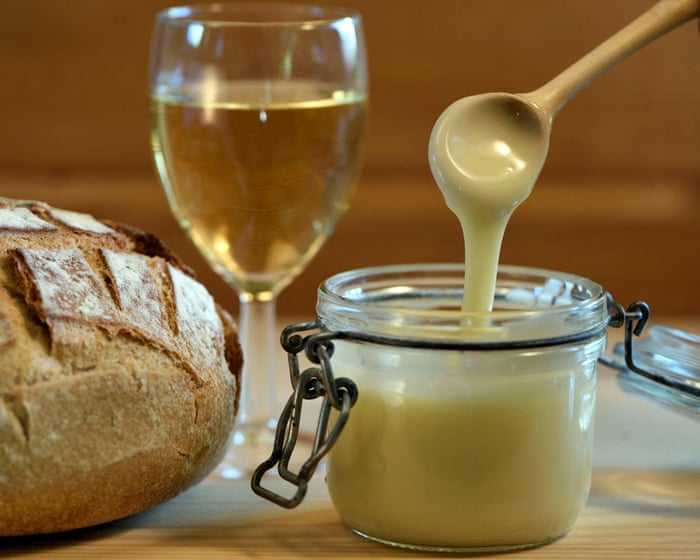
At a cheese-making facility in the village of Franois, in eastern France, a steady flow of what looks like runny, beige goo is being packed, sealed, and shipped out as quickly as it can be made. The freezer room, usually stacked high with pallets of the product, is nearly empty.
For what must be the first time in the history of cancoillotte—a cheese product that until recently was hardly known outside the eastern Franche-Comté region—there has been talk of a supply “rupture” and an unprecedented shortage.
France may be what Charles de Gaulle described as an ungovernable country with 246 types of cheese, but only one of them can claim to have won over fitness enthusiasts and social media influencers.
In just a few weeks, word about cancoillotte—pronounced con-qwy-yotte—has spread among people who want to enjoy cheese without losing their toned muscles or raising their cholesterol.
Unlike most cheeses, cancoillotte is low in fat, high in protein, cheap, and until recently, it was a niche product outside the Franche-Comté, the region along France’s border with Switzerland.
Now, local producers are hoping to take advantage of its sudden popularity.
Julie Morin, director of the Poitrey la Belle Étoile cheese factory near Besançon and president of the Association for the Promotion of Cancoillotte, said the sudden demand caught her and the region’s 22 cancoillotte producers off guard.
“There’s been a slow increase in cancoillotte sales over the last seven years, but the influencers caused a big boom that we didn’t expect,” Morin said during a tour of the factory, which was established almost 150 years ago.
“With all the new excitement about the cheese and the May bank holidays, we couldn’t produce as much as usual, so we had a bit of a shortfall. But we’re catching up.”
“Until now, it was a product that was hard to advertise. So we’re surprised and happy that it’s become something of a craze, and we hope it lasts.”
The sales boom is thanks to social media influencers, especially those promoting health and fitness, who have discovered the cheese.
Johan Papz, a content creator with 1.5 million followers on TikTok, said tasting cancoillotte was “the best day” of his life, adding, “My eating has changed forever.”
Pouring a tub of the cheese over a plate of “disgusting” potatoes, he said, “How is it scientifically possible that a melted cheese that tastes so good has almost no fat? I can eat this and still have these,” he added, lifting his T-shirt to show off his abs.
Influencer Itscindyoff has made 178 TikTok videos praising cancoillotte and traveled 500 kilometers to the Franche-Comté to buy as many different flavors as possible.
The cheese even has its own eating competition. Last year’s winner, Maximilien Reverchon, ate 1.75 kilograms at Larians-et-Munans in the Franche-Comté without any bread or biscuits.
Nicknamed “the glue” by some locals because of its sticky texture, cancoillotte is said to date back to the Middle Ages in the Jura mountains. It went into production around World War I, when it became popular with soldiers on the front lines.
It is made from metton, a fermented cheese produced from skimmed cow’s milk, from which all fat has been removed to make butter, cream, or other cheeses. What’s left is the metton, which is fat-free.Then it’s coagulated, dried, and aged until it turns into crumbly blocks that look like cheese but have very little flavor. To make cancoillotte, the metton is melted at a high temperature in an industrial pressure cooker. Butter and salt are added to create a smooth, almost liquid cheese with more flavor.
Rows of cancoillotte at Poitrey la Belle Étoile, one of the 22 places making this cheese product in Franois. Photograph: Magali Delporte/The Guardian
Onion, shallots, mushroom, and garlic are often added to cancoillotte. The resulting cheese is high in protein and, depending on how much butter is added, contains between 7 and 15 grams of fat. For comparison, mature cheddar has almost 35% fat, edam has 25%, and blue cheese just under 28%.
In 2022, the EU recognized cancoillotte as an IGP – a unique geographical product – meaning the milk used to make the metton must come from within a specific region.
But the question is: is cancoillotte really cheese? Guardian columnist Emma Beddington called it “a low-fat lactose ectoplasm.”
“Well, we call it a cheese product,” Morin said. “Metton is cheese, but if you add butter and other things, it’s technically a cheese product.”
Last year, cancoillotte makers in the Franche-Comté region produced nearly 6,500 tonnes of the cheese, which is most often eaten melted over potatoes or with local sausage. Thanks to interest from influencers, they expect to produce an extra 500 tonnes this year, though Morin doesn’t currently export to the UK.
“In fact, there are a lot of other uses,” Morin said. “You can have it as an aperitif with dips, put it in a quiche, on a pizza, heat it up, or eat it cold. We have a pesto cancoillotte you can have with pasta, and an onion one that’s delicious on steak.”
She added: “Health-wise, it’s not fatty and is rich in proteins, so it’s obviously good for people who are active and can eat it without breaking their diet.”
Last year, cancoillotte makers in Franche-Comté produced nearly 6,500 tonnes of the cheese, which is most often eaten melted over potatoes or with local sausage. Photograph: Magali Delporte/The Guardian
Not everything works. Morin said one producer made chocolate and fruit-flavored cancoillotte.
She said: “It was a disaster. People just didn’t like them, so it was dropped. Some people said it could be used as a spread on toast in the morning, like Nutella, but it seems it couldn’t.
“But I’m delighted by the craze. It’s a great product.”
Frequently Asked Questions
Here is a list of FAQs about the healthy French cheese trend organized by topic
Beginner Questions
1 What is this healthy French cheese craze all about
Its a trend where influencers on social media are promoting specific types of French cheese as being surprisingly good for you often highlighting their protein and probiotic content rather than just their fat content
2 Is all French cheese suddenly healthy
No The craze focuses on traditional rawmilk and aged French cheeses The idea is that these cheeses have more nutrients and beneficial bacteria than highly processed pasteurized and preshredded cheeses
3 What makes these cheeses healthier than regular cheese
Influencers point to three main things
Probiotics Rawmilk cheeses contain live good bacteria that can help your gut
Protein Many French cheeses are very high in protein per gram
Nutrients They are rich in calcium vitamin K2 and conjugated linoleic acid which may support bone health and metabolism
4 Can I eat this cheese if Im lactose intolerant
Many people with mild lactose intolerance can eat aged French cheeses The aging process breaks down most of the lactose However fresh cheeses like Chvre still contain some lactose
Intermediate Advanced Questions
5 What specific French cheeses are influencers raving about right now
The most popular are
Comté Praised for its high protein and low lactose
Camembert de Normandie Known for its creamy texture and probiotic potential
Chvre Often lower in calories and fat than cows milk cheese with a different protein profile
Roquefort A blue cheese high in calcium and specific antiinflammatory compounds
6 Is there a downside to eating rawmilk cheese
Yes Pregnant women young children the elderly and people with weakened immune systems are usually advised to avoid rawmilk cheeses due to the risk of listeria or other bacterial infections Most of the healthy hype applies to healthy adults