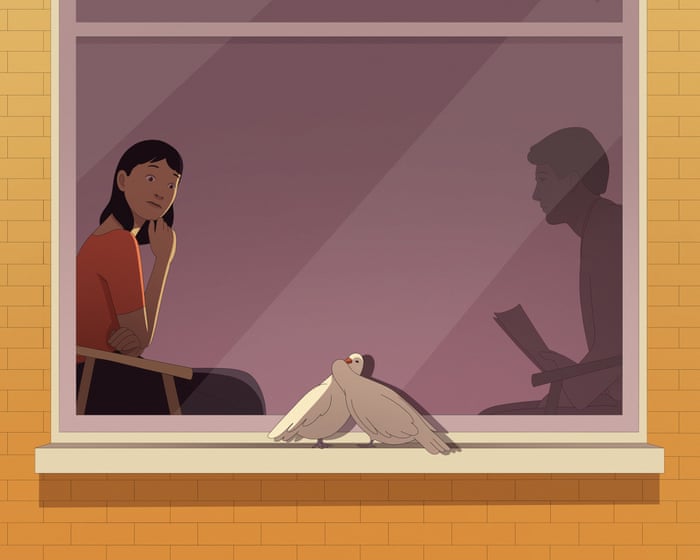
I was half-watching the latest season of the Netflix romcom Nobody Wants This when things suddenly got interesting. Spoiler alert: it was just revealed that one of the characters, Morgan, was in a relationship with her newly ex-therapist, Dr. Andy. While some characters freaked out, calling the relationship very concerning, I felt a thrill of excitement. Because I, too, have wanted to date my therapist.
As it turns out, this fantasy is neither unusual nor unexpected. “Psychoanalysis almost insists on transference,” explains psychotherapist Charlotte Fox Weber, referencing the term coined by Sigmund Freud in his 1895 work Studies on Hysteria. The basic idea is that a patient projects old feelings, attitudes, desires, or fantasies onto their therapist. This can show up in many ways—often all at once—covering the full range of emotions and relationships, from love to hate, maternal to erotic, and everything in between.
While relationships between clients and therapists are generally frowned upon—even after therapy ends—they do happen. Like transference, they’ve been a feature of “the talking cure” from the beginning, with figures like Carl Jung entering into a romantic relationship with a patient.
“I think many people fall in love with their therapists, because why wouldn’t they?” says Sally Openshaw, a sexual and relationship psychotherapist. “You’ve got someone who’s listening exclusively, who’s fully attentive, who’s doing everything they can to be alongside you. That makes idolizing the therapist very likely.”
I can relate. I have a wonderfully supportive group of friends, but there’s something about how my therapist listens—the look of compassion in his eyes—that just hits differently. It doesn’t help that in many ways he seems to be exactly what I’m looking for in a partner. We’re around the same age (I think; annoyingly, he’s incredibly discreet and doesn’t share much about himself), and he’s kind, intelligent, and attractive. So, while the sane part of my brain knows I don’t really know who he is outside our sessions, there’s no doubt in my mind that if he popped up on a dating app, I’d swipe right immediately.
I felt embarrassed and guilty, worried it might be considered emotional cheating.
Kat, 28, works in customer service. She’s been seeing her therapist for a year and finds the “empathy and consistent support” intoxicating. “Everything about the way she engages makes me feel a way I haven’t felt in years—probably since the start of my relationship with my now-husband,” she tells me, explaining that she noticed “a strong, intense attraction” just four sessions in.
“During sessions, I found myself trying to make her laugh and wanting her to like me. After they ended, I’d feel hollow and restless until the next one,” she says. “Sometimes I wish I’d never told her I was married, because the fantastic, illogical part of my brain thinks that then I’d have a chance with her.”
Daniel’s romantic transference was more of a slow burn, surfacing about eight months after he started therapy. “Truthfully, it was a really bad time for me to start processing trauma,” he tells me, explaining that his wife had just given birth to their second child. The 38-year-old admits he wasn’t “as present a father as I would have liked to be,” while he says his wife “wasn’t as kind and caring as she could have been, and I received a lot of anger from her.”
While Daniel insists he doesn’t blame his wife—”This isn’t me saying she’s not a good spouse; she just didn’t have the emotional bandwidth to…””Assist me” – he now understands how this challenging dynamic caused him to project romantic feelings onto his therapist. “There was this contrast: I’d go home and feel like I wasn’t enough, but in therapy, I’d receive the kindness and compassion I needed in that moment,” he says.
When Emma, 31, first began experiencing transference—for a sex therapist she was seeing with her wife—it appeared as an obsessive crush. “I started thinking about her often, which brought me a lot of warmth but also pain, because I knew nothing could ever come of these feelings,” she says. “I would Google her name and try to learn more about her. I kept looking at her picture on the clinic’s website, and sometimes I’d check the website of a university where she’s a professor to see if there was any information about her or her class.”
Soon, however, her feelings took on an erotic tone. “She was giving us homework related to sex and masturbation, and she would often come to mind during those moments, becoming part of my fantasies,” she says. The erotic transference began only after they started “delving deep into emotional aspects and I began feeling more connected to her.”
Clover, 35, also described how feelings of connection and safety transformed into erotic transference within a couple of months of starting therapy. She says, “One day I noticed that just the thought of speaking with my therapist was arousing.” In the weeks and months since that first time, her fantasies have only intensified, growing in frequency and becoming more explicit. “Sometimes I’ll get a flash of a sexual act,” she says. “More often it happens outside of the session, but occasionally it’s during a session, too.”
Aside from Clover—who studied psychology in college and says that when the erotic transference started, she thought, “Oh, I know what’s going on, this can be a good thing!”—none of the people I spoke to were aware of the phenomenon before experiencing it, which made their feelings even more unsettling.
“I felt embarrassed and guilty, and worried that it might be considered emotional cheating,” says Kat. It was only after she stumbled upon a post about romantic transference on TikTok that she realized her feelings probably weren’t the “genuine romantic attraction” she had assumed. Daniel had a similar experience, initially feeling immense shame before finding some clarity on Reddit message boards. “It takes effort not to spiral if you’re not aware that it’s going to happen,” he says.
Another common theme was that none of the people I spoke to felt able to fully admit their feelings to their therapist—or their partners. Clover came the closest, once telling her therapist about a dream she’d had that included a sexual encounter between the two of them, but she felt disappointed by his response. He seemed “neither judgmental nor overly interested” in her disclosure, she tells me, adding that she felt his response was “careful,” with “just the slightest bit of hesitancy on his part.”
The first thing I say to any friend when they talk about their feelings for their therapist is: tell the therapist.
For the others, the fear of damaging their therapeutic relationship or upsetting their spouse means they are left to deal with these intense and confusing feelings alone. “It felt like punishment. I have these feelings, I can’t tell anyone about them, and I just have to feel them alone and hope they vanish,” Emma says. “I didn’t want to disclose this to the therapist in an individual session because that would create secrets, and that’s not how couples therapy is supposed to work. Part of the reason we sought sex therapy was due to how un…”I was worried about how my partner might feel, so I thought revealing the erotic transference would have been a disaster.
Fox Weber, who discusses this in her book What We Want: A Journey Through Twelve of Our Deepest Desires, says, “It really bothers me when I hear about therapists responding awkwardly or shutting down the conversation. The first thing I tell any friend who talks about their feelings for their therapist is: tell the therapist. How can you not tell your therapist you’re having erotic dreams about them? Therapy is the space to be uncensored.”
Openshaw—who offers training on working safely with erotic transference and countertransference and is writing a book on the topic—believes avoiding these conversations “stops the client from being in real contact with the therapist.” Once that happens, she says, “the material that needs to be discussed in therapy is left out.”
She explains that erotic transference in particular is “a direct path into past trauma and unmet developmental needs. It’s not really about sexual contact; it’s usually a manifestation of something else.” This could involve old memories or even act as a test to see if the therapist can handle such a revelation. “That’s why, if you leave clients alone with these feelings, they develop their own fantasies and feel ashamed. I think that does a lot of harm.”
Then there’s countertransference: the feelings a therapist experiences toward a client. The classic Freudian view sees countertransference simply as a reaction to the client’s transference—a perspective both Openshaw and Fox Weber reject in favor of a more modern, relational approach.
“My feelings may be in response to the client, but they might also be stirred up by my own history,” Openshaw says. Fox Weber adds, “I think it’s rich with opportunity when we acknowledge that both people in the room contribute to the dynamic. It’s always valuable to consider your feelings about someone and to question whether they’re about you, about them, or something in between.”
Both Openshaw and Fox Weber take pride in welcoming transference and countertransference into their work. “I make space for the possibility right from the start,” Openshaw says. “What I’m basically saying is, this might feel confusing and awkward, but it’s really important that if it happens, either of us brings it into our therapeutic relationship.”
The problem, she explains, is that erotic transference and countertransference are “completely avoided topics in many training programs,” meaning many therapists simply don’t know how to handle them. The reasons are complex. “Most of the training I received said ‘don’t go there’; it was treated as a danger or threat. Because it’s not normalized, people get scared and don’t know what to do next.”
Openshaw believes that trying to ignore erotic countertransference actually puts therapists at greater risk rather than protecting them. “Once it’s pushed into the shadows, your vulnerability to acting on it becomes much higher,” she says. Ultimately, if you don’t confront it, you might end up behaving inappropriately.
From a neuroscience perspective, the feeling of yearning is real. But the meaning we attach to it—”I want to have sex with my therapist,” “I want to be loved by my therapist”—is often misplaced.
It doesn’t help that therapy in the UK is unregulated, meaning anyone can call themselves a therapist or counsellor, regardless of qualifications (though some titles, like clinical psychologist and counselling psychologist, are protected). In the absence of formal oversight, there are several professional bodies, of which…
Frequently Asked Questions
FAQs Attraction to Your Therapist Sexual Fantasies
Beginner Questions Understanding the Basics
Q1 Is it normal to be attracted to your therapist or have them appear in sexual fantasies
A Yes its a common and welldocumented experience in therapy The therapeutic relationship is uniquely intimate and trusting which can sometimes trigger romantic or sexual feelings It doesnt mean youre a bad client or that therapy is failing
Q2 What does it mean when I have these feelings or fantasies
A It can mean several things Often its not about the therapist as a person but about the qualities they represent safety unconditional attention deep understanding or emotional intimacy you may be craving It can also be a way your mind processes vulnerability or explores attachment patterns
Q3 Should I tell my therapist about this
A It is highly recommended to discuss it if you feel safe enough This is incredibly valuable therapeutic material A competent ethical therapist is trained to handle this conversation professionally and use it to help you understand yourself better They will maintain clear boundaries
Q4 Will my therapist be offended or reject me if I tell them
A A professional therapist should not be offended angry or reject you Their ethical code strictly forbids any romantic or sexual relationship with a client They should respond with empathy curiosity and professionalism focusing on what these feelings mean for your therapy
Q5 Can anything actually happen between me and my therapist
A No Ethical and licensing guidelines absolutely prohibit therapists from having any sexual or romantic relationship with a current client Such a relationship is an abuse of power and is deeply harmful A good therapist will reinforce this boundary to protect you and the therapeutic work
Advanced Questions Deeper Meanings Navigation
Q6 Is this a form of transference
A Very likely Transference is when you unconsciously redirect feelings and desires from important past figures onto your therapist Sexual or romantic attraction is a classic form of erotic transference Exploring this can reveal deep insights about your relationship patterns
Q7 What if the attraction is so strong it distracts me from doing the actual therapy work
A This is a key reason to bring it up The distraction