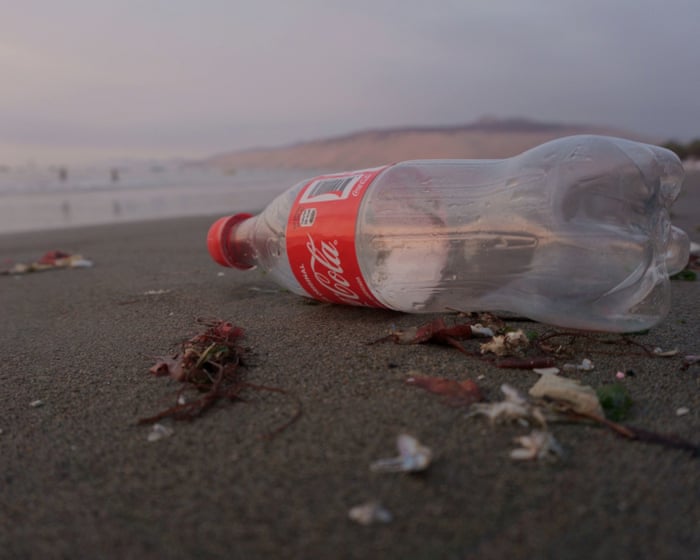
In July 2024, a European Union law came into effect requiring plastic bottle caps to stay attached to their bottles. The rule was widely mocked by social media jokesters and Silicon Valley billionaires alike. People said it was Brussels at its worst: bureaucrats micromanaging, treating citizens like children who couldn’t be trusted to recycle a cap.
What went almost entirely unreported was the evidence behind it. Plastic bottle caps have been found, across decades of coastal cleanup data, to be among the top items littering European beaches. Small, light, and made from a different type of plastic than the bottle itself, the caps float on their own once separated, traveling much farther than the bottles they came from. They are far more likely to be swallowed by seabirds, fish, and sea turtles that mistake them for food.
Now consider what happened next. After lobbying against the rule, some of the world’s largest beverage companies redesigned their caps and adapted. But companies like Coca-Cola also did something revealing: while they promoted the new cap design as a sign of their strong commitment to sustainability, they kept the detachable caps almost everywhere else. Not because the physics of plastic pollution differs across continents, but because no other country, whether the US or in Asia, has passed a national law requiring the change.
The bottle cap story is a lesson for a larger battle playing out at the highest levels of European politics. One side claims that EU rules are the problem: a self-imposed burden of standards on businesses that slows Europe down while the US and China race ahead. The other side says those rules are not a handicap but a source of strength, the only tool a continent without a single government has to shape its own economic future while protecting its people and the planet.
Right now, the first camp is winning. The political coalition behind it is broad, stretching from Brussels to Berlin, Warsaw, and Rome. The argument sounds entirely reasonable on the surface. From that diagnosis comes a program of “simplification” championed by the European Commission led by Ursula von der Leyen: cuts to environmental protections, digital rules, and consumer and food safety requirements. Standards that Europe spent two decades building are being rolled back, all in the name of competitiveness.
There is one problem at the foundation of all this. The diagnosis is at best questionable and at worst wrong. The so-called explosion of EU red tape is a fiction. The red tape explosion that supposedly explains the widening growth gap with the US is a fiction. The OECD’s latest data shows that the regulatory burden on European businesses has arguably risen only modestly over the past 15 years.
Even the landmark 2024 report by Mario Draghi, the former head of the European Central Bank, who was commissioned by the EU to diagnose Europe’s economic weaknesses, cannot back up this claim. The report’s most-cited figure—that more than 60% of EU companies saw regulation as an obstacle to investment in 2023—turns out, on closer inspection, to mean that only about 25% identified it as a major obstacle. This share has since risen, but a larger proportion of European businesses remain concerned by other obstacles, such as energy costs. More importantly, Draghi’s main demand was not for a less regulated Europe, but for a more coordinated, better-funded, and strategically capable one.
And even if you accept the diagnosis, the proposed cure—deregulation—barely makes a difference. The European Commission’s own estimate of the annual savings from its entire simplification program, the legislative packages at the center of this agenda, is €12 billion, or roughly 0.07% of EU GDP.
Europe’s productivity problem is real. But the caricature of a continent collapsing under regulation is not. Much of the apparent US-European growth gap reflects population growth, purchasing power, working hours, and the very different social bargain Europe has chosen to preserve.This suggests that Europe doesn’t need to become like the US in order to be more competitive. Dismantling Europe’s regulatory framework doesn’t just fail to boost growth—it gives up something Europe has spent decades building. Think about what these targeted rules actually do. When the EU forced Apple to open its App Store to rival app developers and payment options, Apple complied—at least in Europe. This shows that EU digital market rules aren’t just costly checkboxes; they’re the very reason European consumers now have choices in apps, payments, and platforms that US consumers still don’t have. The broader European rulebook is also why Google, Meta, and Amazon face limits on how they combine, collect, and profit from Europeans’ data. Weaken those rules, and US platforms—along with their tech billionaires—gain even more control over Europe’s markets and people.
The timing of this push for deregulation isn’t a coincidence. The Trump administration officially labeled Europe’s digital rules as trade barriers, threatened punitive tariffs if Brussels didn’t weaken them, and demanded their removal as a condition for any deal on steel and aluminum. The deregulation agenda unfolding in Brussels is exactly what Washington has been demanding through every available means: weaker European rule-making, greater access for American companies, and a continent less able to offer an economic or even ideological alternative to the US model.
Europe’s rules aren’t necessarily obstacles—at their best, they’re tools of power. They shift the burden of collective choices away from individuals and onto the companies best equipped to handle them. That’s why those companies often oppose them, and why, once the rules are in place, they usually comply.
The bottle cap is still attached to the bottle in Europe. The real question is whether Europe still has the will to be itself—a political project that uses rules to protect its people and shape global markets—or whether, in the name of competitiveness, it hands that power over to the very interests that want it gone.
Alberto Alemanno is the Jean Monnet professor of EU law at HEC Paris and the founder of The Good Lobby.
Frequently Asked Questions
Here is a list of FAQs about why the plastic bottle cap has become a symbol of EU regulation written in a natural tone with clear answers
BeginnerLevel Questions
1 Why is everyone suddenly talking about plastic bottle caps
Youve probably noticed that caps on plastic bottles are now attached by a small plastic tab This isnt a design flawits a new rule from the EU to stop caps from becoming litter
2 What is the new EU rule about bottle caps
The EUs SingleUse Plastics Directive requires that plastic bottle caps stay attached to the bottle after opening The goal is to prevent caps from being thrown away separately where they often end up in nature or the ocean
3 Why are bottle caps such a big problem
Caps are small lightweight and easy to lose They are one of the most common plastic items found on beaches Because theyre small theyre often missed during recycling and can be mistaken for food by birds or fish
4 How does this rule actually help the environment
By keeping the cap attached the whole bottle is more likely to be recycled together It also stops caps from being dropped on the ground which means less plastic pollution in parks rivers and oceans
5 Do I have to use these new caps Is it the law for me
You dont have to do anything special The law applies to manufacturers and retailers in the EU When you buy a drink the bottle will simply have a cap that stays attached You just drink as usual
Intermediate Advanced Questions
6 Why is the bottle cap considered a symbol of EU regulation
The cap is a perfect example of a small practical fix that has a big impact It shows how the EU can use a simple design rule to solve a widespread environmental problem It also gets people talking about regulation in their daily liveseveryone who opens a drink sees the change
7 I find the attached cap annoying Is this really worth the inconvenience
Many people do find it a bit awkward at first However the inconvenience is minor compared to the environmental cost Studies show that loose caps are a major source of beach litter The rule is designed to change our habits and reduce that waste without banning plastic bottles entirely