Interviewing Rachel Aviv is a great way to get book recommendations. When I ask the sharp essayist about her new book, she responds by asking if I’ve read her colleague Parul Sehgal on the trauma plot (of course), Janet Malcolm’s work (are you kidding?), or Parallel Lives by Phyllis Rose (you know, I’ve been meaning to). Then there’s a self-help book from the 90s that’s making the rounds among her friends.
The Middle Passage – “a bad title,” Aviv admits – promotes the Jungian idea that if you cling to the identity you formed in young adulthood, you’ll end up small and scared in middle age. You have to change something fundamental to make it through. Over green tea at a café near her home in Brooklyn’s Park Slope, the New Yorker staff writer, who covers the wonderfully vague beat of “psychology, medical ethics and criminal justice,” confirms that this is basically, frustratingly true. “I have always been very afraid of change,” she says. “I had a really intense high school relationship where I completely lost myself. Everything I’d cared about before just disappeared.” She worried this would happen when she had her first child in 2016, and was relieved when it didn’t: “I thought I had won, as if there weren’t more chances for change later on.”
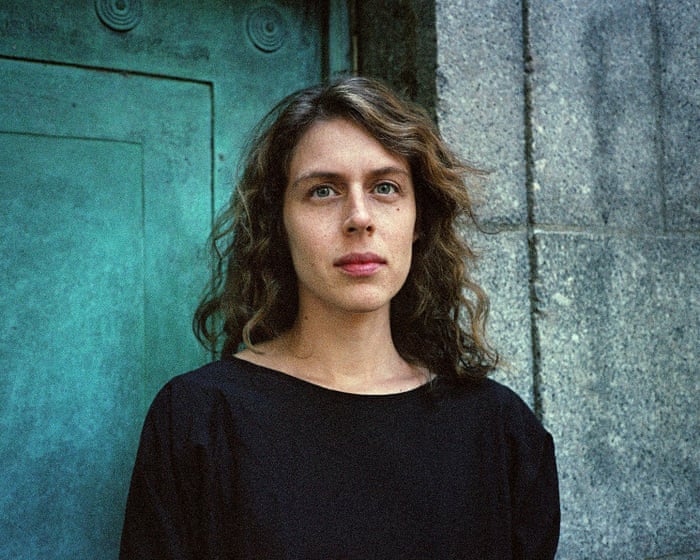
Professionally, Aviv has won many times. She’s one of our greatest magazine writers, partly because she’s obsessively passionate about the details of her stories – she’s so internalized the “show, don’t tell” rule that she’s actively trying to “just say what I think” more often – and because she understands how those details can complicate the stories about humanity that no one else questions. Seeing her New Yorker cartoon headshot – with wispy brown hair and blue eyes that look just like her in person – is like a sign: you’re about to read something that could change how you choose to live. Her profile of psychologist and misinformation expert Elizabeth Loftus won a 2022 National Magazine Award. Second Life, about a woman whose schizophrenia diagnosis seemed to be cured after chemotherapy, was a finalist for the 2025 Pulitzer Prize. Her investigation into Alice Munro’s partner’s molestation of Munro’s youngest daughter – overlooked in real life but woven into Munro’s beloved fiction – won a George Polk Award last year.
The Land and Its People by David Sedaris review – crankiness and charm
Read more
Aviv’s second collection of essays includes these, plus three more New Yorker stories, reworked (and some re-reported) with a focus on the mother-daughter relationship. “There’s a way of writing about motherhood that can be very sentimental and reductive and kind of boring,” Aviv says. She chose a dynamic many of us can relate to and moved it out of its usual settings. This lets us become temporary analysts while reading, and then weepy sentimentalists once it’s over, when we realize how much it makes us think about our own private failures and fleeting successes in how we parent or how we handle being parented.
The title, You Won’t Get Free of It, comes from a line in Munro’s short story The Children Stay, which describes the “chronic” pain a mother feels when she leaves her children for a man: “You won’t get free of it, but you won’t die of it. You won’t feel it every minute, but you won’t spend many days without it. And you’ll learn some tricks to dull it or banish it, trying not to end up destroying what you incurred this pain to get.”
View image in fullscreen
The cover of You Won’t Get Free of It Photograph: Courtesy Knopf
It was Aviv’s reporting on Munro that sparked the book – that, and the fact of a two-book deal with Farrar, Straus & GiRoux. Her previous collection, Strangers to Ourselves, published in 2022, uses case studies of mental health mysteries to explore what Aviv calls the “psychic hinterlands.” She brings seemingly endless empathy, a rare talent for finding and sorting through archives, and a writing style that turns even the driest psychiatric terms into gripping narrative gold. Aviv examined her own experience of being diagnosed with anorexia at age six—a label that became a kind of trap—by pairing her medical records with her childhood journal. “I had some thing that was a siknis its cald anexorea,” a young Aviv wrote. She had it “because I want to be someone better than me.”
You Won’t Get Free of It draws readers in with a personal preface. Aviv recalls her mother’s dream of becoming a serious writer, and the summer she planned a DIY writing retreat in a cottage on the coast of Maine. When Aviv called after three days at sleepaway camp, saying she planned to drown herself in the lake, her mother drove seven hours to pick her up the next day. They did write—Aviv’s mother worked on a story that was never published, while next to her on the floor, Aviv wrote a story about a child loving her mother to an extreme degree. “All the stupid things I created were received with wonder,” Aviv says. “I got exposed to the dream of writing at a very early age, and she idealized even the struggle of being a writer… She made me feel like I had a special gift.”
Dave Eggers: ‘Once you have a machine think and write for you, you’re cooked as a species’
Read more
Aviv does have a gift. Take how she finds non-famous subjects. Her first piece for the New Yorker, at age 28, was about Linda Bishop, a young mother who was on and off medication her whole life, until she spent the last four months of her life in an abandoned farmhouse, living on apples and rainwater. Aviv discovered Bishop’s case by digging through a database kept by psychiatrist E. Fuller Torrey—”who has his own specific agenda about feeling like people should be medicated more, which I disagree with,” Aviv notes—and she saw a single line in a newspaper article mentioning that Bishop had written journals. That intrigued her enough to contact Bishop’s sister. “It began with a question, which was, ‘How do you know when to force someone to be treated against their will?’ and I was looking for ways to tell that question as a story.”
Bishop’s story is included in the new collection, and revisiting it made Aviv feel mildly horrified. She couldn’t believe she’d never asked a follow-up question about Bishop losing a child. How had that not mattered? She felt she had unevenly identified with the woman as an individual, not as who she was to her children, or who she was to herself when she took on the mother identity. “I was really into the idea of a psychiatric case study, for many years. It just felt like the ideal form,” Aviv tells me. But that narrow focus “was like I had allowed for the interiority of one person and not the other part of that dynamic.”
View image in fullscreen
Aviv’s previous collection, Strangers to Ourselves. Photograph: Harvill Secker
The story of Alice Munro and her daughter Andrea Robin Skinner is the culmination of Aviv’s desire to broaden her perspective. These days, she says, her ideal assignment “would tell an entire life.” While the original New Yorker version hits all the key points needed to understand the internalization of abuse, the invalidation of the victim, and the excuses the sexual liberation movement provided, the book version changes the structure. Munro’s Alzheimer’s and her sense of what she could and could not process about her past decisions is revealed only at the end, after we’ve watched a whole world build and then unravel.
When Aviv went into labor with her first child, she brought court records related to a piece she was working on to the hospital.After giving birth, she started reading them in her hospital bed. Aviv writes that this was tied to her desire to hold onto her old self—her identity as a writer, the ideal her own mother had instilled in her.
You Won’t Get Free of It comes out at a time when being a mother in America is increasingly difficult. The fertility rate is dropping, which you can blame on the high cost of childcare, worries about the planet’s future, or just plain uncertainty. Wanting a child has become politicized, absorbed by a MAGA agenda that has labeled a life experience everyone should have access to with the dismissive word “trad.”
For all of Aviv’s literary knowledge, she hasn’t heard of Yesteryear, a 12-week New York Times bestseller about a tradwife influencer who wakes up on a real 1800s ranch. I summarize the plot. She listens politely but looks confused. No, none of that was on her agenda. She doesn’t have an agenda at all. She has stories.
As a result, You Won’t Get Free of It is refreshingly free of debates. It’s not interested in winning an argument, but determined to show what it feels like to be inside the mother-daughter relationship, which Aviv finds “perhaps more than any other, seems to defy a fixed point of view.” That’s Aviv’s style. She can’t imagine doing it any other way. “I guess you convince yourself,” she says, “that what you write is the only way the story could have been written.” It’s not so different from how she parents: “I fundamentally feel that the child I have is becoming the self they were already going to become. I can hinder or help, but the creation lies with them.” Having empathy for others ultimately lies with us, but Aviv’s work can only help.
You Won’t Get Free of It: Stories of Mothers and Daughters is out now in the US via Knopf and on July 9 in the UK via Fern Press.
Frequently Asked Questions
Here is a list of FAQs based on Rachel Avivs statement about motherhood writing covering different levels of interest
BeginnerLevel Questions
Q Who is Rachel Aviv
A Shes a journalist and writer for The New Yorker known for deep thoughtful stories about people medicine and psychology
Q What did she mean by sentimental and dull
A She means that a lot of writing about motherhood relies on predictable overly emotional clichés that dont feel real or surprising It can become boring because it avoids the messy complicated truth
Q Is she saying you shouldnt write about motherhood at all
A No Shes saying you should write about it in a more honest less predictable way Avoid the sugarcoated version and include the frustration boredom and confusion
Q Can you give an example of sentimental motherhood writing
A A classic example is I never knew love until I held my baby Every moment is a miracle Its a beautiful feeling but when every story says the same thing it loses its power
IntermediateLevel Questions
Q Whats the main problem with this sentimental tone according to Aviv
A It creates a false onedimensional picture of motherhood It leaves out the hard partsthe loneliness the loss of identity the resentmentwhich makes the writing feel less true and less relatable for many parents
Q How does this criticism affect modern mommy blogs or parenting influencers
A It suggests that the most popular glossy perfect life content is often the most dull and dishonest The most valuable writing is the raw messy stuff that shows the struggle not just the highlight reel
Q Whats the difference between sentimental and emotional writing about motherhood
A Sentimental writing tells you how to feel and uses cheap shortcuts Emotional writing shows you the experience in a specific honest way letting you feel whatever you feeleven if its uncomfortable
Q Does this apply to all personal writing or just motherhood