Walking through almost any Slovenian town—or just driving along its regional roads—you’ll notice them right away. Posters plastered on lampposts, bus stops, and construction fences celebrate the victories of one political party or another. It’s the clear sign of campaign season: Slovenia is heading to the polls.
On March 22, the country will hold parliamentary elections. By Slovenian standards, it’s almost remarkable that the outgoing coalition, led by center-left Prime Minister Robert Golob, has served a full term. Formed ahead of the 2022 election, Golob’s Freedom Movement (Gibanje Svoboda, GS) was only created months earlier by the former head of the state energy company. In its first election, the party won 41 of the 90 seats in parliament—the strongest result for a single party since independence.
Golob’s landslide victory allowed him to join forces with the Social Democrats (SD) and the Left party (Levica), securing 53 seats—a rare show of stability in Slovenia’s often fragmented political system.
Golob’s government has been far from perfect. The Freedom Movement’s rapid rise meant it took office with little governing experience, and at times its improvisation has been too obvious. Still, it has achieved tangible results. After the devastating floods of 2023, it secured advance financial aid for towns and citizens even before the full damage was assessed. It softened the impact of the energy crisis with measures that shielded households and businesses from soaring prices.
The government also raised the minimum wage, strengthened labor protections for cultural workers, and finally introduced a long-delayed long-term care system. Much of this progressive policy work came from the smallest coalition partner, Levica, which holds only three of the 20 ministries. Many of its measures focus on socially vulnerable groups, even if they aren’t necessarily part of its voter base.
Over the past four years, I’ve winced more than once. But I no longer expect parliamentary democracy to deliver radical change. What I look for is steadier progress: gradual improvements, respect for fundamental rights, and the protection of basic freedoms. And at the very least, I expect it to stay democratic.
By those measures, the current government has been flawed, but not illiberal. Institutions have kept functioning. The media landscape, though polarized, remains pluralistic. Civil society has operated without systematic intimidation.
Despite this, public support for Golob’s Freedom Movement has slipped. The hard-right Slovenian Democratic Party (SDS) is consistently ahead in the polls, leading the Freedom Movement by a few points. Its voters have remained strikingly loyal. While center-left supporters swing between enthusiasm and disappointment, SDS backers stay constant.
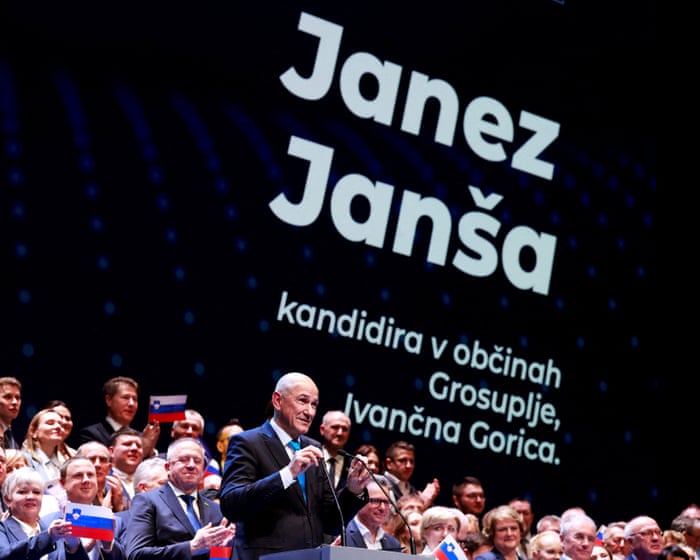
What sets the SDS apart from some other far-right parties in Europe is that it isn’t an outsider movement. It’s the central pillar of the Slovenian right and has governing experience: its longtime leader, Janez Janša, has served as prime minister three times since 2000.
During its first term in the mid-2000s, the SDS governed as a conventional conservative party, but its later stints in power grew more polarizing. Janša’s 2012–13 government collapsed amid mass protests over corruption allegations. Janša himself was sentenced to two years in prison, though the conviction was later overturned. His most recent term, from 2020 to 2022, coincided with the COVID-19 pandemic—and marked a sharper illiberal turn. His administration suspended funding for the Slovenian Press Agency for months, repeatedly attacked the public broadcaster RTV Slovenija, tried to reshape oversight boards of state institutions, and openly clashed with journalists on social media.
Fortunately, the courts pushed back. Civil society mobilized. Tens of thousands, many on bicycles, protested in Ljubljana.Janša’s efforts to undermine key institutions and the rule of law were serious enough to draw warnings from the European Parliament. In opposition, his SDS party has not needed to change its approach. Over the last four years, it has stuck to familiar themes: attacking the “biased” media, warning about migrant arrivals, complaining of overregulation in Slovenia, and waging culture wars over education. Repeating these messages has worked well for them.
The wider European political climate has also shifted, giving such rhetoric more room to spread. During Janša’s last term as prime minister, his attempts to control public broadcasters and reshape state bodies faced strong pushback at home and abroad. Today, the global context is different. The Trump presidency made open hostility toward the media and judiciary seem more acceptable, providing a playbook for politicians who seek to polarise, pressure institutions, and constantly undermine their opponents. Versions of that model have since taken root and evolved across Europe and elsewhere.
Janša, who admires Trump’s style, fits right in. He recently said he would prefer to govern with an outright majority, claiming that building coalitions wastes time that could be used to implement policies. On its own, that might sound like mere frustration with parliamentary politics. In today’s climate, it suggests something deeper: a wish to act without the need for compromise.
Over the past year, I’ve heard similar views from potential SDS voters: “At least he gets things done,” or “We need order.” There is a growing impatience with coalition negotiations and a perception—not always backed by evidence—that liberal governments are weak and bogged down in procedure. This longing for decisiveness can easily turn into acceptance of concentrated power.
A new SDS-led government would likely act quickly on issues like migration, pushing for stricter border controls and treating movement primarily as a security threat. It promises to cut regulations and create a more “business-friendly” environment. Talk of “reform” and “depoliticisation” could, in practice, mean greater executive influence over the media and the courts. None of this would necessarily break democratic rules outright. Illiberalism rarely starts that way. It progresses step by step, within the law, reshaping institutions from within.
Slovenia’s institutions are still anchored in the EU’s legal order. Its civil society is active and resilient. The country is not destined to slide backward democratically. But what has changed since Janša’s last time in office is that the tactics, narratives, and international networks of illiberal politics are now more established than ever. There are precedents, validation, and mutual reinforcement among like-minded leaders.
That is why this election feels less like ordinary democratic upkeep and more like a fundamental choice—not simply between left and right, but between an imperfect pluralism and a model of governance where democratic norms can erode very quickly.
Frequently Asked Questions
FAQs Slovenias Political Shift
BeginnerLevel Questions
What is the main topic of this article
The article examines why Slovenia despite being a successful and stable European country appears to be moving away from liberal political values and policies
What does turning its back on liberalism mean in this context
It refers to a perceived shift in Slovenias government and political culture away from classic liberal ideals like open markets strong individual rights free press and international cooperation toward more conservative nationalist or populist policies
Why is Slovenia considered a European success story
Since gaining independence in 1991 Slovenia has transitioned smoothly to a market economy joined the EU and NATO maintained political stability and developed a high standard of living relative to many other postcommunist states
Is Slovenia a wealthy country
Yes by European standards It has one of the highest GDPs per capita in Central and Eastern Europe and is often seen as a model of successful postcommunist transition
Intermediate Analytical Questions
What specific events or policies suggest Slovenia is shifting away from liberalism
The article likely points to the policies and rhetoric of former Prime Minister Janez Janas governments which included clashes with media attempts to reshape public institutions skepticism toward EU policies and a focus on national sovereignty and traditional values
What are the main reasons for this political shift
Common explanations include a reaction to rapid social changes economic anxieties not fully addressed by the liberal model the rise of global populism a desire for stronger national identity and disillusionment with established centrist parties
Is this shift unique to Slovenia
No its part of a broader trend seen in several Central and Eastern European countries and beyond where there is a pushback against certain aspects of liberal democracy and globalization
Does this mean Slovenia is leaving the European Union
No there is no serious movement for Slovenexit The shift is more about domestic politics and asserting national interests within the EU framework rather than leaving it
How has this affected Slovenias international reputation
It has caused concern among some EU partners and international observers about the rule of law media freedom and the independence of the judiciary leading to tensions within European institutions
Advanced Practical Questions