Eadar-theangachadh bho Bheurla gu Gàidhlig na h-Alba:
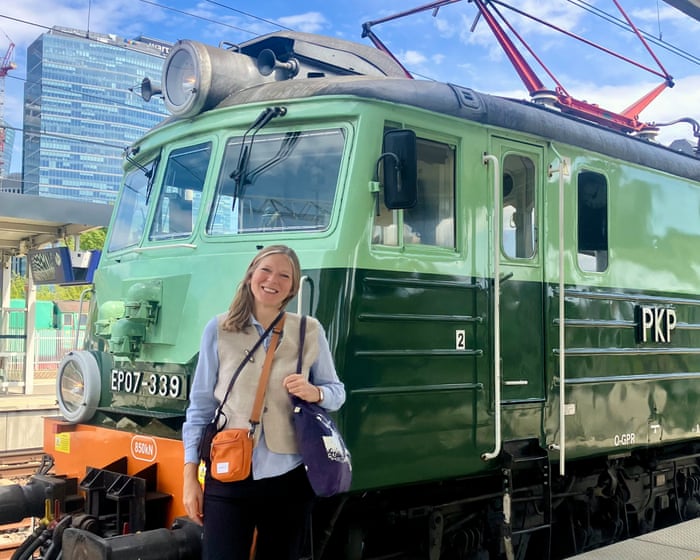
Bha luchd-amharc thrèanaichean air àrd-ùrlar 2 nuair a bha solas na grèine a’ deàrrsadh air na carbadan uaine-ola snasta den 11:07 bho Warszawa Główna gu Poznań. Fhad ‘s a bha mi a’ dèanamh deiseil airson a dhol air bòrd, ruith fear le bogha-fraoich agus braces seachad orm, a’ ruighinn na ceumannan an toiseach. Bha an toileachas follaiseach. Ach an uairsin, cha b’ e seo dìreach trèana sam bith—b’ e tachartas a bh’ ann. Turas air ais ann an ùine.
Bha pàrlamaid na Pòlainn air 2026 ainmeachadh mar Bhliadhna Rèile na Pòlainn, agus tha dà chomharrachadh a’ dol: 25 bliadhna bho chuir an gnìomhaiche astar fada PKP Intercity agus ceud bliadhna de rèile stàite na Pòlainn. Airson an tachartais a chomharrachadh, chaidh sreath de thursan rèile retro ris an canar Nieśpieszny (“Gun luaths”) a chur air bhog.
Gach deireadh-seachdain as t-earrach agus as t-samhradh (co-dhiù gu deireadh an Lùnastail, le barrachd thursan dualtach), bidh trèana làn ath-leasachadh bho na 1980n, air a pheantadh a rèir an linn, a’ fàgail bho roinn eadar-dhealaichte anns a’ Phòlainn—bhon cheann a deas bheanntach gu oirthir a’ Bhaltaig anns a’ cheann a tuath. Nuair a dh’innis mo charaid Mariusz dhomh mu dheidhinn seo, le fios gu bheil mi a’ gabhail turas trèana bliadhnail don dùthaich aige, leum mi air a’ chothrom. Ghlèidh mi mo thiocaid gu Poznań air an latha a chaidh iad air an reic.
Air bòrd, shuidh mi ann an roinn sia-suidheachan le dath marmalade le suidheachain coltach ri cathraichean-armachd. Bha àile càirdeil ann; às deidh a h-uile càil, cha robh duine a’ siubhal gu obair no ann an cabhaig. Bheireadh ar turas “gun luaths” timcheall air còig uairean a thìde, an coimeas ri beagan a bharrachd air dà uair air seirbheis nas luaithe.
Deiseil airson lòn tràth, chuir mi air falbh mo bhaga agus lean mi fàileadh nan isbeanan friochte chun a’ charbaid-bìdh. Tha companaidh còcaireachd WARS air a bhith a’ biathadh luchd-siubhail air trèanaichean na Pòlainn bho 1948, agus bha na clàran-bìdh agus na truinnsearan againn airson an turais seo gu math seann-fhasanta. An dèidh òrdachadh, bhrùth mi a-steach air stòl ri taobh neach-siubhail eile air an robh Anita agus a mac—a thuig mi an dèidh sin mar phiana-chuirm Jan Lisiecki—a’ tadhal bho Calgary, ach le freumhan teaghlaich ann an Gdańsk. “Anns na 1980n, bha trèanaichean làn. Bha daoine eadhon a’ seasamh anns an taigh-beag. Chan eil seo dad,” thuirt Anita.
Le bhith a’ faighinn eòlas air a’ Phòlainn le trèana air mòran eòlasan tlachdmhor a thoirt dhomh thar nam bliadhnaichean. A’ dol a-steach do uighean friochte, buntàta le dill, agus cupa fionnar de kefir, smaoinich mi cho furasta ‘s a bhiodh e biadh bho àm nan comannach a chur às an àireamh mar a bha sinn a’ frithealadh, ach bha e air ùr-fhrithealadh agus air leth math. Dh’fhaighnich mi ri fear eile aig a’ bhòrd againn mun bhrot aige. “Is e flaki a tha seo, air a dhèanamh le tripe,” thuirt e, a’ gabhail spàin.
Bha an t-sealladh-tìre a bha sinn a’ dol troimhe—tuirbinean-gaoithe, coilltean giuthais, agus achadan càl—gun chomharradh. B’ e an trèana fhèin, le a taobh a-staigh eireachdail, a bha sinn uile air clàradh air a shon. Sin, agus an ùr-ghnàthachadh. Bha na h-uinneagan eadhon a’ fosgladh gu h-iomlan, mar a b’ àbhaist, a’ leigeil leinn ar cinn a chuir a-mach.
Le bhith a’ faighinn eòlas air a’ Phòlainn le trèana air mòran eòlasan tlachdmhor a thoirt dhomh thar nam bliadhnaichean. Tha mi air a dhol thairis air an dùthaich le rèile, bho bhaile gnìomhachais ach ag atharrachadh gu luath Katowice anns a’ cheann a deas gu baile-puirt a’ Bhaltaig Gdynia anns a’ cheann a tuath, ach tha tòrr a bharrachd ann a tha mi airson fhaicinn: Lublin anns an ear airson a thalla-grùide fon talamh, agus Zakopane airson coiseachd ann am Beanntan Tatra. Tha fios agam gun toir na trèanaichean mi ann. A-nis, le bataraidh mo fhòn gu tur marbh—gu h-iomchaidh, cha robh socaidean sam bith rim faighinn—chuimhnich mi air cuid de na h-àiteachan sònraichte.
Uaireannan anns a’ Phòlainn, tha an tlachd uile mu dheidhinn an stèisein rèile fhèin. Mar eisimpleir, Wrocław Główny, neo-Gothic agus air a chrìochnachadh ann an 1857, le a ghlainne dhathte, soidhnichean neon bho na 1950n, agus cunntairean thiocaidean le pannalan fiodha, airidh air tadhal leis fhèin.
Cheannaich mi a’ chiad jagodzianka agam, am bun làn dearcan ainmeil na Pòlainn—blas an t-samhraidh agus glè bhlasta.
Tha aoibhneas cuideachd a’ tighinn bho bhith a’ stad ann an àiteachan dìreach air sgàth ‘s gu bheil e ag obair le slighean agus amannan sònraichte. B’ e sin a’ chùis nuair a thadhail mi air Toruń ann am meadhan-tuath na Pòlainn. An dèidh faighinn far na trèana agus a dhol thairis air drochaid air chois thairis air Abhainn Vistula, thòisich sealladh farsaing iongantach den t-seann bhaile meadhan-aoiseil a’ fosgladh. Goirid an dèidh sin, chaidh mi a-steach do thaigh-tasgaidh beag coisrigte do mhac an t-saoghail aig a’ bhaile, Tony Halik, neach-iomairt agus neach-naidheachd ainmeil. Sheall seann dhealbhan e a’ draibheadh a Jeep bho Argentina gu Alaska eadar 1957 agus 1961.
Seall ìomhaigh làn-sgrìn
Sopot, baile-saor-làithean air a’ Bhaltaig, dìreach turas 20-mionaid air trèana bho Gdańsk. Dealbh: Patryk Kosmider/Getty Images
An ath latha air an turas sin roimhe, an dèidh na trèana a ghabhail bho Toruń gu tuath gu Gdańsk Główny – stèisean eile a tha tarraingeach le a thùr-cluig agus turaidean copair – ghluais mi trèana a-rithist airson turas goirid 20-mionaid gu Sopot, baile-saor-làithean beag air a’ Bhaltaig. A’ coiseachd seachad air preasan sea-buckthorn, ràinig mi Bar Przystań agus dh’fheuch mi a bhrot iasgair ainmeil, air a dhèanamh le halibut, bradan, agus luibhean. An sin, cheannaich mi cuideachd a’ chiad jagodzianka agam, am bun làn dearcan ainmeil na Pòlainn – blas an t-samhraidh agus glè bhlasta – mus do chuir mi air bòrd na trèana gu Katowice.
Air ais air an trèana retro làithreach, le dìreach 45 mionaidean air fhàgail mus do ràinig sinn Poznań, thill mi don charbad-bìdh beòthail. Bha an loidhne dìreach cho fada ‘s a bha i roimhe, ach bha an luchd-obrach fhathast càirdeil. Bha am pie ubhal làn de mheasan. Fhad ‘s a bha mi a’ crathadh fhad ‘s a bha mi ag òl a’ chofaidh gharbh, shearbh, thuirt mo nàbaidh, “Sin an seann stuth traidiseanta – fhathast an aon chofaidh a bhios mo sheanmhair ag òl.” Aithne eile don àm a dh’fhalbh, agus mar sin bha e math dha-rìribh.
Turas trèana de phrìomh-bhailtean fionnar na h-Eòrpa: bho Lunnainn gu Vilnius, tro Bherlin agus Warsaw
Leugh tuilleadh
Cha robh mi deiseil airson an turais a thighinn gu crìch, ach bha mi a’ coimhead air adhart ri tilleadh gu Poznań. Thug trèana mi ann beagan bhliadhnaichean air ais, nuair a thuit mi ann an gaol le a spionnadh agus a lùths, a Taigh-Pailme – aon de na taighean-glainne as motha san Roinn Eòrpa – agus am bainne bàr àileach Pod Arkadami. Ach bha mi air ruith a-mach à ùine airson Taigh-tasgaidh a’ Chroissant. Mar chomharra-malairt a’ bhaile, tha croissants Naomh Màrtainn ann am Poznań, ris an canar cuideachd rogale świętomarcińskie, air an reòiteag agus air an lìonadh le sìol poppy geal, agus tha an taigh-tasgaidh a’ tabhann clasaichean bèicearachd.
Tha an trèana shlaodach againn na eadar-dhealachadh mòr ri fàs luath seirbheisean rèile ùr-nodha anns a’ Phòlainn. Gus coinneachadh ri iarrtas, thathar ag ath-leasachadh seann charbadan, agus thathar a’ toirt a-steach feadhainn eile bho thall thairis. A bharrachd air sin, sa Ghearran, bhuannaich a’ Phòlainn duais 2026 Rail Champion ann am Brussels airson a cur ri leasachadh còmhdhail rèile san Roinn Eòrpa. Le àm ri teachd cho gealltanach, gu cinnteach chan eil dad ceàrr air a bhith a’ faighinn tlachd à beagan cianalais mhath, cofaidh searbh agus a h-uile càil.
Bidh tursan Nieśpieszny a’ tòiseachadh bho £20. Tha Koleo, app gluasadach agus làrach-lìn, feumail airson siostam rèile na Pòlainn a sheòladh.
**Ceistean Bitheanta**
Seo liosta de cheistean bitheanta mu eòlas brot tripe agus cofaidh searbh air turas trèana cianalais bho àm nan comannach tron Phòlainn
**Coitcheann – Suidheachadh an t-Seallaidh**
C: Dè a tha an eòlas carbaid-bìdh seo dha-rìribh mu dheidhinn?
F: ‘S e turas cianalais a th’ ann air trèana ath-leasachadh às a’ Phòlainn bho àm nan comannach. Tha am fòcas air an àile fhìrinneach, gharbh agus air a’ bhiadh is an deoch shònraichte a tha air am frithealadh sa charbad-bìdh.
C: Carson brot tripe agus cofaidh searbh? An e sin na h-aon roghainnean?
F: ‘S iad na nithean sònraichte a tha a’ suidheachadh an t-seallaidh. Bha brot tripe na bhiadh cumanta, blàth dha luchd-obrach, agus bha an cofaidh mar as trice na neach-ionaid lag, searbh agus gu tric loisgte. ‘S e sin na prìomh roghainnean a tha ceart airson an linn.
C: An e trèana fhìor a tha seo air am faod thu marcachd?
F: ‘S e. ‘S e trèanaichean dualchais no cianalais a tha seo, gu tric air an cur air dòigh le taighean-tasgaidh rèile no buidhnean dealasach. Bidh iad a’ ruith air cinn-latha sònraichte air slighean seallaidh mar Beanntan Bieszczady no bho Warsaw gu Kraków.
C: A bheil am biadh math no dìreach airson an eòlais?
F: ‘S e 100% airson an eòlais fhìor a th’ ann. Tha am brot tripe sa chumantas air a mheas mar rud air a dhèanamh gu math, ach tha an cofaidh a dh’aona ghnothach searbh agus uabhasach. ‘S e a’ phuing a bhith a’ blasad mar a bha siubhal dha-rìribh anns na 1970n.
**Am Biadh is an Deoch**
C: Dè dìreach a th’ ann am brot tripe?
F: ‘S e brot traidiseanta Pòlainneach a th’ ann air a dhèanamh le tripe mairt air a bhruich airson uairean a thìde le glasraich agus marjoram. Anns a’ cho-theacsa seo, tha e air a fhrithealadh ann am bobhla meatailt sìmplidh.
C: Carson a tha an cofaidh cho searbh?
F: Rè àm nan comannach, bha fìor chofaidh gann agus daor. B’ e neach-ionaid chicory no gràin a bh’ anns a’ chofaidh a bha air a fhrithealadh mar as trice. Tha e a dh’aona ghnothach searbh, uisgeach, agus le blas loisgte – fìor bhlas an linn.
C: Am faigh mi rudeigin eile ri òl?