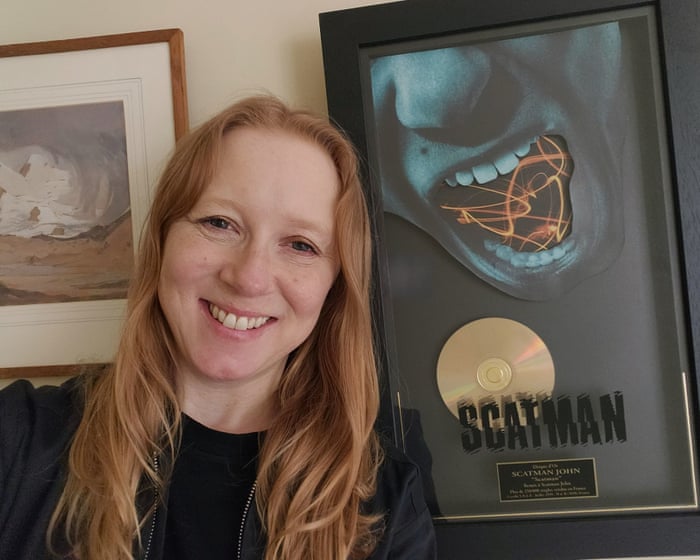
For most of my life, I had one goal: don’t get found out. I was a covert stammerer (or stutterer). Nobody knew I had a speech disability, because whenever I felt I might get stuck on a word, I swapped it out or stayed quiet. I seemed fluent by avoiding certain sounds, words, situations, and people. You’d never catch me on the phone. In restaurants, I ordered whatever was easier to say, not what I actually wanted. At school, I skipped any class where I might have to read aloud. On top of that, I was a shy, geeky redhead with braces who got bullied constantly. Even my family didn’t know I stammered. I believed I’d never have a good job, a relationship, or a way out.
What changed that wasn’t therapy or a sudden flash of inspiration. It was a strange song blasting from my dad’s car radio in the summer of 1995.
You’ve probably heard it. Scatman (Ski-Ba-Bop-Ba-Dop-Bop) was a global hit, widely written off as cheesy, throwaway pop. Its singer, Scatman John, was a mustachioed, balding 52-year-old in a fedora, seen as just another novelty act in a decade full of chart-topping gimmicks. But John Larkin – to use his real name – was a lifelong stammerer. Unlike me, he couldn’t hide it, so he embraced it and turned his broken syllables into scat-singing. An avant-garde jazz pianist with no interest in the charts, he agreed to record a pop song on one condition: that he could try to reach kids with lyrics about “stuttering” and self-esteem. “Everybody stutters one way or the other,” he sang. “If the Scatman can do it, so can you.”
Sitting in the passenger seat of the car, I didn’t hear a novelty track. I heard a man joyfully singing about having a stammer and not letting it hold you back. Plus, it was a banger. This is for me, I thought. I was hooked. I bought all his albums and singles and listened closely to his lyrics, which spoke to outsiders and misfits like me.
Two years later, we got dial-up internet at home. I searched an online directory of email users and found “John Larkin, jazz musician, California”. Could it be him? I had no idea. But by then, my mental health had taken a turn for the worse. I wrote a long, desperate email and hit send.
John – still at the height of his fame – was performing for 300,000 people at the Sounds of Frankfurt festival in Germany. But he read my email and recognized it as a cry for help. He replied, promising he’d get back to me. Days later, he kept his word, and we exchanged messages back and forth. It was like a dam bursting – all the shame, fear, and anger about my speech came pouring out. He was kind, respectful, and encouraging. Then, when I told him I was terrified of the phone, he asked for my landline number.
View image in fullscreen
‘If the Scatman can do it, so can you’ … Scatman John (left) on German TV in 1996. Photograph: United Archives/Frank Hempel/Shutterstock
That afternoon, the phone rang – and for the first time in months, I picked it up.
“This is Juh-Juh-Juh-John,” said the California voice on the other end. He was stammering so heavily it took him a few minutes to introduce himself, but I already knew who it was. My favorite popstar had called my house.
I listened to him in awe – he was stammering openly, without fear or shame. And he skipped small talk to ask how I was feeling. John was an abuse survivor and a recovering addict; he knew all about the danger of toxic shame. Hiding would steal my life, he told me. Feeling brave, I let myself stammer – just once. I felt like I could hear him smiling down the crackly transatlantic line.
“Ah!” he said. “It’s so b-b-b-b-beautiful to hear you stutter.”
After hearing that, I began to break down my long-held belief that I had to sound like everyone else. The message I’d gotten from society and the media was always the same: stammering was a defect to be cured, pitied, or overcome. I didn’t yet know it was neurological – a speech difference rooted in brain function, imperviousIt wasn’t about willpower. John reminded me that it wasn’t my fault, and I didn’t have to feel ashamed.
He kept pushing me to join what was then called the British Stammering Association, now known as Stamma. Through it, I started to “find my people”—others who truly understood what I was going through. Even so, I still turned to John whenever things got hard, and he always made time for me, no matter how busy he was. In 1999, during my first week of university, I felt anxious and stressed, so I called him. His wife, Judy, answered and told me that the cancer he’d been fighting was now terminal.
Shocked, I spent my entire student loan on a plane ticket to Los Angeles the next day. People warned me he might not recognize anyone anymore. But when I walked in, he lifted his head and smiled. “Oh my God, it’s you! It’s you!” he said, reaching out to me. I stayed by his side for four days, holding his hand.
John passed away six weeks later, at the age of 57. It took me many more years to get where I am today, but now I speak openly about my stammer and advocate for others. I try to be the kind of positive role model John was, passing on the gift he gave me.
Today, his unusual 1995 track is racing toward a billion streams. Almost no one realizes they’re listening to one of the most radical acts of disability pride from the MTV generation. But I do. Whenever I hear those rapid-fire syllables, I’m taken back to that phone call and to the remarkable man who gave me back my voice.
Scatman John: The Remarkable Story of the World’s Unlikeliest Popstar by Gina Waggott is published by Bloomsbury (£21.99). To support the Guardian, order your copy at guardianbookshop.com. Delivery charges may apply. In the UK, Childline is available at 0800 1111. In the US, call or text Mental Health America at 988 or chat at 988lifeline.org. In Australia, support is available at Beyond Blue on 1300 22 4636, Lifeline on 13 11 14, and MensLine on 1300 789 978.
Frequently Asked Questions
Here is a list of FAQs based on the article A moment that changed me My stammer made life miserable then a song gave me my voice back
General Background Questions
1 What is this article about
Its a firstperson story about a person who struggled with a severe stammer their whole life It describes the misery and isolation it caused and the surprising moment they discovered that singing completely eliminated their stammer giving them a new sense of freedom and identity
2 Who is the author and what is their background
The author is a person who has had a stammer since childhood They arent a professional singer by trade rather they are someone who used music as a personal therapy and escape The article focuses on their personal journey rather than their professional credentials
3 Why did the stammer make life miserable
The author describes the daily frustrations of being unable to communicate fluentlyfacing social anxiety being misunderstood avoiding speaking situations and feeling a deep sense of shame and powerlessness in conversations
4 What was the moment that changed them
The specific moment was when they realized that when they sang they could articulate words perfectly without any stammer This discovery shifted their perspective from seeing themselves as a victim of their speech impediment to someone who had a unique powerful voice through music
The Science The Why
5 Why does singing stop a stammer
While the article is personal science supports this Stammering is often a disconnect between the brains language processing and the motor functions for speech Singing uses a different neural pathway involves rhythm breath control and a slower more melodic pace This bypasses the part of the brain that triggers the stammer
6 Is this a cure for stammering
No The article makes it clear that this was not a cure The author likely still stammers when speaking The cure was psychological and emotionalit gave them confidence and a way to express themselves fluently but it didnt fix their conversational speech
7 Does this work for everyone who stammers
No Stammering is highly individual While many people who stammer find fluency in singing it doesnt work for everyone The effect can also vary depending on the song the situation or the