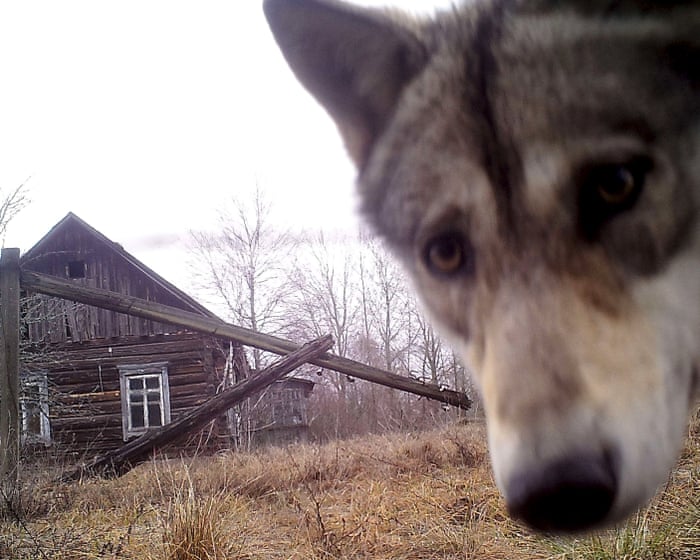
Forty years after the world’s worst nuclear disaster, Chornobyl is still contaminated with nearly half the caesium-137 that exploded from the Unit 4 reactor in 1986, along with longer-lasting hazards like plutonium, tritium, and americium. Yet some experts believe the long-term effects on nature may be less severe than if humans had stayed in the area, leading to unexpected outcomes in an environment left to itself.
This reminder of Chornobyl’s lingering fallout comes ahead of Sunday’s anniversary, which coincides with renewed calls for nuclear power and growing fears about nuclear brinkmanship driven by the oil crisis and wars in the Middle East and Ukraine.
The ongoing conflict in Ukraine continues to threaten Chornobyl and worsen the contamination. Last month, it was revealed that the giant containment structure around the most radioactive area inside the defunct plant will need €500 million (£434 million) in repairs after a Russian drone strike.
Inside the containment structure, there are an estimated four tonnes of radioactive dust, fuel pellets, and other debris from the disaster on 26 April 1986. That event caused the largest release of radioactivity in nuclear energy history and contributed to the fall of the Soviet Union.
More than 300,000 people were evacuated from the Chornobyl plant and the surrounding 4,200 square kilometres of land in Ukraine and Belarus. Radionuclides spread across most of Western Europe, raising fears of crop contamination as far away as the Lake District, Scotland, and Ireland. But the main concern was the health risks to people in the immediate area, especially since the Soviet Union tried to cover up the consequences. The official death toll was 134 people, mostly firefighters and plant workers, though foreign analysts warned the fallout would cause fatal cancer for tens of thousands more.
The National Academy of Medical Sciences of Ukraine is set to publish an assessment of the disaster’s impact this week. Its last update in 2022 recognised 41,000 fatalities. A 2006 study by outside experts estimated between 4,000 and 16,000 deaths.
Experts remain divided on the long-term effects of radiation on Chornobyl’s environment, but there is broader agreement on the benefits to wildlife and ecosystems from the accidental rewilding that has occurred since most human residents were evacuated.
The Chornobyl exclusion zone (2,800 square kilometres) and the neighbouring Polesskiy radioecological reserve (2,170 square kilometres) in Belarus form one of Europe’s largest unplanned nature sanctuaries, even though it sits in the middle of a war zone.
“Wolf populations are seven times higher than before the accident because there’s less human pressure,” said Jim Smith, an environmental scientist at the University of Portsmouth, who has studied the region for over 30 years. Elk, roe deer, and rabbit populations are also reportedly thriving.
“The ecosystem in the exclusion zone is much better than it was before the accident,” Smith said. “It’s been a powerful demonstration of the relative impact of the world’s worst nuclear accident—which isn’t that big—compared to the impact of human habitation, which is devastating.”
Similar conclusions have been drawn in other no-go areas, such as Fukushima, where wild boar, Japanese macaques, and raccoons have become more abundant in places evacuated after the 2011 reactor meltdown, and the Korean Peninsula’s demilitarized zone, where North-South tensions and the exclusion of most humans have created a sanctuary home to 38% of South Korea’s endangered species, including white-naped cranes, Siberian musk deer, and Asiatic black bears.and Korean gorals.
Ukraine is now testing the idea of restarting farming in some of the less contaminated areas around Chornobyl. Smith co-wrote a paper last year on how to measure radioactive levels in wheat, corn, leafy greens, and other potential crops.
Smith said he used to be against nuclear power, but has become a cautious supporter because it poses lower risks to human health and the climate than fossil fuels. He acknowledged that radiation damages DNA and estimated that the Chornobyl accident has caused about 15,000 extra cancer deaths in Europe. But he noted this is likely much smaller than the deaths caused by air pollution or from the atmospheric nuclear bomb tests by the US and Russia in the 1950s and 60s.
“Since the 1990s, many scientists have been frustrated about how we failed to get the message across about what the important thing at Chornobyl is,” Smith said, adding that evacuations also came with psychological and economic costs.
The long-term effects of the disaster on wildlife are debated. Several journal papers report lasting genetic damage to some mammals, birds, and plants, especially in the most contaminated areas. A paper last year noted that barn swallows and great tits had lower reproductive success due to “sperm abnormalities, oxidative stress, and reduced antioxidant levels.”
Gennady Laptev of the Ukrainian Hydrometeorological Centre, who has researched Chornobyl for many years, said he hasn’t seen any visible signs of mutations, but it’s hard to say for sure that the ecosystem is better than before the accident. “This is a complex question. In my opinion, if wild animals are abundant, it means they’re doing okay,” he said.
The political stakes of this debate are huge. The Trump administration is trying to weaken safety rules to allow building nuclear power plants in suburban areas, partly to meet the extra energy demand from data centers.
Meanwhile, European Commission President Ursula von der Leyen, citing the US-Israeli attack on Iran that has driven up oil prices, said Europe’s move away from nuclear power was a “strategic mistake” because it made countries more dependent on expensive and unstable imports. Twenty countries recently attended a summit in France on civil nuclear power’s potential to become “the sector of the future.” To have any chance, supporters need to convince the world that nuclear is safe and affordable.
But anti-nuclear campaigners say that will be hard while Russia deliberately targets Chornobyl and Japan releases radioactive water from Fukushima into the Pacific Ocean.
Shaun Burnie of Greenpeace Ukraine said any attempt to revive the sector is a dangerous distraction by a nuclear industry fighting for survival. “In contrast to the hype and misinformation, the chance of another severe accident remains. Unlike those in the Kremlin and the White House, who together promote nuclear power, these risks are too big to ignore—while nuclear power remains massively uncompetitive financially.”
Burnie is working with scientists and engineers in Chornobyl, where he has seen wild elk on the roads, heard Russian drones flying overhead on their way to targets in Ukraine, and made three visits inside “the new safe confinement” where radiation levels are still high.
“The nuclear industry will grab on to anyHe said, “Things like the Middle East crisis are being used to try to revive its fortunes, but the future for energy security and decarbonization lies in renewables. After more than 80 years of massive subsidies and several nuclear disasters, including Chernobyl, nuclear power still provides less than 10% of the world’s electricity and only 4% of global energy. That’s not a track record to be proud of. What it’s still very good at is what it was originally designed for: producing plutonium for nuclear weapons.”
Frequently Asked Questions
Here is a list of FAQs about the nogo zone paradox of Chernobyl covering beginner and advanced questions
BeginnerLevel Questions
1 What is the nogo zone paradox
Its the surprising observation that wildlife is thriving in the Chernobyl Exclusion Zone even though the area is heavily contaminated by radiation from the 1986 nuclear disaster
2 Is it safe for animals to live in Chernobyl
Surprisingly yes for many species While high radiation doses can be harmful the lack of human activityhunting farming loggingseems to outweigh the negative effects of radiation for most large animals
3 What kind of animals live there
Wolves deer boar bears lynx bison horses and even the rare Przewalskis horse Birds and insects are also abundant
4 Why does the article mention this paradox now
Because the world is reconsidering nuclear energy as a clean power source The paradox raises a tough question if wildlife thrives after a nuclear accident does that mean radiation is less dangerous than we think
5 Does this mean nuclear energy is safe
Not exactly The paradox shows that removing humans can be more beneficial for wildlife than avoiding radiation Nuclear accidents are still catastrophic for people but the longterm ecological impact is complex
IntermediateLevel Questions
6 How much radiation is actually in the Exclusion Zone
Levels vary wildly Some hot spots near the reactor are still lethal but most of the 1000squaremile zone has radiation levels comparable to a longhaul flight or a medical Xray Its not safe for human habitation but its not a desert
7 Are the animals radioactive
Yes many animals have measurable levels of cesium137 and strontium90 in their tissues Studies show they have higher mutation rates and shorter lifespans in some species but populations remain stable or grow because the benefits of no humans outweigh the costs of radiation
8 Doesnt radiation cause cancer and mutations
It does but the effect is dosedependent Animals at Chernobyl show higher rates of cataracts tumors and genetic damage However natural selection is harsh individuals with severe mutations die young leaving the