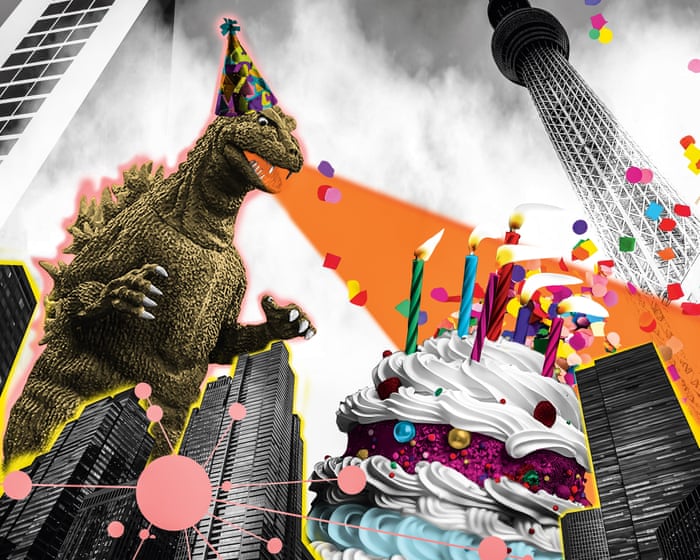
Kim Jong-il loved pepperoni pizza. Saddam Hussein couldn’t resist a fish barbecue. Idi Amin was said to be able to eat an entire roasted goat. Their menus were different, but their appetites were the same. For history’s most brutal dictators, the dining table was also a stage for power. And for the cooks who served them, every meal came with enormous risks. “It goes back a bit to Hannah Arendt’s idea of the banality of evil,” says director Andrew Neel. “These everyday things we all love, like food, can take on a completely different meaning in a dictatorship.”
In his latest film, How to Feed a Dictator, which premieres this week at the Tribeca Film Festival, five private chefs share their intimate experiences cooking for some of the world’s most feared dictators and the constant dangers that came with the job. Based on a 2020 book by Polish journalist Witold Szabłowski, the 95-minute documentary explores the difficult line between morality and survival. It asks viewers to think about the choices these chefs made—and the choices they never really had. The film is structured like a tasting menu, serving up sobering pieces of human cruelty wrapped in the style of a lavish cooking show. It’s especially hard to watch on an empty stomach.
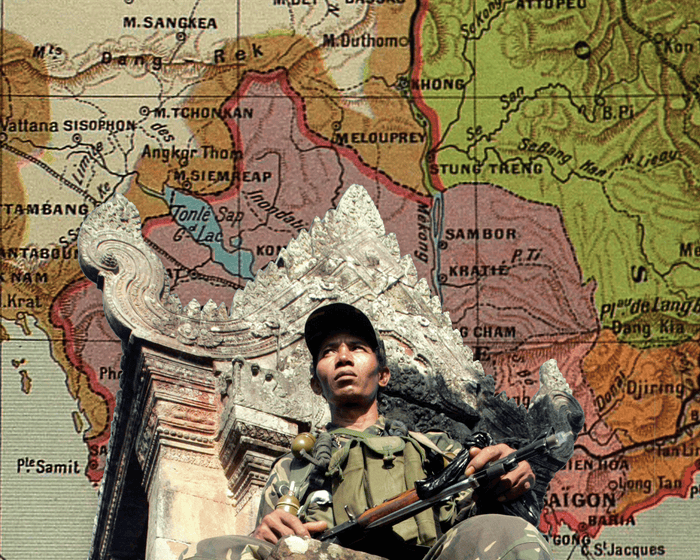
The perspectives vary widely, much like the meals they prepared. We meet Keo Samoun at the messy gravesite of her former boss, Cambodian dictator Pol Pot, laying out fish, fruit, and rice for a man she still sees almost as a god. Famous pizzaiolo Ermanno Furlanis, on the other hand, recalls the terror of making pizzas for Kim Jong-il—his life under surveillance, his passport held, and a state official who barged into his kitchen to make sure the olives on one pizza were spaced just right.
No chef is as haunted by his service as Ugandan Charles Otonde Odera. He describes his early days working for Ugandan tyrant Idi Amin as life-changing—one day he was a poor villager barely getting by, and the next he was driving a Mercedes, supporting eight wives, and living in extreme comfort while Amin terrorized and brutalized the local people. For all these chefs, comfort was the trade-off. By most standards, it was a great job—a kind of logic that can excuse almost anything. “Saddam’s chef got a car every year,” Neel says. “That phrase, ‘it was a great gig,’ I think actually runs the world. Like, ‘It was just business.'”
It wasn’t until Amin’s second wife, Kay, was found dead in the trunk of a car—amid rumors that Amin had her killed for taking a lover—that Odera began to question the deal he’d made. “I missed my low wages from before,” he says in the documentary. “At least my heart was at peace.”
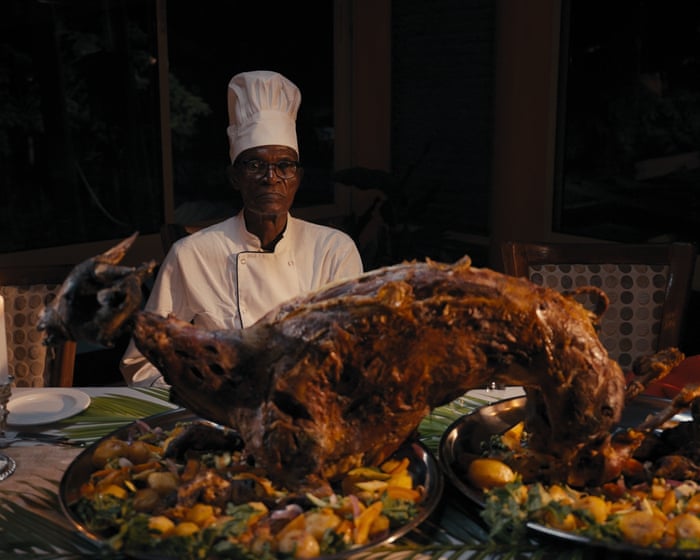
Odera describes Amin as “a man of great appetites” who seemed to enjoy how rumors of his supposed cannibalism upset Uganda’s British colonizers, reinforcing his image as a ruler beyond rules or limits. (Amin famously denied the gossip, saying human flesh was “too salty.”) Odera remembers being ordered to cook a human heart, with Amin telling him that eating someone’s heart stops their spirit from haunting you. His career took another dark turn when one of Amin’s children got a stomach ache after a meal—a small incident that still earned the chef a death sentence.
As Odera shares these painful memories, he prepares a roasted goat with a team of cooks. In How to Feed a Dictator, images of animal butchery and state-sanctioned violence are deliberately shown together. You can only imagine how uncomfortable the crew felt filming all this rich food, caught between the sensory appeal of what was in front of them and the horror it was paired with.
“The food does get cold when you’re designing…”We were rushing through shots and didn’t get to try everything,” Neel says. But he does praise Samoun’s fish dip, a favorite at Pot’s table, and the masgouf—a grilled carp dish that Hussein supposedly couldn’t live without. That dish ultimately helped U.S. forces track him down after his regime fell in 2003, when he was found hiding in a spider hole in the desert.
For anyone wondering why a chef wouldn’t play the hero and poison a dictator, the film makes it clear: that thought never crosses their mind. Getting close to a dictator requires deep trust, which also keeps you far from the outside world. “There was plenty of food where I was,” says Furlanis, recalling how his Italian grocery orders would arrive in the Hermit Kingdom within days. When he suggested sharing some of his extra food with starving North Koreans—many of whom were reportedly eating grass and tree bark—his offer was quickly rejected. “A cook only needs to cook,” says Odera, the Ugandan chef. “There is no other story.”
Samoun, Pol Pot’s former cook, simply can’t reconcile the man who arranged her marriage, paid for her wedding, and walked her down the aisle with the architect of a genocide that killed an estimated 1.5 to 3 million Cambodians in four years. In the film’s most intense moment, one of Neel’s translators challenges her story, sharing his own experience of being beaten and tortured by the Khmer Rouge.
“She wasn’t really answering the question,” Neel recalls. “And I said to [the translator], because I knew his history, ‘You need to tell her what happened to you.’ Everyone wants to be respectful. Everyone wants to forget things, even the people who went through it. This is the awful legacy dictatorship leaves: people who were brutalized by the regime living alongside people who benefited from it.”
View image in fullscreen Photograph: Tribeca film festival
The contradiction seems to push Samoun to a breaking point. “Even though he made mistakes, it couldn’t all be bad,” she says, crying.
Meanwhile, Coco Pacheco—Chile’s Emeril Lagasse—remains fiercely loyal to Augusto Pinochet. He keeps one of Pinochet’s star-studded peaked caps under glass, treasures photos of their time together, and celebrates his military coup in Chile as a brave stand against communism. He prepares a table of his late boss’s favorite foods, sets an empty place, and toasts him. “We never talked politics,” Pacheco says. “It was all family. I laughed with him a lot.”
As for the tens of thousands Pinochet killed, tortured, or forced into exile, Pacheco treats the subject as lightly as an omelet order. “He had to give the orders he didn’t want to give,” he says. “That’s life.”
Hussein’s former chef is similarly loyal, calling the president who used chemical weapons against his own people “the father of Iraq,” and comparing his execution after trial—carried out on Eid, of all days—to a death in the family. The chef speaks under a pseudonym and appears on screen as a black silhouette, his identity hidden more out of fear of Hussein’s enemies than of any relatives or former allies. “His body was changed, his voice was changed—we wanted to make sure none of it could be reverse engineered with AI,” Neel says. “One thing I really liked was the idea that he was just a hole. We went for this full black shadow because he can’t say any of that stuff in public. In a way, for me, Saddam cut him out of the world.”
How to Feed a Dictator rests on a central idea: people help create dictators just as much as they help bring them down, and the chefs who sustain these regimes are ultimately just culled from the herd. Watching it, you’re reminded of a certain American president drawn to authoritarian figures, past and present….and to the performance of strongman politics itself—even if his love for fast food and Diet Coke doesn’t quite match the dictator’s more refined tastes.
Neel did consider including Donald Trump in his film—though, “to be clear, he is not a dictator,” he says. “He wants to be one, but he’s not. I did find a chef who cooked for him before he got elected. But after Trump won, the chef disappeared. He wouldn’t talk to me anymore. Why? He was probably afraid of losing his job. He likely had a great gig.”
How to Feed a Dictator is premiering at the Tribeca Film Festival and is currently seeking distribution.
Frequently Asked Questions
Here is a list of FAQs about the experience of cooking for a dictator based on the concept of a man of great appetites
BeginnerLevel Questions
1 What does a man of great appetites mean in this context
It means a dictator who has extreme often dangerous cravingsnot just for food but for power control luxury and sometimes violence His appetite for a meal is just one part of a much larger demanding personality
2 Is this a real job Do people actually cook for dictators
Yes absolutely Dictators have personal chefs kitchen staff and food tasters Its a real highstakes job often for military leaders or authoritarian rulers
3 Why would a dictator need a personal chef
For several reasons extreme paranoia a desire for exotic or rare foods the need for constant control over their environment and the sheer ego of having a dedicated culinary staff
4 Whats the biggest danger of cooking for a dictator
The biggest danger is poisoningeither accidental or intentional One wrong ingredient a spoiled dish or a perceived insult can lead to imprisonment torture or execution
5 Is the food always fancy or expensive
Not always Some dictators prefer simple nostalgic foods from their childhood But often its about excess caviar whole roasted animals rare wines and enormous portions
IntermediateLevel Questions
6 What happens if the dictator doesnt like the food
The consequences can range from a terrifying silent glare to a violent outburst In many cases the chef is immediately fired demoted or worse A bad meal can be seen as a direct act of defiance
7 How do chefs handle the constant threat of poisoning
They use a system of food tasters who eat every dish first Chefs also source ingredients from trusted singlesource farms or their own gardens and they lock the kitchen down with armed guards
8 Is it just about cooking or is there a psychological element
Its heavily psychological The chef must read the dictators mood anticipate his whims and manage his ego A dish that reminds him