The car is probably the closest thing Germany has to a national symbol. That’s why the success of its auto industry and the happiness of drivers have long been seen as a measure of the country’s well-being.
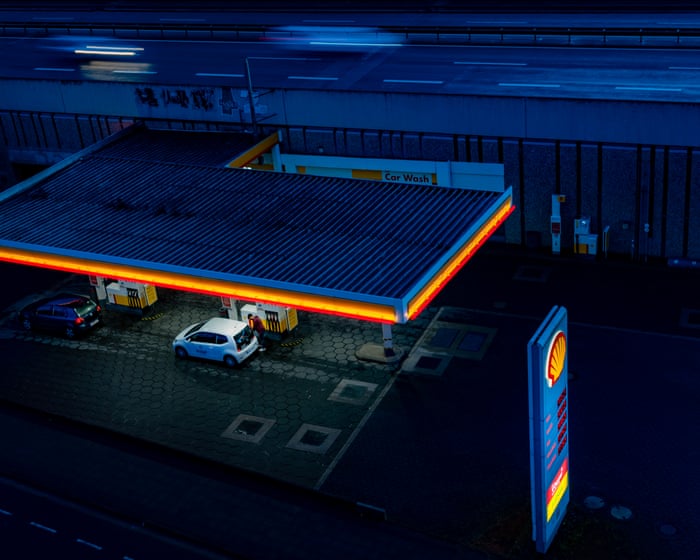
Since the war on Iran began, German news has been full of stories about drivers. Journalists have sent urgent reports from gas stations across the country, describing anger and frustration over rising fuel prices.
That anger is understandable. Diesel briefly went above €2.40 (£2.08) per litre—more than a 50% increase from a year earlier.
Because the war’s effects quickly showed up as inflation, the crisis in the Strait of Hormuz has revealed just how fragile the European economy is. This isn’t the first time Europeans have had to learn about their energy dependence. Between 2020 and 2024, COVID, the Ever Given container ship blocking the Suez Canal, Russia’s war on Ukraine, and Israel’s war on Gaza all disrupted global trade and EU energy security.
These earlier crises should have taught the German government how to respond politically to such shocks. But its reaction to the US-Israel war on Iran has once again exposed the hypocrisy of energy politics in Germany. Friedrich Merz’s governing coalition—made up of the Christian Democratic Union (CDU), Christian Social Union (CSU), and Social Democratic (SPD) parties—has responded to the latest disruption in oil shipments by doubling down on fossil fuels. This has meant new subsidies for fossil fuels and drafting laws that could cut funding for renewable energy projects.
On March 23, Katherina Reiche, Germany’s minister for economic affairs and energy, gave a notable speech at an energy conference in Houston, Texas. In it, she questioned the EU law that sets the goal of net zero emissions by 2050. “We need to get back some flexibility,” she said, adding that this could only happen by “allowing different solutions and technologies” and accepting that the EU might miss its net zero goal by “maybe 5 or 10% by 2050.”
This apparent shift away from renewable energy wasn’t inevitable. Soon after the war on Iran started, European Commission President Ursula von der Leyen—herself a CDU member and a longtime minister under Angela Merkel—made a case for a green transition that was very different from Reiche’s statement two weeks later. “Ten days of war have already cost European taxpayers an extra €3 billion in fossil fuel imports,” von der Leyen told the European Parliament in Strasbourg. “That’s the price of our dependence. The fact is, we have energy sources that are homegrown: renewables and nuclear. Their prices have stayed the same over the last 10 days.”
At the heart of this disconnect between Brussels and Berlin is the CDU and CSU’s systematic disregard for fighting the climate crisis, most loudly voiced by Reiche. Before taking her ministerial post, Reiche was the CEO of Westenergie AG, a subsidiary of the energy company E.ON.
Her background has drawn sharp criticism from those who see the energy minister as too close to the fossil fuel industry, which has its own interests. She seemed to prove her critics right this month when she opposed an SPD plan to tax the excess profits of oil companies.
Environmental groups became even more worried when Reiche announced she would stop building wind and solar farms and cut programs that subsidize private solar panels. Instead, she has proposed building new gas plants. In November, Reiche justified her policy approach in the name of efficiency. “Subsidies and public funding programs have to be rigorously reviewed,” she said. “Wrong incentives have to be removed, even if it hurts.” She hinted at cuts to subsidies for installing heat pumps.This had been introduced by her predecessor from the Green party. Before the Iran war, Reiche promised she would let the market guide policy, not the other way around. But she has been happy to make an exception for the fossil fuel industry. For example, she wanted to increase subsidies that would mostly benefit drivers who need their cars to commute to work. In the end, the government agreed to introduce a similarly misguided subsidy: a tax cut on fuel sold at gas stations. This will be expensive and essentially means transferring state funds to companies, hurting Germans who don’t need to fill up their car tanks.
The current crisis—the biggest oil shock in decades—has shown that fossil fuels are neither economically nor environmentally sustainable. So, the subsidies should go toward expanding renewable energy. But the CDU-led government is doing the exact opposite.
The war has proven that when the interests of drivers are at stake in Germany, free market ideology goes out the window. In late March, a law limiting gas stations to no more than one price increase per day was quickly drafted and passed.
In an ideal world, the government would extend the same sympathy it shows to drivers by broadening its relief packages. But when it comes to deciding who is worth spending money on, hypocrisy seems to rule the day.
Tania Roettger is a journalist based in Berlin.
Frequently Asked Questions
Here is a list of FAQs about Germanys sudden reversal on climate policy in response to the oil shock written in a natural tone
BeginnerLevel Questions
1 Wait Germany reversed its climate policy What exactly happened
Germany had big plans to phase out coal and nuclear power quickly But after the energy crisis they decided to restart old coal and oil power plants and delay their nuclear shutdown to keep the lights on
2 Why is this the worst possible reaction to an oil shock
Because it locks Germany into burning more fossil fuels just as they should be accelerating the switch to renewables Its like responding to a gas shortage by buying a gasguzzling SUV It solves the immediate problem but makes the longterm crisis worse
3 What is an oil shock in this context
It refers to the sudden spike in energy prices and supply shortages caused by the war in Ukraine Russia cut off natural gas supplies which Germany heavily relied on
4 Doesnt this mean Germany is giving up on climate goals
Not officially but in practice its a huge setback Theyre burning more coal which directly increases carbon emissions It sends a terrible signal that climate commitments are the first thing to go when times get tough
Advanced Questions
5 What specific policies were reversed
The Energiewende was accelerated but the key reversal was
Coal Reactivating emergency reserve coal and oilfired power plants
Nuclear Delaying the final shutdown of the last three nuclear plants
Renewables While still a goal the immediate focus shifted to securing fossil fuel supply slowing down permitting and investment in solarwind
6 Why is using coal to solve a gas shortage considered an idiotic strategy
Its economically and environmentally stupid Coal is dirtier than gas Youre solving a temporary supply problem by creating a permanent pollution problem Also it burns less efficiently so you need more fuel to get the same energy making Germany more dependent on other volatile fossil fuel markets
7 What are the actual consequences of this reversal beyond emissions