The bullying started just after I turned five. My family had moved from Dorset to a small village in Buckinghamshire. I started a new school in September, right before my third sister was born. It should have been a perfect time. I remember everyone was excited about the new baby. My school was small, right in the countryside, with playing fields surrounded by woodland. It was about a mile from our new home. When the weather was nice, my mom would try to get me to walk with her. Sometimes she’d use my lunchbox as a little basket and fill it with blackberries she picked from the hedges on the way home. But she was very pregnant and already had three kids aged five and under (soon to be four). So it just made more sense for me to take the school bus.
Strange things were already happening at school. At first, I thought it was just because everything was new. The games were rough—my sisters and I could be tough with each other, but this felt different, like things went too far and hurt more. I was shocked when a group of girls reached under my skirt and pulled my underwear down to my ankles. Maybe they thought it was funny? I just wasn’t sure if I was in on the joke or if I was the joke. At first, it felt like being in a dream or visiting a foreign country. Almost nothing made sense, but I knew I was the only one who didn’t understand, and it was up to me to figure it out.
Then I got punched on the bus. The boy who did it wanted leftover sandwiches from my lunchbox. I didn’t have any. “Of course you don’t, you fat bitch,” he said. It took me too long to realize his fist was coming at my face. All I could do was close my eyes.
I don’t remember the pain, just the shock. Suddenly, my life felt chaotic and messy. This wasn’t supposed to happen. I was little, but I knew enough to be good, to avoid trouble, to stay away from anything that could hurt me. And I had failed.
When the bus reached my stop, another boy—a kind one—helped me off and told my mom what happened. I’m sure she hugged and kissed me and tried to comfort me, but mostly I remember my dad’s anger when he got home from work later. Of course he was furious. Someone had punched his five-year-old daughter. But I hated yelling, and so did my sisters. It was a stressful time for everyone. The new baby was very sick and in the hospital. I decided that if bad things happened, it might be best to keep quiet about them.
Years later, my mom told me she went straight to the headmaster, but he said, “We don’t have a bullying problem in this school.”
The boy who punched me was about nine or ten. Now I understand that older boys don’t punch five-year-old girls unless they’re going through something really painful themselves. But the adults around me let me down badly. The bullying went on. There was the scary, violent kind, and the sneaky kind too. The name-calling. Being left out. Other kids would talk about me like I wasn’t there, like they could see right through me. Sometimes I wondered if I was a ghost—or maybe I had already died and gone to hell.
One year, we had to write a page for our school reports—a journal summing up the year. It was supposed to be general and light, like “I enjoyed learning about the Tudors and Stuarts, and I got better at long division.” But I saw it as a chance to send out a distress signal, to ask for help. I wrote about the bullying, how lonely I felt, and how unhappy I was. “This isn’t a problem page,” my teacher told me.”Write it again.” The message was clear to me: that teacher thought I wasn’t worth saving or even paying attention to.
But even though my teacher didn’t help me, I learned something valuable. Writing everything down made me feel calmer and stronger. It was a powerful way to release the pressure building up inside me. When I wrote, I could help myself feel better. Not only could I write down all the terrible things happening and let them go, but I could also write about the wonderful things I dreamed of and hoped for. That made me feel better too.
However, when the bullying became too much, I couldn’t always write my way through it. Sometimes I brought it home with me. I’m ashamed to admit that I treated my little sisters badly (eventually there would be six of us), taking my frustrations out on them when I could have been much kinder. We’re much closer now as adults than we were as children, and I’ve told them all how sorry I am for the times I was cruel or dismissive. But it’s hard to talk to them about the violence I experienced as a child, especially now that some of my sisters have children and find it painful to think about my experiences through the lens of their own motherhood.
If a friend sees me from across the road and shouts my name, I panic.
As I got older, I became determined to get as strong as possible – physically, mentally, and emotionally. It made me independent and eager to take charge of my life and myself. Being bullied forced me to figure out who I am and to do my best to embrace all of it – the good, the bad, and the downright embarrassing. It made me fiercely ambitious and desperate to prove myself, to the point where I feel bulletproof and bully-proof. And I hope it’s made me tender. Like an animal sensing an earthquake, I can usually walk into a room and figure out what might happen next and how everyone is feeling. I can sense fear quickly because I lived in fear for so long.
The bullies left a legacy that shaped my teens and twenties. Because they commented on my body, I developed a complicated relationship with food and struggled with eating disorders from age 12. At school, I worked obsessively, pushing myself to excel academically. I believed I needed excellent results and qualifications to stay safe. If I had enough As or a good degree, I could do any job I wanted, which meant I could always run away if life got bad again. Subconsciously, I believed that if I became as perfect as possible, I’d be safe. But whenever something went wrong, I felt crushed by shame. If I made a mistake or faced any of my own imperfections, I would bully myself. I’d tell myself I was useless and not trying hard enough.
When I was 27, I met the man I would eventually marry. At the time, I had only really thought about having children in an abstract way. It might be nice, like it might be nice to get married and buy a house, but back then all those things seemed out of reach – practically, financially, and emotionally. As I fell in love, I started thinking about the future. I had been in relationships before, but I always believed their success depended on me holding my breath. I had to give up a little bit of myself. I could never let a partner find me out and discover I wasn’t pretty enough, or thin enough, or, worst of all, too weird.
With Dale, I found the feeling I had been searching for since I was a small child. When I was with him, all I needed to do was be; I was home at last. I wanted to marry him. I assumed that eventually I would want to have children with him. I waited for the feeling I had been told to expect: the great, broody urge to get pregnant. After all, I was one of six girls. I had been raised Catholic. Surely the broodiness was in my blood?
Instead, I felt reluctant. Ambivalent. We talked iWe talked about it regularly. We kept checking in with each other, waiting for one of us to say, “Let’s go! Let’s try!” It took me a long time to understand why I was so hesitant. Even though I loved telling stories and imagining happy endings, I just couldn’t picture a happy childhood for a child of ours. I was too afraid they would have to go through what I did. I told Dale, worried he would say I was being silly and that everything would probably be fine. But he understood. “I worry too,” he said simply. “You went through something terrible. The way you feel makes sense. There are so many different ways to be happy and to be a family. We don’t need to have children for that.”
I worry about bullies every day. There’s no redemption or payback for them. They run the world.
Many contradictory things can be true at once. Sometimes I feel tearful with longing for the children I’ll never have. Most days, I feel overwhelmed with gratitude for the life I’ve built and the people in it. I know my parents loved me very much and, by any standard, did their best to take care of me. But when I was little, I often felt like no one cared. Some days, choosing not to have children feels like another way of hiding, letting fear decide for me. Other days, it feels like an unconventional choice, a sign that I’m finally able to live in a way that’s right for me, no matter what anyone else thinks.
I’ve worked very hard to move on and leave the bullying behind. I seem like a functioning adult. I can summon confidence when I need to. Anyone who sees me speaking at a literary festival or swimming in the North Sea would assume I’m not particularly shy. I’ve built a life I love, and for the most part, I’m happy.
But the memories of bullying sometimes catch me off guard. If someone accidentally acts like a bully, my body still floods with adrenaline, leaving me panicked and disoriented. If a friend sees me across the street and shouts my name, I panic. My first instinct isn’t to stop and say hello, but to walk away quickly and find somewhere to hide. If I’m on a train or in a café and hear a group of people laughing, I immediately feel self-conscious and scared. If a stranger stops me to ask a question, my heart starts pounding. Logically, I know they probably just want directions, but my body braces for a blow: I’m half-expecting a cruel comment, a kick, or a punch.
When I was being bullied, I developed a vivid imagination, dreaming about a future I hoped would be happier than the present. I started telling myself stories, and I believe that saved my life, giving me hope and keeping me from despair. As a young reader, I reached for books about families like mine—the one that made the biggest impression on me was Little Women. I didn’t understand many of the war references, but I read with a sense of comfort. Of course slavery was abolished. Of course the good guys won! That’s how it was supposed to be.
I don’t feel that comfort anymore. I worry about bullies every day. There’s no redemption or payback for them. They run the world. We live in a culture that encourages bullying—where the most powerful people act in the worst ways and never seem to face any consequences. I’m in awe of parents raising children in these circumstances. But I’m not sure I have the strength and skills to do it.
Acknowledging that has been heartbreaking, but it’s also been freeing. I’ve spent so much of my life telling myself I need to rush to the next task or achievement, not wanting to admit I was running away from myself. There were moments when I thought motherhood might be the answer to “What’s next?” ButThere doesn’t have to be a “next.” I’m not running from bullies anymore. I can stand still.
When I read stories, I found the freedom I was looking for. I had room to play. I could resent the bullies for the fear they caused in me. On the playground, I couldn’t play. It was a scary place where I never felt carefree. But when I read stories, I found the freedom I was seeking. I had space to play. I could hold onto my anger at the bullies for making me afraid. In some ways, they made my world much smaller. But being bullied also pushed me to find ways to make my world bigger. Now, I try to write the kind of stories that comforted me during my hardest times. I know what it’s like to need a book that meets you where you are and lifts you up, and I do my best to write joyful, hopeful stories. In my new novel, a modern retelling of Little Women, I got to explore motherhood on the page.
Imagining and writing about how I think having children would feel for me has been deeply healing. When I tell stories, I get to play house in a way I couldn’t as a child. I have the chance to meet so many different people and discover their worlds. To me, that feels like the happiest possible ending.
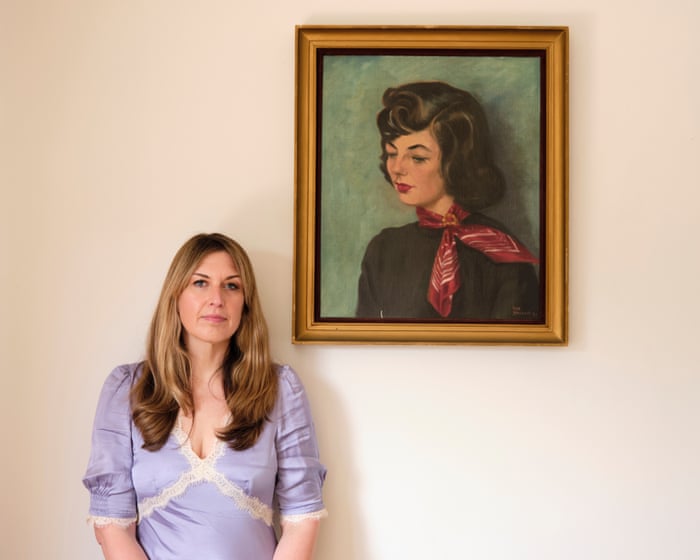
Daisy Buchanan is the author of All Grown Up, published by Century on 4 June (£16.99). To support the Guardian, buy a copy at guardianbookshop.com. Delivery charges may apply.
Frequently Asked Questions
Here is a list of FAQs based on your experience written in a natural conversational tone with clear and direct answers
Frequently Asked Questions Getting Punched on the School Bus How Bullying Changed Me
BeginnerLevel Questions
Q What happened to you on the school bus
A I was punched by another student It was a sudden physical attack that was part of a larger pattern of being bullied
Q How did the bullying affect you at the time
A It made me feel scared alone and humiliated I didnt want to go to school and I started to lose trust in people
Q Did the bullying just happen on the bus
A No the bus was just one place it happened The bullying followed me into the hallways the cafeteria and even online The bus incident was a breaking point
Q What does it mean that the bullying influenced one of the biggest choices you ever made
A It means that the experience of being bullied was so powerful that it directly shaped a major life decisionlike changing schools moving switching friend groups or choosing a different career or hobby
IntermediateLevel Questions
Q How did the bullying change you as a person
A I became much more cautious and anxious But it also made me more empathetic to others who are struggling and it taught me to stand up for myself and for people who cant
Q What was the biggest choice you made because of the bullying
A I decided to switch to a completely different school I realized that staying in that environment was destroying my mental health so I chose to start over somewhere new
Q Was switching schools a good decision
A It was incredibly difficult at first but yes it was the right choice for me It gave me a fresh start and a chance to build a life where I wasnt defined by being a victim
Q Did you tell your parents or teachers about the bullying
A Eventually yes At first I was too embarrassed and scared But when I finally told my parents they helped me make the decision to change schools
Q Why didnt the school do anything to stop the bullying
A Thats a complicated part of the story Sometimes schools dont see the full picture