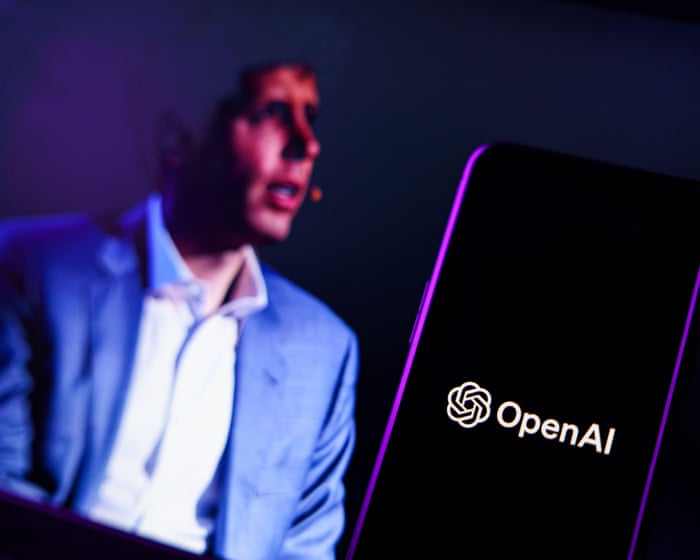
OpenAI, the creator of ChatGPT, is projected to lose $14 billion this year. Its market share is shrinking, and CEO Sam Altman has acknowledged the company made a mistake with part of its product. Its decline could accelerate with just 10 seconds of your time.
A grassroots movement called QuitGPT is spreading, urging people to cancel their ChatGPT subscriptions. Over a million have already done so, with support from figures like Mark Ruffalo and Katy Perry. This is one of the most notable consumer boycotts in recent years, and it’s time for Europeans to participate.
The boycott was sparked earlier this year when it was revealed that OpenAI’s president, Greg Brockman, donated $25 million to Maga Inc, Donald Trump’s largest Super Pac, making him Trump’s biggest donor in the last election cycle. When questioned by Wired, Brockman claimed his donations were meant to further OpenAI’s mission of benefiting “humanity.”
Here’s what that mission looks like in reality. Employees of ICE—the agency involved in the deaths of two people in Minneapolis in January—have used a screening tool powered by ChatGPT. The same company behind your helpful chatbot is assisting the government in selecting targets for deportation raids.
And it doesn’t stop there. OpenAI helped launch a $125 million lobbying Super Pac to prevent any state from regulating AI, attacking politicians who try to pass safety laws. The company wants Trump, and only Trump, to set the rules for the world’s most powerful technology. Every month, subscription fees from users worldwide go to a company that is integrating itself into the Trump administration’s repressive infrastructure. This isn’t a conspiracy theory; it’s a business strategy.
The situation worsened last week. When the Trump administration demanded that AI companies grant the Pentagon unrestricted access to their technology—including for mass surveillance and autonomous weapons—Anthropic, the company behind ChatGPT’s main competitor Claude, refused.
The retaliation was immediate and severe. Trump ordered all federal agencies to stop using Anthropic’s technology. Secretary of War Pete Hegseth labeled the company a “supply-chain risk to national security,” a designation usually reserved for Chinese firms like Huawei. He announced that anyone doing business with the U.S. military is barred from working with Anthropic, effectively issuing a corporate death sentence for refusing to help build killer robots.
Meanwhile, what did OpenAI do? That same Friday night, while its competitor took a stand, Sam Altman quietly signed a deal with the Pentagon to replace Anthropic.
Let me be clear: I am not against AI. I use AI tools daily in my work. This isn’t about rejecting technology; it’s about rejecting the notion that we must fund a company that supports authoritarianism.
As a historian, what excites me about this moment is that the most successful consumer boycotts in history share two traits: they are focused and easy to join. QuitGPT fits this perfectly.
First, consider the importance of a clear target. In 1955, Black residents of Montgomery, Alabama, didn’t try to dismantle segregation all at once. They focused on one target—the city bus system—and for 381 days, they walked or carpooled to work. This financially crippled the bus company and helped end segregated transit across the American South.
OpenAI is our bus company. It’s the perfect target because it’s highly vulnerable, burning through money at one of the fastest rates in corporate history.Market share has plunged from 69% to 45% in just one year. Desperate for revenue, the company has even started running ads—something Altman once called “a last resort.” Investors are closely tracking subscriber numbers, and every cancellation is felt.
What sets #QuitGPT apart from movements like #DeleteFacebook or calls to boycott Amazon—campaigns that ultimately failed because the ask was too big—is how easy it is to leave. Quitting Facebook meant losing your social connections, family photos, and community groups. For many, leaving Amazon feels like giving up oxygen. The friction outweighed the principle.
In contrast, canceling ChatGPT takes only 10 seconds, and there are plenty of alternatives that are just as good, if not better. History shows why #QuitGPT has real potential: successful boycotts, like the one against Nestlé in 1977 or Bud Light in 2023, worked because they were focused and simple. They had a clear target, and people had good alternatives.
The most effective boycotts didn’t succeed because millions suddenly became activists. They worked because switching your coffee brand or choosing a different beer was something anyone could do on a Tuesday afternoon. Small actions, repeated by many, can create a political earthquake.
Visit quitgpt.org. Cancel your subscription. If you’re using the free version, delete the app—your conversations still feed the system. Then try an alternative and tell at least one person why you did.
OpenAI’s president bet $25 million that you wouldn’t notice where your money was going—or that you wouldn’t care enough to spend 10 seconds switching. It’s time to prove him wrong.
Rutger Bregman is the author of Moral Ambition, Humankind, and Utopia for Realists. He was last year’s BBC Reith lecturer and is the co-founder of The School for Moral Ambition.
Frequently Asked Questions
Of course Here is a list of FAQs about the claim Stop using ChatGPT immediately Your subscription is funding authoritarian regimes designed to be clear direct and helpful
Beginner Core Concept Questions
1 What does this claim even mean
Its the argument that by paying for a ChatGPT Plus subscription you are directly sending money to OpenAI which then invests in or partners with companies and data centers located in countries with authoritarian governments indirectly supporting those regimes
2 Is this actually true Does my 20 a month really go to an authoritarian government
Not directly no Your subscription fee goes to OpenAI a USbased company The concern is about indirect funding OpenAI spends money on computing power Some of the companies that manufacture these components or the countries where data centers are built have ties to authoritarian regimes
3 Which authoritarian regimes are people talking about
The discussion often focuses on
China Through the use of hardware manufactured by companies with close ties to the Chinese government
Saudi Arabia UAE Through major investment funds from these countries being significant investors in AI companies like OpenAI
4 So is OpenAI owned by an authoritarian government
No OpenAI is headquartered in San Francisco However it has received billions of dollars in investment from Microsoft and other entities including investment funds like Saudi Arabias Prosperity7 and the UAEs G42 These funds now own a small stake in the company
Advanced Practical Questions
5 Isnt this true for almost all tech My phone and laptop were probably made in similar conditions
Yes this is a critical point This is a supply chain ethics issue common to nearly the entire global tech industry The argument is that because AI is so powerful and politically sensitive we should hold it to a higher standard
6 What specific actions is OpenAI taking that cause concern
Critics point to
Investment from funds linked to Saudi Arabia and the UAE
Potential reliance on Chinesemanufactured hardware in its supply chain
Complying with censorship requests in certain global markets which some see as enabling authoritarian control