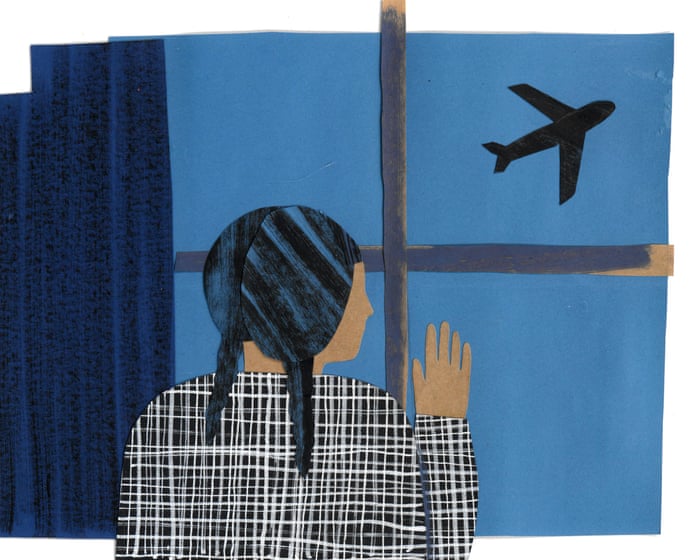
Maria’s daily routine is very different from most 11-year-olds. While other kids her age in her hometown of Târgoviște are still waking up, she’s already making sure her grandmother takes her morning pills.
After school, before she starts her homework, she helps with cooking and cleaning, and gives her grandmother her medication again. When her grandmother needs to see a doctor—sometimes across town, sometimes a two-hour bus ride to Bucharest—Maria is the one who takes her.
During the visits, she sits across from the doctor and listens carefully. Maria keeps track of the medication names, the dosages, how often to take them, what each test is for, and what the results mean. Sometimes this means she misses school, but she doesn’t complain.
“I don’t mind taking care of my grandma,” Maria said, with a calmness beyond her years. “It’s just another activity. I’m used to it.”
Maria has lived with her grandparents since she was three months old. Her parents left Romania for work—first in Spain, then in Germany. They split up, and her mother moved to London to work as a cleaner, while her father stayed in Târgoviște, though he’s mostly absent from her life.
View image in fullscreen
Many children have ended up caring for elderly relatives, managing households, and looking after younger siblings. Photograph: Andrei Pungovschi/Getty Images
Maria is one of more than 53,000 Romanian children who have at least one parent working abroad, according to the latest figures from Romanian social services. Of those, more than 10,000 have both parents or the sole breadwinner working abroad.
But the true scale is hard to measure. Many parents, afraid that reporting their absence might lead to state intervention, leave without officially naming a legal guardian. This means children can face problems enrolling in school or getting medical care without a legal guardian.
Map showing location of Târgoviște
A 2022 study estimates the real number is more than 530,000, with 184,000 having both parents away. The Romanian authorities put the number for the same period at 76,000.
Anca Stamin, program manager at Save the Children, said that besides the figures collected every three months by social services, schools also collect data, and those numbers are two to three times higher.
“There has been a wave of misinformation in disadvantaged communities that the state will take their children away,” Stamin said. “Combined with low trust in authorities and little guidance from the state, it pushes many parents not to formally transfer parental rights to the grandparents or relatives raising their children.”
The exodus of parents began when Romania joined the European Union in 2007. Romania now has the largest diaspora in the EU, with more than 3 million people officially living in the bloc—though the real number is likely higher, according to EU statistics.
Romania remains one of the poorest countries in the EU. Despite years of economic growth, wages are still among the lowest in the bloc. Even after a decade of the fastest minimum wage growth in the EU, the minimum wage lags far behind Western Europe.
For many families in cities like Târgoviște, the math is simple and harsh: a parent working as a cleaner or laborer in London or Frankfurt can earn in a week what they might earn in a month at home. The parents who leave rarely describe it as a choice, but rather as the only way to give their children a better life.
View image in fullscreen
A parent working as a cleaner or laborer in London or Frankfurt can earn in a week what they might earn in a month in Târgoviște (pictured). Photograph: vladispas/Getty Images
“If I could find a job in Romania that paid enough to live without worrying about tomorrow, I would come back tomorrow,” said Diana Sabu, whose eight-year-old son, Edi, is being cared for by his grandmother while his mother works as a cleaner in France.
Many of these children, like Maria, have quietlyThey took on responsibilities that weren’t theirs to carry – caring for elderly relatives, managing households, and looking after younger siblings. Research shows that the emotional impact on children can be severe, with feelings of guilt, withdrawal, anxiety, or aggression being common. Yet access to psychological support for these children remains scarce.
At Christmas, Maria’s mother came home for a month and a half. When it was time to leave, she told Maria she would wake her to say goodbye. But when Maria opened her eyes in the morning, her mother was already gone.
“She never says goodbye when she leaves,” Maria said.
A recent survey found that more than three-quarters of parents abroad say their biggest struggle is keeping an emotional connection with the children they left behind. Nearly half of parents working abroad did not return home for Easter this year, according to the same study, with most citing costs as the reason.
Children also grow up with feelings of guilt because parents often tell them they have to leave for work for their own good.
“Parents make all kinds of promises they don’t keep, and when they fail to follow through, the emotional weight falls heavily on the child,” said Stamin. “In this unstable emotional environment, children are more likely to develop behavioral problems and are at risk of dropping out of school.”
Save the Children runs after-school programs in 50 Romanian schools, including two in Târgoviște, for children whose parents work abroad. The program offers activities, trips, homework help, and a warm meal – a partial substitute for what’s missing at home.
“These children grow up so fast,” said Dana Zoe, the Târgoviște program manager. “But they’re also more sensitive than others. It’s a trauma, and you can see it showing.”
Eight-year-old Edi is part of the program. His mother, Sabu, left for Corsica in April because there was no work for her in Târgoviște. He now lives with his grandmother, Roxana, who does everything she can to care for him. His father has been working in Denmark for five years and visits every few months.
“It’s clear he misses her a lot,” said Roxana. “They left to give the children a better future, but it’s different from how I grew up, with my parents right there beside me.” She pauses. “I don’t think she’ll ever come back for good.”
Sabu works as a cleaner at a campsite with just one day off a week. She earns about €1,600 a month, with accommodation and meals included – a much better deal than she could find anywhere near Târgoviște.
The decision to leave came suddenly, after months of commuting to a job in a nearby town about an hour’s drive from Târgoviște, waking up at three in the morning and getting back at six in the evening. It wasn’t sustainable, so she left.
“The longing is what hurts the most,” she said. “But I’m at peace knowing he’ll have what he needs. We’re learning to manage the distance.”
But when the children are asked directly what they prefer, the answer is always the same, they say. “They say they’d rather be poor and have their parents here,” Zoe explained.
Even so, Edi’s mother stays in touch with him every day. Every evening, she falls asleep on a video call. It is, she said, the only moment in the day that feels meaningful. She plans to return in October, and beyond that, to save enough to buy a home for them.
Darius Gavriș is 17 now, and he talks about his childhood with a perspective that only distance and time can give.
His parents left for Spain when he was three months old, then moved to Italy, where they’ve been living for eight years. He grew up in Târgoviște with his grandparents, surrounded by nine cousins in the same situation: all of their parents – his aunts and uncles – had also left.
Until he was five, he didn’t see much of his parents. Then, until he was 11, he saw them every two years. During the Covid pandemic, fFour years went by without seeing them at all. He remembers watching other kids at school being dropped off and picked up by their parents. “I wanted that too,” he said.
But he’s made peace with his childhood. “It made me stronger, in a way, more ambitious, because I wanted to make my parents proud,” Darius said.
He speaks carefully, without self-pity, but there’s one memory he can’t quite shake. The first time his mother came home to visit, he didn’t recognize her. He turned to his grandmother and asked, “Who is this lady?”
Maria has never had that problem. Her grandmother is the most constant presence in her life, and she sees her as her mother.
She doesn’t want to go to London and leave her behind, even though her brother moved there with their mother a few months ago. She wants to stay and take care of her grandmother. Some nights, if her grandmother isn’t feeling well, Maria stays awake beside her.
“I always fall asleep after my grandma. I need to make sure she’s okay, and then I can sleep,” Maria said.
* Some names have been changed.
Frequently Asked Questions
Here is a list of FAQs about the reality of Romanian families separated by migration focusing on the specific phrase She never says goodbye when she leaves
BeginnerLevel Questions
1 Why doesnt she say goodbye Is she angry
No its not anger She likely avoids saying goodbye to protect herself from the intense pain of the moment A sudden quiet departure feels less devastating than a long tearful farewell
2 Does this mean she doesnt care about her family
Absolutely not In fact its usually the opposite She cares so much that the sadness of leaving is unbearable The silence is a shield against the emotional breakdown that a formal goodbye would cause
3 Who is she in this situation
She is typically the mother or grandmother who is migrating abroad for work In Romanian culture women are often the primary caregivers so their departure is especially painful
4 Is this a common thing in Romania
Yes very common Since the 1990s millions of Romanians have left to work abroad The silent goodbye is a wellknown painful ritual in many families
5 What happens instead of a goodbye
She might leave very early in the morning while everyone is asleep Or she might say a casual Im going to the store and simply not come back Sometimes she leaves a note or a small gift
IntermediateLevel Questions
6 Is this a cultural tradition or just a personal choice
Its a coping mechanism that has become a widespread informal tradition Its not taught but its passed down through shared family trauma Its a way to make the impossible act of leaving feel slightly more bearable
7 How does this affect the children left behind
Children often feel confused abandoned and betrayed They might stop trusting adults The lack of closure can lead to anxiety anger issues and difficulty forming secure attachments later in life They may also feel guilty for not having said goodbye themselves
8 Is it better for the parent to say a proper goodbye or to leave quietly
There is no easy answer A proper goodbye is emotionally raw and painful for both sides A quiet departure can feel like a lie Many experts now recommend a planned