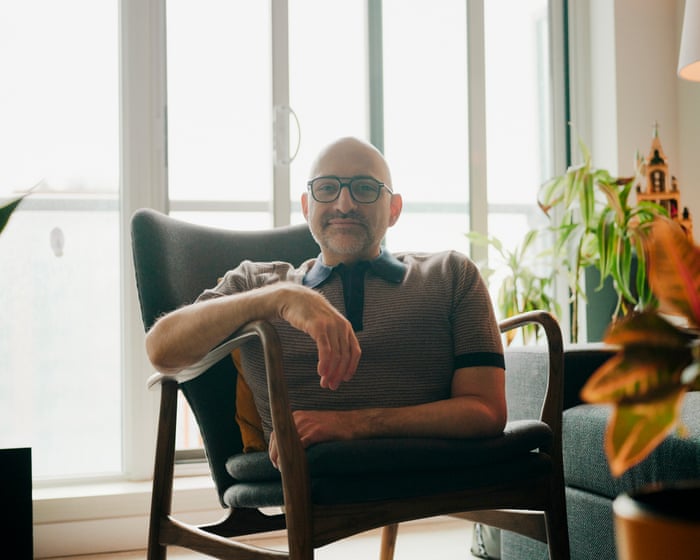
I was born with a rare genetic condition called sacral agenesis, which meant my legs didn’t work. When I was five, I had surgery to have them amputated. Doctors told my parents I might never be able to sit up, let alone live a normal life. But as a kid, I wanted to try everything, and my mom and dad were great at encouraging me.
I learned to get around by walking on my hands. I also used a wheelchair, or I’d cruise around my neighborhood in Wyoming on a skateboard, just like other kids.
I went to university in Utah and graduated with a degree in communications in 2003, right when the job market was terrible. I worked in client operations, but I wanted something more meaningful.
Then, in 2008, a friend invited me on a volunteer trip to Kenya with a nonprofit organization. Seeing how development work was done in a different part of the world, and meeting schoolkids who were interested in my story, helped me find my passion. I started working for the organization as a motivational speaker. I moved to Toronto and then traveled the world, sharing my story to encourage young people to make a difference. But I kept thinking, “I haven’t actually done that myself.”
In 2011, the organization’s founder told me he had climbed Kilimanjaro and asked if I’d consider it. I thought he was crazy, but within days I started wondering if I could.
I asked my friends Alex and David to join me, and I got support from doctors, a local climbing expert, a personal trainer, and my employer. I suggested using the climb to raise $500,000 for clean water in East Africa.
We all found it harder than expected. I planned to do half of it in a wheelchair, but it was impossible to use on the terrain.
I spent a year fundraising and working with a personal trainer. In June 2012, we boarded a plane to Tanzania.
On day one, the weather was good and we were excited. I wore padded rowing gloves and planned to climb half the way on my hands and half in a wheelchair—but the chair was useless on the terrain. Over seven hours, I did 80% of the climb on my hands, with dust spraying in my face. We all found it tougher than we thought and were nervous about day two.
We tried a setup where two porters could hook my wheelchair to themselves and carry me overhead. It was fun at first, but they walked fast and I ended up ahead of my friends, which wasn’t great.
Luckily, we soon found a rhythm. Over the next few days, we started at 6 a.m. with me being carried in the chair. Then, when possible, I walked on my hands through the alpine desert and then the lunar desert above the clouds. By day six, heading toward the 5,895-meter (19,341-foot) summit, there was snow, ice, and strong winds. It felt like one step forward and two steps back. I switched to thicker gloves. The terrain was rough, the slope was steep, and the altitude made it hard to breathe. My friends were throwing up, but I was okay—we joked it was because of my height.
Summit day involved a zigzag trail to Kilimanjaro’s rim. We got up at 4 a.m. A porter wrapped me in a blanket and tied me to his back for the first part because it was too dangerous to go by hand. My friends thought I looked cute.
I walked the rest of the way, and at the summit, as we watched night turn into day, we collapsed, hugged, and cried. I had gone through four pairs of gloves. I drank my grandparents’ homemade wine and looked down at the curve of the Earth.
The climb gave me a lot of time to reflect. I learned how important it is to ask for help—it shaped every part of my journey.
It also helped me professionally. I started speaking to bigger audiences. When the nonprofit I worked for closed, I continued my work on my own. I became interested in disability justice and started creating online content about the challenges.I’m 45 now, and I know my body couldn’t climb a mountain anymore. But when I talk to audiences, I relive those memories. I wrote a book called Breaking Free, where I share what I’ve learned from my experiences to help others realize they can move past whatever’s holding them back, too.
People often ask me, “Where do you get your resilience?” The truth is, I don’t have a choice. I can either be resilient, or I can’t live the life I want.
As told to Deborah Linton
Do you have a story to share? Email experience@theguardian.com
Frequently Asked Questions
Here is a list of FAQs about climbing Mount Kilimanjaro using only your hands written in a natural conversational tone with clear answers
BeginnerLevel Questions
1 Wait you climbed Kilimanjaro with just your hands What about your feet
No my feet were definitely involved The phrase using only my hands means I didnt use any climbing equipment like ropes harnesses or ice axes I climbed using my hands and feet to grip the rock and snow but I still wore boots and used my legs for most of the walking and climbing
2 Is that even possible Isnt Kilimanjaro a technical climb
Its not the typical way but yes its possible on certain routes Kilimanjaro is a walkup mountain not a technical rock climb Most people walk up it However some routes like the Western Breach or certain sections of the Umbwe Route involve scrambling Doing the entire mountain without any technical gear is extremely rare and dangerous
3 What does using only my hands mean exactly No ropes or anything
Correct No ropes no harnesses no carabiners no ice axe and no crampons It was just me my hands my feet and the mountain I relied on my grip strength and balance to climb steep loose rock and icy sections
4 Why would anyone do that Isnt that incredibly dangerous
Yes it is incredibly dangerous People do it for the extreme challenge to test their physical and mental limits and to experience the mountain in a raw unfiltered way Its a personal quest not a recommended or safe way to climb
5 How long did it take you
The same as a normal climbabout 6 to 8 days The only hands part didnt make me faster In fact it made it much slower because I had to carefully find handholds and test every rock before putting my weight on it
IntermediateLevel Questions
6 What was the hardest part of climbing with your hands
The hardest part was the