What do Donald Trump, Vladimir Putin, and Benjamin Netanyahu have in common? The answer: a deep inability to tell right from wrong. These three leaders, who are currently causing the most harm in the world, share a tendency toward violence, a chilling lack of empathy, and an extraordinary sense of self-importance mixed with paranoia. But the trait that ties them together most closely is their rejection—or failure to understand—basic moral standards. Worse still, these men typically act, at least in their public lives, in ways that are fundamentally immoral. And that’s a problem for everyone. Their moral sickness is contagious.
Ideas about what, in absolute terms, is right and wrong have always been debated, as moral philosophers from Aristotle to Kant have shown. Pope Leo, the leader of the world’s Catholics, recently warned that “we are living in a time when it is becoming difficult even to recognize what is truly good for everyone.” Yet most people, most of the time, follow a personal moral code that they share with others. For example, there is broad agreement that it’s wrong to kill, steal, cheat, and lie. In what seems like a secular age, 76% of people worldwide identified with a religion in 2020—a strong sign of individual and collective morality.
Putin’s Russia deliberately fires missiles at Ukraine, randomly killing civilians. In most people’s view, that’s immoral. Netanyahu’s Israel is still committing genocide by targeting Gaza’s children, according to the UN. That’s immoral too. And the defining immorality of the Trump regime knows no limits. The US vice-president, JD Vance, claimed last week that the Watergate scandal, which shattered Richard Nixon’s presidency, wouldn’t be a big deal today. Nixon conspired to undermine the US constitution, acted criminally, and lied to the American people. But as Vance’s comments suggested, such behavior is now considered normal.
The normalization of immoral conduct in public office may be Trump’s lasting legacy. Abroad, it ranges from extrajudicial killings in the Caribbean, to betraying Ukrainian and European allies, to bowing to Beijing’s human rights abusers. The mass killing of primary school children in Minab at the start of the unlawful US-Israel war on Iran was militarily inept and morally unforgivable. Yet this atrocity isn’t so much covered up as arrogantly ignored. At home, Trump’s name is synonymous with crypto-greed, blatant corruption, and sleaze. But his shameless message is clear: all this is normal now.
International law, in theory, upholds a separate, impersonal moral code. Yet its rules are routinely bypassed, and its indictments ignored. Other moral imperatives, like a strong sense of civic duty and social responsibility, are also fading in a polarized age. Jeremy Bentham’s utilitarian idea—that what is moral depends on how much it improves overall well-being—has little relevance today. In a modern political wasteland dominated by billionaires, war criminals, mega-corporations, AI, and arms dealers, the greater happiness of ordinary people barely matters.
Principles that modern progressives and liberals once thought unchangeable, such as tolerance and equal rights, are being undermined by unprincipled far-right nationalist-populist reactionaries. Elected Western politicians who appease autocrats, excuse the inexcusable, and label their opponents as terrorists are fueling this harmful moral collapse. Yet the blame is shared. Every citizen, high or low, who fails to speak out is also potentially complicit.
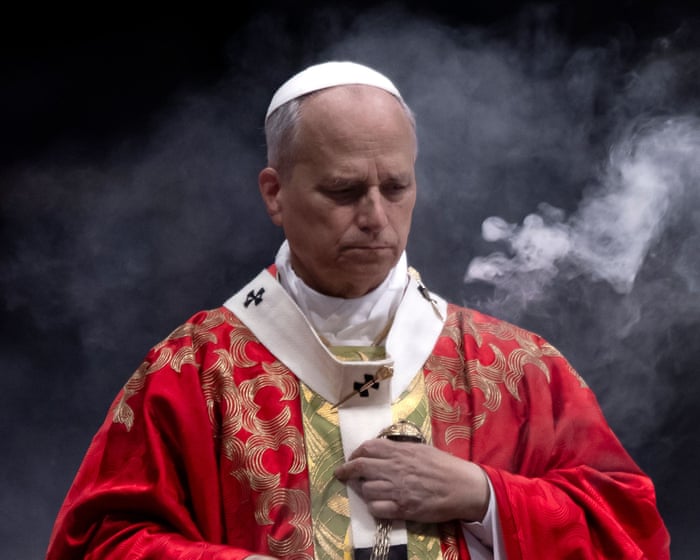
Where can moral leadership be found in these uncertain times? Pope Leo, for one, is trying to find a way out of the swamp. Speaking in April, he condemned “a world ravaged by a handful of tyrants,” leaving little doubt in Washington, Moscow, and Jerusalem about who he meant. He has repeatedly criticized the evils of war-making and the failure to fund the global fight against poverty, ignorance, and disease. And he has strongly condemned Vance and the US defense secretary, Pete Hegseth, who claim divine justification for their actions.Pope Leo said, “Woe to those who manipulate religion and the very name of God for their own military, economic, and political gain, dragging what is sacred into darkness and filth.”
But Leo doesn’t just talk—he has a plan. Last weekend in Rome, he led a “consistory,” a rare gathering of all the Catholic church’s cardinals, to tighten the just-war theory of St. Augustine and St. Thomas Aquinas. This theory is often twisted to justify so-called preventive wars of choice. Leo argues that war is only morally acceptable for “proportional self-defence” and only after all peaceful options have been tried. “War is never worthy of humanity, and it is never blessed by God,” he told the cardinals. “War is not merely a conflict between states,” but comes from “a culture of power.” The world must “rebuild a culture of cooperation.”
This struggle over the soul of today’s newly confrontational world order has drawn in Islamic and Jewish religious leaders, as well as other Christian groups. Sarah Mullally, the newly installed archbishop of Canterbury, defiantly called for “faithful resistance” to Israel’s expanding occupation when she met Palestinian Christians in the West Bank last month. The international community has a “moral responsibility” to ease the deep suffering there and in Gaza, she wrote in a pastoral letter—and the time to act is now. Middle East conflicts, she said, are “symptomatic of a deeper political and spiritual crisis—an abandonment of international law and an increasing recurrence of military force.”
You don’t have to be religious to value truth, justice, and human decency. Looking back, it was usually people on the right—social conservatives like Mary Whitehouse, Thatcherite ideologues, and evangelical preachers like Billy Graham and Jerry Falwell—who talked about moral decay and the need for moral revival. The left avoided that kind of language, afraid of sounding judgmental or bossy. But old taboos are fading. The secular outlook is changing.
A return to agreed standards of moral behavior in international affairs and public life is crucial if we want to avoid even more disruption, instability, and conflict. For Britain’s soon-to-be prime minister, Andy Burnham, and other would-be change-makers across Europe—and for every citizen, too—this is becoming a central challenge of our time. When considering each new decision, policy, or plan, we must ask: it may be politically, economically, or militarily desirable—but is it the right thing to do? If it’s morally wrong, it won’t work.
Speaking for tyrants everywhere, Trump declared in January that only one thing held him back: “My own morality … it’s the only thing that can stop me.” Here, in the flesh, is the “darkness and filth” Pope Leo warned about—because, truth be told, Trump is utterly, sickeningly immoral. He and other might-makes-right authoritarians don’t think about doing good, only about their own selfish goals. Their immoral delusions of godlike power are the ultimate obscenity. Today’s progressive moral majority must find its voice—and cast them out.
Simon Tisdall is a Guardian foreign affairs commentator.
Do you have an opinion on the issues raised in this article? If you would like to submit a response of up to 300 words by email to be considered for publication in our letters section, please click here.
Frequently Asked Questions
Here is a list of FAQs based on the quote by Simon Tisdall The immorality of world leaders spreads like a disease Thank goodness for the pope
BeginnerLevel Questions
1 What does Simon Tisdall mean by immorality spreads like a disease
He means that when powerful leaders act dishonestly or unethically it influences other leaders and people to do the same Its like a contagious sickness that can corrupt governments and societies
2 Why does the quote say Thank goodness for the pope
The pope is seen as a rare example of a global leader who consistently speaks out about morality justice and caring for the poor Tisdall is thankful that someone in a position of power is trying to fight that disease of corruption
3 Is this quote criticizing all world leaders
No not all Its criticizing the general trend of unethical behavior among many powerful leaders not every single one The pope is highlighted as a positive exception
4 What kind of immorality is the quote talking about
It could include lying to the public accepting bribes starting wars for profit ignoring human rights or putting personal power above the needs of ordinary people
IntermediateLevel Questions
5 Why does Tisdall compare immorality to a disease instead of just calling it bad behavior
Calling it a disease emphasizes that it spreads quickly and silently infecting entire systems It suggests that immorality isnt just a single bad actits a systemic problem that can weaken trust in governments and institutions
6 Does the quote suggest the pope is perfect or without flaws
No The phrase thank goodness for the pope is about his moral voice and leadership on issues like poverty and peace not about him being flawless Its recognizing that he stands out in a world where many leaders are failing ethically
7 How can a leaders immorality spread to other countries
Through diplomacy trade and media For example if a powerful leader normalizes corruption other leaders may feel its acceptable Also unethical actions can trigger retaliation creating a global cycle of distrust