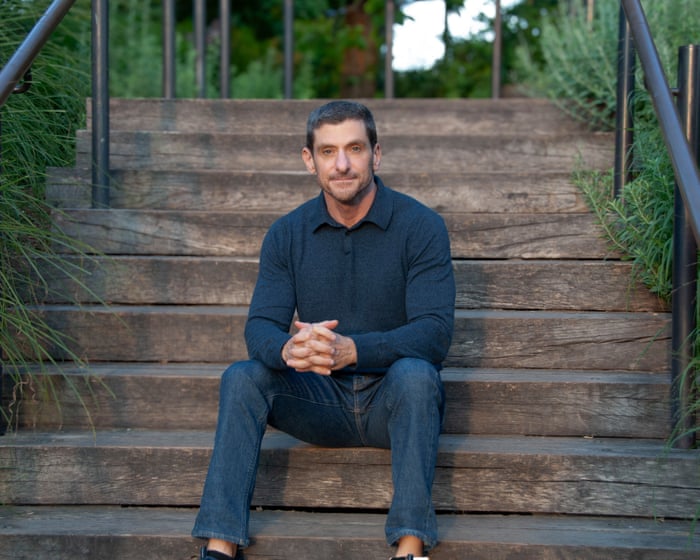
Amir Levine has spent the last 16 years quietly working on a second book. When Attached, which he co-wrote with Rachel Heller, was published in 2010, it introduced the concept of attachment styles—how we behave in relationships—to a wide audience. According to attachment theory, you might be anxious (often leading to social hypervigilance), avoidant (independent and prone to suppressing difficult emotions), fearful-avoidant (craving closeness but often pulling away in fear), or secure. Understanding your own style and that of your significant others offered valuable insights for self-awareness and relationship harmony.
Since then, Levine has received countless emails from readers worldwide, either seeking advice or sharing how the book changed their lives. “I got an email from a woman in Iran,” he recalls. “She said she realized she was with someone very avoidant. She was able to end that relationship and found someone else who was secure.” Because she felt better equipped to communicate her needs with her new partner, she experienced an orgasm for the first time. Drawing from these stories, along with research into the neuroscience of attachment and neuroplasticity, and his work with therapy clients, Levine has now compiled tools to help anyone become more secure.
As a busy therapist and associate professor of clinical psychiatry at Columbia University in New York, I imagine these unsolicited emails added a significant amount of unpaid work over the years, but he doesn’t see it that way. “This is my longevity hack,” he says from his home in Miami. As his new book, Secure, explains, positive connections with others help rewire our brains to become more secure—and living in a secure mode is linked to a longer life.
“Create what I call a secure village and foster secure bonds,” he says. “A meta-analysis of 300,000 people showed that this can reduce mortality by 50%.” Various studies followed participants for periods ranging from months to 58 years. “That’s incredible. No amount of supplements or peptides even comes close.” It makes sense—whenever centenarians are interviewed, they often seem to be part of close-knit communities.
Secure people tend to be healthier, Levine writes. If they do get sick, they experience fewer symptoms and feel less stressed about it. “When we feel safe, our stress response decreases, which reduces inflammation and related issues. It’s really fundamental,” he says. A 1997 study in which people were exposed to a common cold virus found that those with stronger social connections were less likely to develop symptoms. Similarly, secure individuals seem less susceptible to consumerism, better at resisting online ads, and less negatively affected by social media. Studies also show that people with stronger social ties have better cognitive function and greater brain volume in old age. They are even more effective and resilient when job hunting.
Levine offers many examples of how attachment styles can affect work life. Take Luke, 32, who earned a promotion and found himself managing a team for the first time. Because Luke is avoidant—meaning he struggles with closeness and thrives on independence—he takes on all the complex tasks himself and doesn’t delegate well. Despite working extra hours, his team’s output declines and deadlines are missed.
Then there’s Levine’s example of a worker with an anxious attachment style, who spent a week recovering from the flu in emotional distress because their boss replied to their sick email with just a curt “OK.” Someone with a secure mindset might have thought: Great, they replied even though they’re busy. I’ll focus on getting better.He is confident that anyone can rewire their brain, settle into a secure state, and reap rewards that go far beyond better romantic and family relationships. But he also emphasizes that the traits of anxious or avoidant individuals can be superpowers.
Anxious people are highly sensitive to others’ feelings and are often the first to notice danger and sound the alarm. Just as these individuals evolved to be community lookouts, others evolved to need time alone. Levine writes: “[Avoidants] often function well under pressure at work, are capable of making tough decisions independently and carrying them out with precision.”
There are many paths to a secure state. Having worked with people for years using what he calls “secure priming therapy,” Levine’s book addresses every possible question and hesitation. Over time, attachment theory has revealed many nuances. First, our attachment style isn’t fixed for life based solely on how we were parented. Second, we can have different attachment styles with different people. You can explore this by taking Levine’s online attachment questionnaire for various relationships—you can even include your pet. In fact, pets have their own attachment styles, as my clingy cat demonstrates. “People think: oh, cats are really aloof,” says Levine. “Some cats really love closeness.”
Insecurity can strike at any age. “I have a bit of a sad story,” he shares. A woman he knew, single for many years and very independent, met someone in her 80s who moved in with her. “It sounds like a wonderful story, and at first it was, but this person was easily hurt and jealous.” Whenever something upset him, he would ignore her for weeks.
“It really affected her deeply,” says Levine. “She died from heart disease. I personally believe it worsened her condition because of the constant emotional ups and downs—our bodies react to that. But at any age, you can suddenly be thrown into very painful, insecure situations.” Stories like this are part of why he wrote the book: “to provide tools to avoid reaching that point, because the cost can be very high.”
Levine’s website also offers a questionnaire to identify your general attachment style. This process of self-reflection gives you “your attachment topography,” he says. Simply realizing that attachment styles are more flexible and often shaped by others’ behavior can be freeing and validating. It also helps to identify the people you feel most secure with. “You can use that as a way to foster change by increasing your interactions with them,” he explains. Taking small, consistent steps over time to nurture secure relationships and distance yourself from insecure ones can help rewire your brain.
“Secure people tend to be healthier,” says Levine. “Our brain is incredibly socially aware. Our greatest asset is our ability to collaborate. We’re physically weak animals, yet we rose to the top of the food chain and reached the moon—all because we can work together.” Social species have evolved to feel safer in groups, and our brains constantly scan for others. Humans take this a step further with what Levine calls “crowdsourcing neurocircuitry.” He writes: “Not only can humans sense the number of people around them and feel safer as a result, but they can also assess their safety based on the quality of those relationships.”
He adds that our brains have a limited amount of energy at any given time. If we feel unsafe, anxiously searching for elusive support or dwelling on worries, that energy gets drained, leaving less for everything else.When we dwell on why someone didn’t call, we use up energy that could be spent on creativity, making plans, or nurturing good relationships. In short, feeling insecure is draining. If you tend to avoid closeness, energy goes toward suppressing the parts of your brain that respond to social connections.
As Levine explains, being excluded or ignored causes emotional pain and self-doubt. We wonder: What does it mean? Did I do something wrong? Am I less important to them? Being snubbed triggers the same brain areas as physical pain, and even something like paracetamol can lessen that emotional sting.
You might start hearing people talk about “Carrp” soon. This is Levine’s acronym for the five pillars of a secure, connected life: consistent, available, responsive, reliable, and predictable. By being Carrp toward others and surrounding yourself with Carrp relationships, you can move toward a more secure attachment style.
Consider Eric, who never felt good enough for his critical father. His supportive mother couldn’t change the father’s behavior and simply advised Eric to avoid upsetting him. Over time, this once-social and successful teenager withdrew from friends and sports.
By chance, a friend recommended a therapist who turned out to be very Carrp. She encouraged Eric to call whenever he needed and, when he mentioned avoiding sports due to his father’s mockery, she suggested they jog together during a session. Gradually, as trust grew, Eric quieted his inner critic and felt more content—his brain literally rewired toward security.
We can have different attachment styles with different people. Thankfully, Levine only uses one more acronym: Simis, or seemingly insignificant minor interactions. For example, when we started our conversation, Levine noticed the sun through my window, and I talked about the weather—a classic Simi. He now sees such small talk as valuable, a shared experience that helps us connect.
Neuroscience shows that these everyday interactions, even brief ones, can strengthen or reshape our neural pathways. Positive Simis can help heal past hurts by creating new, positive experiences.
One of Levine’s most freeing ideas is that our attachment style isn’t permanently set by our parents. Believing it’s fixed can be a trap. As he notes, we can’t be defined by something that happened at age three. The causes are complex—blending life experiences, genetics, and even epigenetic factors passed through generations. We’re far beyond simple nature vs. nurture debates; it’s all much more intricate and nuanced.Charlie, the dog. Photograph: Shira H. Weiss
He also aims to ease the cycle of parents anxiously worrying that their own behavior has caused anxious attachment in their child—often, it’s a chicken-and-egg situation. “Consider how much more difficult it is to raise a child with this heightened sensitivity. It’s simply harder,” he notes.
Moreover, he explains that pinpointing causes isn’t always needed to make changes. In fact, focusing too much on causes can become “a kind of internal gaslighting: telling yourself that because something happened to you, that’s why you’re reacting this way.” This can get in the way of recognizing that what you’re experiencing is real, unhelpful, and needs to be addressed—it can downplay both the situation and your valid feelings.
He admits to feeling somewhat nervous about how the book will be received. He isn’t dismissing trauma therapy or saying more conventional approaches are wrong, he clarifies. Rather, this method is what has proven effective for him and his clients, based on his neuroscience research and therapy practice. “I don’t know how people will respond,” he says. “I’m a little scared about it.”
Secure by Amir Levine was published on 14 April (Cornerstone Press, £22). To support the Guardian, order your copy at guardianbookshop.com. Delivery charges may apply. Levine will appear at the How To Academy at the Royal Geographical Society in London on 1 May.
Frequently Asked Questions
FAQs The Secret to Emotional Wellbeing
Getting Started The Basics
What exactly is emotional wellbeing
Emotional wellbeing is your ability to understand manage and express your feelings in a healthy way It means you can handle lifes ups and downs feel generally good about yourself and build positive connections with others
Is this just about being happy all the time
No not at all Emotional wellbeing includes the full range of human emotionssadness anger and fear too The secret is not avoiding negative feelings but learning to navigate them skillfully so they dont control you
What are the main benefits of improving my emotional wellbeing
Youll likely experience less chronic stress and anxiety bounce back from setbacks faster enjoy deeper and more satisfying relationships and have a greater overall sense of life satisfaction and purpose
Common Challenges Problems
I often feel overwhelmed by my emotions Where do I even start
Start small Simply practice naming your emotion without judgment Instead of Im so angry try Im feeling frustrated right now This simple act of labeling creates a tiny bit of space between you and the feeling giving you more control
My relationships keep hitting the same rough patches How can emotional wellbeing help
Strong emotional health improves communication It helps you listen without immediately reacting express your own needs clearly and empathize with others perspectives which are the foundations of resolving conflict
I know I should practice selfcare but I feel guilty taking time for myself
This is common Reframe selfcare not as a luxury but as essential maintenance You cant pour from an empty cup Start with 510 minutes a day for an activity that genuinely recharges you like a walk or listening to music
Practical Tips Daily Habits
Whats one simple daily habit I can adopt
Practice gratitude Each day write down or mentally note three specific things youre grateful for This trains your brain to scan for the positive which can gradually improve your overall mood and outlook
How can I handle a difficult emotion in the moment like a surge of anxiety or anger
Try the STOP technique