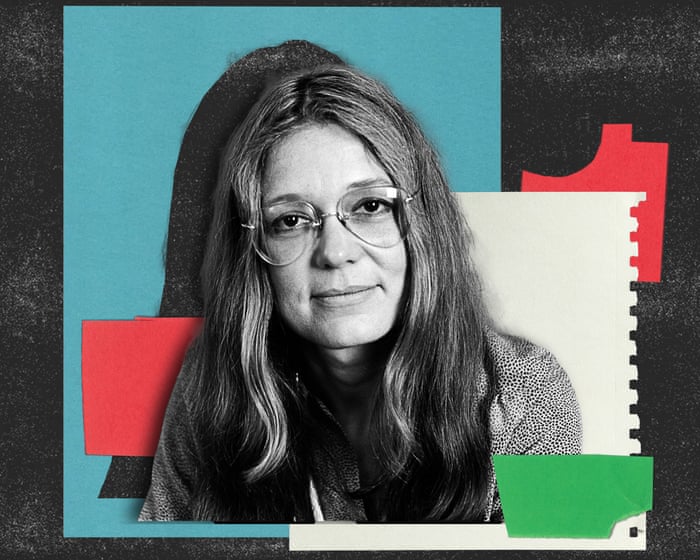
I’m grateful for the role Gloria Steinem played from the 70s to the 90s
Rebecca Solnit, Guardian US columnist and author
As far as I can tell, the US women’s movement was mostly centered in coastal cities and university towns until Ms. magazine, which Gloria Steinem co-founded and co-managed for many years, made it a national cause. My mother, living in suburban California, was an early subscriber, and I was a preteen who eagerly read every issue. I think it helped strengthen her resolve and her sense of her own rights, which ultimately led her to leave my violent father.
Some of the quick, dismissive takes I’m seeing now about Steinem and the women’s movement she was central to remind me that many people have no idea what women’s lives were like before second-wave feminism. They don’t know how women were routinely described as weaker, less intelligent, less rational, and less objective than men—and therefore less believable, less qualified to work, testify, or participate. They don’t understand how completely disempowered and excluded women were in both law and society, how women were made radically unequal economically in countless ways, including being shut out of professions and education, and lacking rights to equal pay or protection from workplace sexual harassment and discrimination. They don’t remember how marriage was a relationship of deep inequality, where a woman gave up many rights and her identity to her husband, not even keeping the right to say no to sex—until feminist pressure made marital rape a crime in more and more American states during the 1970s and 1980s.
We now face a huge backlash, maybe even bigger than the one we’ve always faced, but I believe feminism is just getting started in reversing not just centuries but millennia of patriarchy. I’m grateful for the role Gloria Steinem played in giving those decades from the 1970s to the 1990s the transformative energy that has made my life so much better, in so many ways, than my mother’s—let alone my grandmother’s.
Her relationships with women of color shaped her feminist activism
Rokhaya Diallo, French journalist, writer, filmmaker, activist, and Guardian Europe columnist
Gloria Steinem understood early on that the feminist struggle would be fought through the media as well as through campaigning, and she inspired generations of journalists, including me. As co-founder of Ms. magazine, the first in the US run entirely by women, she strengthened the link between journalism and activism.
Steinem’s feminism was more attentive to race than that of many of her white contemporaries in the “second wave.” Her first explicitly feminist essay, “After Black Power, Women’s Liberation,” shows a sharp understanding of the need to connect feminist struggles with other movements for justice. She wrote about poor women and mothers, and imagined an alliance between radical feminists, middle-class women, and “poor women of all colors,” though some of the dated language may now seem offensive. Her relationships with prominent women of color—including Dorothy Pitman Hughes, Shirley Chisholm, and Wilma Mankiller—shaped every part of her work. As she acknowledged: “Personally, I learned feminism disproportionately from Black women.” In 1971, she served as treasurer of the fund for the legal defense of Angela Davis, the Black feminist philosopher who was unjustly prosecuted for murder and faced the death penalty.
Steinem used her privilege as an educated white woman with access to elite media circles, but she couldn’t escape the dynamics of public life that made her “the face of feminism” within a diverse and collective movement: the names of the women of color who stood alongside her haven’t left the same mark on public memory.
While I admired Steinem greatly, I regretted that her feminism remained so closely tied to the Democratic party. This led her toIn 1998, she defended Bill Clinton and downplayed Monica Lewinsky’s accusations, only to admit two decades later that she had been wrong. Her support for Hillary Clinton also revealed the limits of a feminism that focused mainly on having women in positions of power.
But in a time when “femonationalism” is on the rise—using women’s rights to push nationalist and racist agendas—Steinem’s legacy reminds us that we urgently need a feminism built on international solidarity and a commitment to fighting all forms of oppression.
Gloria’s kindness and empathy were like steroids that strengthened us
Mona Eltahawy
Egyptian-American journalist and author of the FEMINIST GIANT newsletter
A couple of days after Egyptian riot police attacked me during a protest near Tahrir Square in November 2011, Gloria Steinem emailed me with news of what she called my “girl gang”: feminists and activists from around the world who had been writing to each other to find the best ways to support me. “No matter where you are, please tell me if there is anything at all I can do to make your life easier – or our outrage more effective, with friendship and empathy from your Girl Gang!” she signed off.
I had met Gloria only once before, a month earlier, when the Hammer museum in Los Angeles hosted us for a feminist conversation in front of a live audience. She was a gracious conversational partner who treated me as an equal. We met several times after that, and each meeting reminded me of the power of the feminist girl gang.
I was part of a girl gang of 25 that she invited to send her questions for an Interview magazine column. My question was about how we both chose not to have children. “I would put the emphasis on ‘free.’ It has increased my freedom,” she replied.
I am a feminist who will tell you to fuck off to your face. Kindness and empathy didn’t make it into my second book, The Seven Necessary Sins for Women and Girls. Gloria wrote this blurb for it: “Mona Eltahawy’s Necessary Sins is shocking, brave, gloriously unfeminine, and right on time … Reading it will free you, and acting on it will free us all.”
My “sins”—anger, profanity, violence, and so on—are necessary in our fight against patriarchy. Gloria’s kindness and empathy were like steroids that strengthened us for that fight: batons she passed across feminist generations and borders—and especially vital when that fight against patriarchy leaves us bruised, with broken limbs, and broke. She lent me $1,000 during a particularly tight financial time, and I was embarrassed at how long it took me to repay her. She didn’t seem bothered at all.
Farewell, Gloria. To quote your 2011 email: “you should see the … loving outpouring from your girl gang from around the world!”
She’d want us to remember that the backlash against women is a sign of our power
V (formerly Eve Ensler)
American playwright and activist
I will always be grateful to Gloria for her early support of my play The Vagina Monologues. After she came to see me perform in a small theater way downtown, she agreed to write the foreword to the book. She showed up wearing her red boa at every event we held early on to launch the V-Day movement to end violence against women, gender-expansive people, and girls—now 30 years old—into the world. The Vagina Monologues was very outside the mainstream at the time, and her support helped other people be brave.
View image in fullscreen
Gloria Steinem, Glenn Close, and V at a V-Day benefit performance of The Vagina Monologues in New York, 2001. Photograph: Darla Khazei/Associated Press
She did the same thing for so many women, helping to spark their dreams, their visions, their advocacy, and their emerging non-profits by lending her support, her strategy, and her kindness.
It’s not lost on me that Gloria left this world during one of the greatest periods of attacks on women’s rights—the destruction of maternal health care; women being pushed out of the labor market in the hundreds of thousands, especially Black women; and the siege on reproductive rights.We’re seeing rape academies popping up online, the Epstein files still going unprosecuted, and a convicted felon as president who’s been found liable for sexual abuse in civil court. But if Gloria had anything, it was stamina and endless hope, and she’d want us to remember that backlash is a sign of our wins and our power. Now we need to push past where we’ve been and imagine new ways to fight off the racist, fascist, capitalist patriarchy that’s actively trying to destroy our world.
You can’t write the history of the women’s movement without her.
Julia Gillard
Former Australian prime minister and former leader of the Australian Labor party. She was the first woman to hold either position.
I’m deeply saddened by the passing of feminist icon Gloria Steinem. Gloria was at the forefront of the women’s rights movement as a political activist, journalist, editor, writer, and thinker for over 60 years. You can’t write the history of the women’s movement without her name at the center of it. In fact, her name is a synonym for feminism.
I felt incredibly lucky to interview Gloria in 2022 for A Podcast of One’s Own. At 88, Gloria was as passionate as ever about achieving equality and standing up for others. I really admired her unwavering commitment to the cause, even when progress wasn’t steady and there were setbacks—especially around reproductive freedom in the United States.
Gloria’s dedication to equality and empowering women everywhere, from all walks of life, will keep inspiring people around the world. Her legacy is now ours to carry forward. My heartfelt condolences go out to Gloria’s family and friends.
She was the truth-teller who inspired my grandmother, my mother—and me.
Jennifer Robinson
Australian barrister at Doughty Street Chambers, and co-author of How Many More Women?
When I heard Gloria Steinem had died, everything stopped.
I had just walked out of the Sydney premiere of our documentary, Silenced, which looks at the legal backlash against #MeToo and how the law silences women from speaking out about abuse. Women were leaving the cinema in tears, angry about how far we still have to go—and fired up about what we need to do to change it.
Then we got hit with the news that we’d lost Steinem. It spread in hushed whispers through the crowd in front of me. The grief was overwhelming.
Steinem, the silence-breaker. The truth-teller who inspired millions of women around the world to find their voices and use them. The woman who inspired my grandmother, my mother—and me. My grandmother is a survivor of domestic violence and later worked in the women’s refuge movement to make things easier for the women and children who came after her. She’s in our film because her work inspired mine. I grew up hearing my grandmother quote Steinem, and whenever I speak—including the other night in Sydney—her words and ideas are there.
It hit me hard. I had to pause. I wanted to cry. But then I looked around at the sea of women in front of me—victim-survivors, frontline service workers, lawyers from women’s legal services, and engaged, concerned community members, all inspired to help create the change we need for women.
It was beautiful. And it made me think of one of my favorite Steinem quotes: “People are always asking me, ‘Who will you pass the torch to?’ The question makes me angry. There is no one torch—there are many torches—and I’m using my torch to light other torches.”
In her lifetime, she lit so many torches—all over the world—including in me and among the women gathered with me in Sydney the other night. What an incredible legacy.
As she said, “The future depends entirely on what each of us does every day; a movement of people is only people moving.” The best way to celebrate and honor her legacy is to continue it—and keep moving.
She was passionate about it.Elif Shafak, British-Turkish novelist and political scientist, wanted to connect local, national, and global feminisms.
In my mid-20s, I left Istanbul to become a fellow in women’s studies at Mount Holyoke College in Massachusetts. I arrived knowing no one, captivated by the beauty of the autumn colors in Boston. The libraries there hold one of the best archives in the US on the history of feminist theory and practice. As winter set in, I buried myself in the works of Audre Lorde, Maya Angelou, Doris Lessing, and Toni Morrison — and that was when I truly discovered Gloria Steinem.
Steinem had an unconventional, nomadic upbringing. Until she was 11, she had never spent a full year in school. Without a stable education, it was books — including Louisa May Alcott’s Little Women — that helped and guided her. “I was rescued by librarians,” she would later explain.
I was struck by the courage she showed in exposing the reality behind the glossy world of Playboy Bunny clubs. The magazine she co-founded, Ms., never shied away from covering difficult issues like sex trafficking and sexual harassment. But it was her books that stayed with me: Moving Beyond Words, Outrageous Acts and Everyday Rebellions, Marilyn: Norma Jean…
Steinem believed that any meaningful change had to grow like a tree — from the bottom up. She not only founded women’s organizations and became a leading voice in second-wave feminism, but she also saw the women’s movement as her chosen family. She said she had learned feminism from Black women. For her, race and gender were deeply connected: “It is not possible to be a feminist without being anti-racist.” She was equally aware of class barriers. She passionately wanted to connect local, national, and global feminisms.
When people asked how she managed to stay optimistic, she said it was because she didn’t stay in one place. Just like in her childhood, she kept traveling. “Perhaps the most revolutionary act for a woman will be a self-willed journey — and to be welcomed when she comes home.”
She wasn’t perfect and wasn’t always right, and we also need to be able to talk about that — in a calm and nuanced way. Her contribution to generations of civil rights and women’s rights has been immense and genuine. Gloria Steinem would have made a fascinating character in a novel — with her resilience, her courage, her determination, her trailblazing, and her contradictions.
She would not give up the fight for women’s liberation, and nor must we.
Rhiannon Lucy Cosslett, British Guardian columnist, first encountered Gloria Steinem in much the same way I met her feminist contemporaries — on my mother’s bookshelves, which I ransacked. Although as a teenage girl in the late 1990s I had fully swallowed the post-feminist narrative (much to my mother’s disappointment) that the women’s movement had achieved everything it needed to, I still read every book for adult women I could get my hands on. I credit Steinem’s undercover Playboy Bunny piece — which was excerpted in one of those books — with the fact that I started to question the raunch culture all around me (and never bought a Playboy T-shirt). That is the power of good journalism — it echoes through the decades.
I found Steinem again at university, in the aftermath of a violent attack that galvanized me, as it can so many women, and I have been a great admirer ever since. When I was in my 20s, setting up my own feminist magazine — the Vagenda — her work was a big influence. Her vocal and inclusive activism, her willingness to reflect on her missteps, her sense of humor, and her refusal to give up the fight even when times were very dark have all been an inspiration.
Her book dedication to the British doctor who granted her an abortion at the age of 22, despite it not beingIn being legal—where she writes, “I’ve done the best that I could with my life,” as she had promised him she would—struck a chord with so many for a reason: it’s a deeply moving testament to the freedom that access to abortion gives a woman, especially in the wake of Roe v. Wade being overturned. I find it incredibly sad that Steinem leaves a world where reproductive rights are still under serious threat. She dedicated her life to this and other vital issues of women’s liberation. She wouldn’t give up the fight, and neither should we. Onward, in her honor.
Do you have an opinion on the issues raised in this article? If you’d like to submit a response of up to 300 words by email for possible publication in our letters section, please click here.
Frequently Asked Questions
Here is a list of FAQs about Gloria Steinems legacy and her complex relationship with feminist writers globally
BeginnerLevel Questions
1 Who was Gloria Steinem and why is she so famous
Gloria Steinem is an American journalist and social activist who became the face of the womens liberation movement in the 1960s and 1970s She is famous for cofounding Ms magazine going undercover as a Playboy Bunny to expose sexism and advocating for the Equal Rights Amendment She gave a public voice to the idea that womens issues were actually political issues
2 What does the term courage and contradictions mean in relation to her
It means that while Steinem was incredibly brave in speaking out against injustice her life and work were also full of contradictions For example she fought for workingclass women but was a glamorous mediasavvy celebrity She preached equality but sometimes prioritized the voices of white middleclass women over women of color Acknowledging these contradictions makes her a more realistic human figure rather than a flawless saint
3 Why is she so important to feminist writers specifically
She gave feminist writers a platform Before Ms magazine serious journalism about womens rights was rare She encouraged women to write from their personal experienceswhat we now call the personal is political She proved that you could be a serious intellectual and a popular writer at the same time
4 What is Gloria Steinems most famous quote or idea
Her most famous idea is that The personal is political meaning that problems women face at home are not individual failures but symptoms of a larger political system She also famously said A woman needs a man like a fish needs a bicycle although she later admitted she didnt actually say it but she loved the message
Advanced Nuanced Questions
5 Why do some Black and postcolonial feminist writers criticize Steinems legacy
Many critics like bell hooks and Audre Lorde argued that Steinems feminism was too mainstream and often ignored the intersections of race and class For example Steinem initially worked within a framework that assumed the primary struggle was gender which often sidelined the specific struggles of Black women facing both racism and sexism