There’s been a lot of discussion in America this week about what integrity really means.
You didn’t hear the word directly, but it was hinted at—in wondering whether Lindsey Graham is an immoral opportunist or a clever pragmatist; in suspecting Todd Blanche is more loyal to Trump than to the country; in doubting Erica Schwartz, Trump’s latest pick to lead the CDC, when she said she’d never compromise on science; in questioning whether Jay Clayton, his nominee for director of national intelligence, would ever tell Trump something he doesn’t want to hear.
The word “integrity” comes from the Latin “integer,” meaning “whole” or “complete”—living by your principles, choosing honesty over opportunism, making ethical choices even when they’re inconvenient or unpopular, and keeping your moral compass steady.
Graham’s public record—denouncing Trump on the Senate floor after January 6, 2021, then becoming his most loyal Senate defender—showed someone who traded honesty for influence. That’s a person with little to no integrity.
Blanche, during his hearing to become attorney general, said he wanted to restore trust in the Justice Department. But then he accidentally called himself Trump’s lawyer—before correcting himself to say he “was” Trump’s lawyer. That slip revealed a deeper conflict, shown by his unwavering loyalty to Trump. He lacks integrity.
Schwartz, in her confirmation hearing, undermined her promise to follow science by saying she believed Trump and Health Secretary Robert F. Kennedy Jr. wouldn’t push policies that harm public health. That alone raises doubts about her integrity.
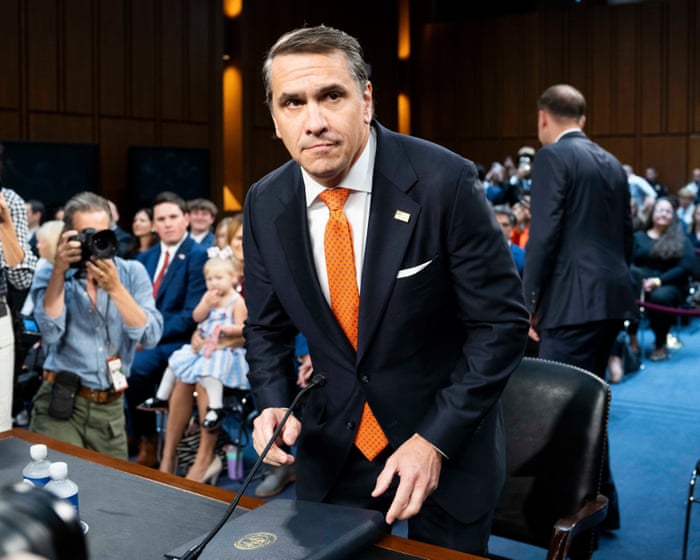
Clayton, in his confirmation hearing, repeatedly refused to say Biden won the 2020 election. Senator Jon Ossoff asked him: “You refuse to answer a basic question about who won a presidential election? But you want to lead America’s intelligence community? Isn’t it humiliating to be unable to answer this question? To have to indulge the president’s delusions? We know, you know, everyone in this room knows the truthful answer. Why can’t you give it?”
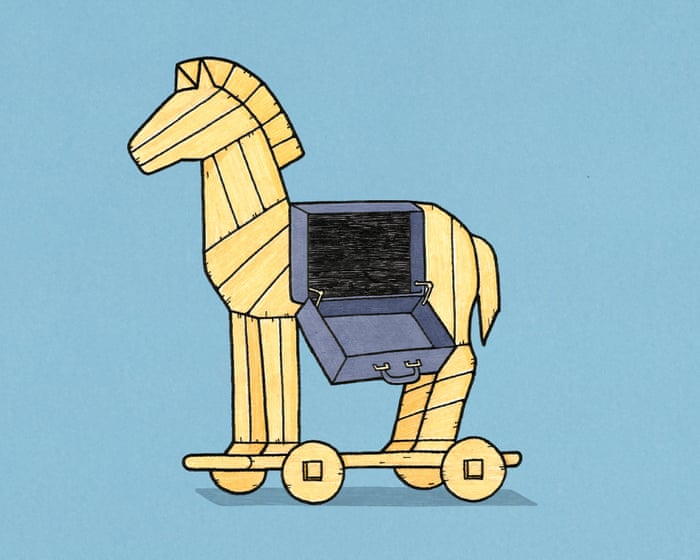
You can’t have integrity and be loyal to Trump. The two are in direct conflict.
No one can be honest in a system built on big lies. As poet, philosopher, and statesman Václav Havel said: “If the main pillar of the system is living a lie, then it’s no surprise that the fundamental threat to it is living in truth.”
So a choice has to be made—personal integrity or loyalty to Trump.
In his book The Art of the Deal, Trump suggested he values loyalty over integrity—just like his mentor, Roy Cohn.
History remembers Cohn for his ruthless bullying, crude boasting, opportunistic bigotry, and endless lies. Like Trump, Cohn had no principles and focused on personal power that could be turned into wealth, influence, and fame. In 1986, Cohn was disbarred in New York for unethical conduct after trying to defraud a dying client by forcing him to sign a will amendment leaving Cohn his fortune. (Cohn died five weeks later.)
Yet in his book, Trump praised Cohn for his loyalty, contrasting him with “all the hundreds of ‘respectable’ guys who make careers out of boasting about their uncompromising integrity but have absolutely no loyalty… What I liked most about Roy Cohn was that he would do just the opposite.”
It’s impossible for Blanche, Schwartz, Clayton, or anyone else in Trump’s circle—just as it was for Graham—to be loyal to Trump and keep their integrity. It has to be one or the other.
But integrity matters more than loyalty. As Trump shows again and again, someone without integrity can’t be trusted. Such a person can’t serve the people of the United States.
Robert Reich, a former US secretary of labor, is a professor of public policy emeritus.He’s at the University of California, Berkeley. He writes a column for Guardian US, and you can find his newsletter at robertreich.substack.com. His new book, Coming Up Short: A Memoir of My America, is out now in the US and the UK.
Frequently Asked Questions
Here is a list of FAQs based on the topic The problem with Trumps newest nominees comes down to one word integrity
BeginnerLevel Questions
1 What does integrity mean in this context
It means honesty strong moral principles and the quality of being trustworthy When talking about a nominee it asks Does this person tell the truth Do they follow the rules Can we trust them with power
2 Why is integrity such a big deal for a nominee
Because nominees are put in charge of important government agencies If they lack integrity they might lie to the public break laws for personal gain or put their own interests above the countrys
3 What is the main complaint about Trumps newest nominees
The main complaint is that several of them have a history of legal troubles ethical scandals or statements that suggest they dont respect the rules Critics say this shows a lack of integrity
4 Can you give a simple example of what lack of integrity looks like in a nominee
Yes If a nominee has been fined for lying on financial forms or if they have been accused of using their previous job for personal profit that would be a red flag for lack of integrity
IntermediateLevel Questions
5 How is integrity different from just being qualified
A person can be very smart and experienced but still be dishonest Integrity is about characterwill they use their skills for the public good or for themselves You need both
6 What specific problems have been raised about some of Trumps recent picks
Problems include nominees with pending criminal charges nominees who have been found liable for fraud in civil court nominees who have made controversial statements about the rule of law and nominees with deep financial conflicts of interest
7 Why do critics say this is a pattern not just a few bad apples
Critics argue that President Trump has consistently chosen loyalists who will not challenge him even if it means overlooking ethical or legal problems They say this shows a system that prioritizes loyalty over integrity
8 What is the process for checking a nominees integrity
The Senate holds confirmation hearings and investigates the nominees background Senators ask tough questions about past behavior The media also