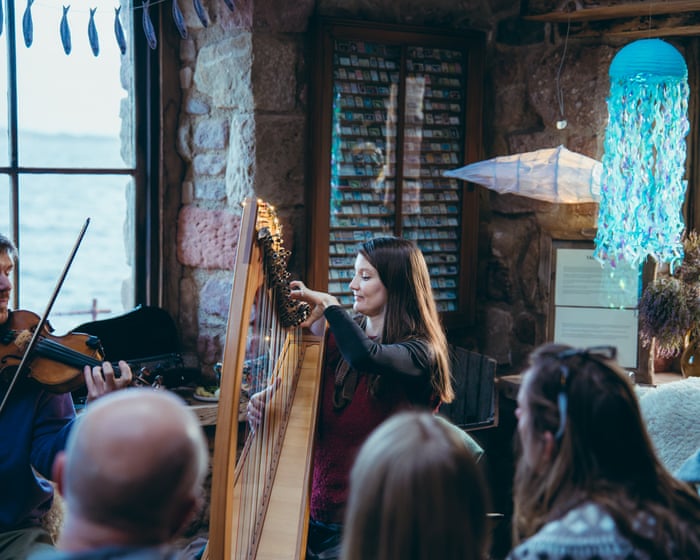
درون یک کلبه کوهستانی مشرف به جزایر سامر در شمال غربی اسکاتلند، صداهای آهنگین یک دوئت سنتی گالیک فضایی را پر میکند که مملو از نوازندگان، داستانگویان، هنرمندان، locals و جشنگیرندگان است، تزئینشده با فانوسهای ماهیشکل و تابلوهای «تولدت مبارک». این یک تولد معمولی نیست. در شبی بادی در آچیلتیبوئی، رشتهای از دهکدهها و روستاهای ساحلی در شمال اولاپول، این مردم در کلبه کوچک گرد هم آمدهاند تا یک نقطه عطف مهم در تاریخ جامعه را جشن بگیرند: نبردی سختبهدستآمده برای محافظت از آبهایشان در برابر تخریب ناشی از لایروبی صدف. از پنجرههای کلبه، خط ساحلی به رنگ خاکستری فلزی به نظر میرسد، پوشیده از بسترهای یکی از متنوعترین و کربنغنیترین زیستگاههای بریتانیا — یک جلبک دریایی صورتی ۹۰۰۰ ساله به نام مرل، که دو بستر از آن یک مایل طول دارند. این جلبک دریایی نادر، شکننده و در معرض تهدید، اسکلتهای سخت، گچی و مرجانمانند تولید میکند که به عنوان پرورشگاه برای صدفها و ماهیها عمل میکنند. اکنون، ۱۰ سال پس از آنکه locals، غواصان، فعالان و ماهیگیران توری موفق شدند کمپینی برای ممنوعیت قانونی لایروبی صدف در یک منطقه ۶۰۰ کیلومتر مربعی (۱۵۰۰۰۰ جریب) که اکنون به عنوان منطقه حفاظتشده دریایی (MPA) تعیین شده است، اجرا کنند، میگویند که قبلاً شاهد احیای چشمگیر حیات دریایی بودهاند. locals میگویند که دگرگونی بستر دریایی آسیبدیده از دههها لایروبی، به جمعیت صدفها اجازه بازیابی داده و به نبردهای ارضی تلخ بین قایقهای ماهیگیری لایروب صنعتی و قایقهای کوچکتر و پایدارتر توری پایان داده است. مشاهده تصویر در تمام صفحه زندگی هایلند با سرعتی آرام در آچیلتیبوئی پیش میرود، مشرف به خلیج بادنتاربات. عکس: CW Images/Alamy مشاهده تصویر در تمام صفحه تخمهای شاهماهی روی مرل. سایت جلبک دریایی نادر ۹۰۰۰ ساله است. عکس: Chris Rickard/BHA باشگاه قایقرانی جامعه و اپراتورهای تور نزدیک گزارش میدهند که مشاهده نهنگها، گرازهای دریایی و دلفینها بیشتر شده است. یک منطقه تخمریزی بزرگ برای شاهماهی — که زمانی در اینجا فراوان بود اما از آن زمان بیش از حد صید شده — در نزدیکی مشاهده شده است، و همچنین در توریهای میگو و خرچنگ، یا قفسهایی که روی بستر دریا گذاشته شدهاند. دیان راس، ۶۵ ساله، هنرمند محلی که فانوسها را ساخته، بخشی از اتحاد امید آبی (BHA) است، ائتلافی از گروهها که از علم شهروندی برای محافظت از اکوسیستمهای دریایی در شمال غربی هایلندز استفاده میکنند. او میگوید دستاوردهای جامعه در محافظت از زیستگاههای زیرآبی «شگفتانگیزترین چیزی است که برای جزایر سامر اتفاق افتاده است. این مجمعالجزایری است که در بهشت برای پرورش ماهی ساخته شده است.» مشاهده تصویر در تمام صفحه اورفلیت مکدوویت، که باشگاه قایقرانی جامعه کویگاچ را اداره میکند. عکس: Samuel James-Griffiths/The Guardian راس در کودکی به یاد میآورد که برای «جعبههایی» از ماهی روغن، لینگ، پولاک و کاد به دریا میرفت — قبل از اینکه جمعیتها کاهش یابند. اما او اخیراً نشانههایی از بازیابی دیده است. او میگوید: «تنوع ماهیهایی که اینجا صید میشوند بیشتر از قبل است» — ماهیگیران در حال صید ماهی روغن و کاد هستند. بیرون روی اسکله، یک ماهیگیر سرسخت در تعطیلات از گلاسکو که با باد مقابله کرده تا آنچه میتواند صید کند، با سه ماهی خالخالی تازه پاداش میگیرد. مشاهده تصویر در تمام صفحه هنرمند محلی دیان راس. عکس: Samuel James-Griffiths/The Guardian بازیابی ذخایر صدف، به گفته آلاسدیر هیوسون، یک غواص صدف، رئیس فدراسیون ماهیگیران توری اسکاتلند (SCFF) و یکی از بنیانگذاران BHA، «عظیم» بوده و دگرگونی بستر دریا مانند «شب به روز» است. یک دهه پیش، یک قایق که صدفهای غواصی دستی را به شرکت او، کلتیک سیفیر، تأمین میکرد، فقط دو هفته را در جزایر سامر میگذراند. هیوسون، که شرکتش صدفها را به رستورانهای بریتانیا تأمین میکند، اعتراف میکند که کسبوکارش از ممنوعیت لایروبی سود میبرد، اما میگوید غواصی دستی پایدارتر است — ادعایی که توسط تحقیقات Open Seas پشتیبانی میشود. سازمان حفاظت دریایی دریافت که روشهای ماهیگیری کمتأثیر، مانند غواصی و توری، نه تنها پایدارتر از لایروبی یا ترال هستند بلکه بیشتر درآمد تولیدشده را در اقتصاد محلی نگه میدارند. اکنون، قایق توری دونا ماری، با ناخدایی گری لوئیس مستقر در اولاپول، تقریباً تمام سال به جزایر سامر میرود. لوئیس، که قبلاً مجبور بودBefore the dredge ban, they would travel farther, to Skye and the Western Isles. "It's not just the catch that's improved, but the general health of the seabed," he says. At the heart of the weekend-long Maerl-Herring festival, which features storytelling, artworks and film, is the public launch of a BHA report covering a decade of citizen science studies. Jason Hall-Spencer, a professor of marine biology at Cyprus University of Technology who wrote the report, says it shows the dredge ban in Wester Ross's MPA—set up to protect the slow-growing maerl habitats and other marine features—has done its job. It has "protected the maerl to a massive extent," he says.
Alasdair Hughson, a scallop diver, SCFF chair and one of the founders of BHA, is pictured. Photograph: Samuel James-Griffiths/The Guardian
Hall-Spencer, author of the Conservation Status of Maerl Habitats in north-west Scotland, partly funded by NatureScot, has carbon-dated the maerl in the bay as 9,000 years old. "If scallop dredgers had spent the last 10 years going up and down here, the habitat would be obliterated," he says. A single pass of heavy towed gear, such as that used by scallop dredgers, can crush or bury up to 70% of maerl. "The seabed is now incredibly rich. Maerl is a very important habitat, chock full of bivalves which provide food for skates and rays."
Peter Drake, 73, a retired prawn fisherman from Polbain, a hamlet that is part of Achiltibuie, was part of Sea Change Wester Ross, a campaign group supported by SCFF that grew into BHA. "It's good to remember what we have achieved here," says Drake. "There's already an improvement in fish populations, but it will take time."
Orfhlaith McDevitt, 25, who has lived here for two and a half years and runs Coigach Community rowing club, says: "People from the club say they see more minke whales, dolphins and porpoises than they did 10 years ago."
Years before Ocean, David Attenborough's documentary, sparked outrage by showing footage of scallop dredgers bulldozing the seabed, causing damage that could be seen from space, Sea Change and the SCFF compiled a body of evidence of the devastation scallop dredgers were doing to fishing grounds and seabeds in Wester Ross.
Sara Nason, in the bobble hat, chats to guests at the Maerl and Herring festival. Photograph: Samuel James-Griffiths/Guardian
The dossier was presented to Scottish ministers in parliament. In 2016, despite fierce opposition from the dredging lobby, scallop dredging was banned by law in the Wester Ross MPA, now the biggest protected area in the world for maerl. Prawn trawling is permitted in designated areas, while hand-diving for scallops and creel fishing by local boats under 150 gross tons are also permitted. The maerl's three-dimensional structure allows high levels of oxygen, essential to scallops, and emits a chemical that attracts them.
But threats to the ecosystem remain: the BHA surveys also highlighted damaged maerl in some locations—from illegal dredgers and from invasive algal growth that scientists believe could be caused by nutrients from salmon farms.
Giving nature a say: why Scottish marine scientists appointed the ocean to their board
"We know that salmon farms put more nutrients into the water," says Sara Nason, a journalist and documentary maker who founded Sea Change, which later became the BHA and organised the Maerl-Herring festival. The BHA has now launched a three-year project with more than £153,000 of support from the National Lottery Heritage Fund and additional funding from members of the North & West District Salmon Fishery Board, to continue its work.
Elsewhere, the battle for Scotland's sea rages on. The Scottish government, which was criticised in June by the independent watchdog Environmental Standards Scotland for not fulfilling its legal duty to restore and protect the seabed, has launched a public consultation on improving protections for marine habitats andTheresa Ross, who runs Achiltibuie Stores for the community of about 250 people living along this stretch of coastline, says the MPA is "fully supported" by local people as it "ensures fishing is more sustainable." But for a rural coastal community, where the sea supports livelihoods and few jobs exist, there are competing concerns, she says.
View image in fullscreen
The venue for the evening's celebrations at the Maerl and Herring festival in Achiltibuie. Photograph: Samuel James-Griffiths/The Guardian
"There are more people working on the fish farm here than fishermen," says Ross, whose husband is one of about six fishers in the village, while her son is one of 10 working on the farms. "I support the status quo. But the fish farms are full-time jobs, guaranteed employment and well paid," she says. "They are not weather dependent, like fishing."
Nevertheless, Nason is one of many who are delighted that the end to dredging has been such a success, describing the protection of the maerl beds as "beyond priceless … We've achieved recovery of the whole ecosystem."
Frequently Asked Questions
FAQs How Stopping Dredging Saved the Seas of Scotlands Summer Isles
Beginner Questions
What is dredging
Dredging is the practice of dragging heavy metal gear across the seabed to scoop up shellfish like scallops and clams It scrapes up everything in its path not just the target species
Where are the Summer Isles
Theyre a small group of islands off the northwest coast of Scotland near Ullapool in the Scottish Highlands
What was being dredged there
Mostly scallops Boats dragged heavy dredges along the seabed to collect them
Why was dredging a problem
It destroyed the seabed habitatflattening reefs smashing corallike maerl beds and wiping out the marine life that lived there It also killed young fish and other creatures as bycatch
What does Beyond Priceless mean
Its the name of the campaign that argued the Summer Isles seabed was worth far more alivefor wildlife fishing and the communitythan the shortterm profit from dredging
Did stopping dredging actually help
Yes After protective measures were introduced the seabed began to recover Marine life returned and the area became healthier for fish wildlife and local creel fishermen
Intermediate Questions
What kind of habitat was being damaged
Maerl beds flame shell reefs and other fragile seabed communities These take decades or centuries to form and are easily destroyed
Who pushed to stop the dredging
Local creel fishermen conservation groups like Open Seas and community members who relied on a healthy seabed They argued dredging was incompatible with the areas longterm future
How was dredging stopped
Through campaigning and legalpolicy pressure the Scottish government introduced a ban on scallop dredging in specific inshore areas including around the Summer Isles
What were the benefits of the ban
Seabed habitats started recovering
More fish and marine wildlife returned
Local creel fishermen saw better catches
The area became more attractive for tourism and diving
Was there opposition
Yes Some commercial dredging operators opposed the ban arguing it hurt their livelihoods The debate was about shortterm profit versus longterm sustainability