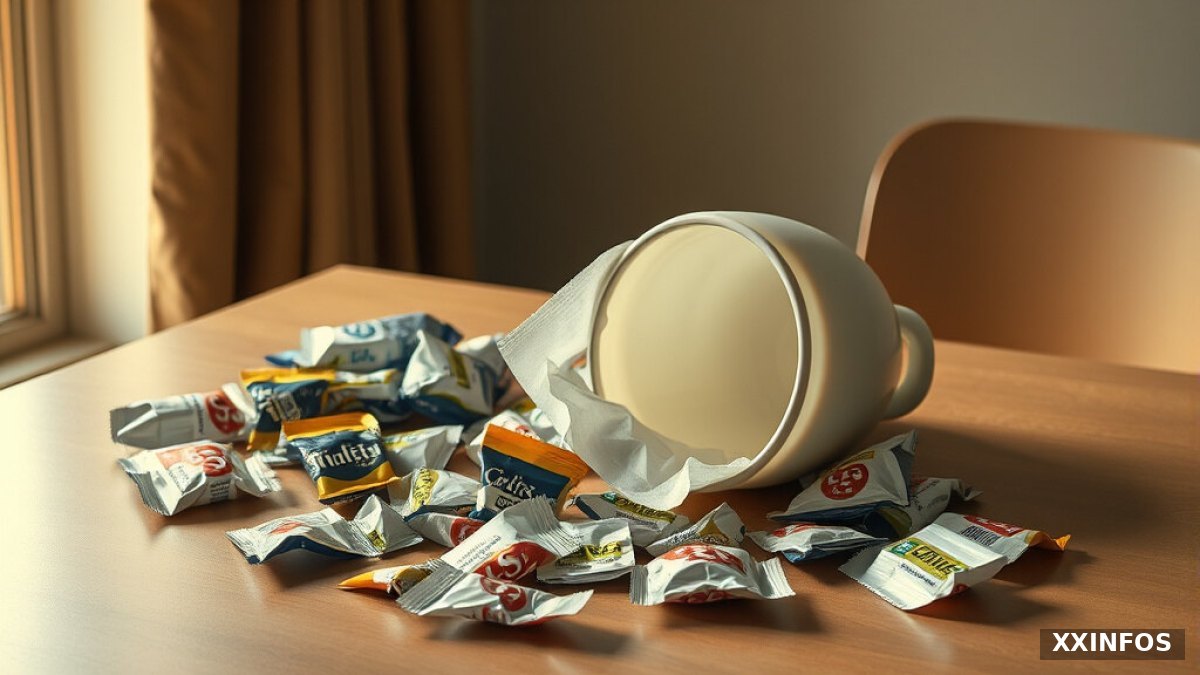
Siobhán McSweeney is teaching me her favourite way to enjoy a packet of cheese and onion crisps. She has set out two matching squares of Cadbury’s Dairy Milk chocolate, two piles of Tayto crisps and two cans of Guinness on the table in front of us – and is giving strict instructions. “Don’t swallow!” she booms theatrically, and I freeze, my mouth full of Taytos. The trick, McSweeney explains, is to get the crisps, chocolate and Guinness into your mouth at the same time, then swill it all around a bit to make a kind of boozy, oniony soup. “See?” McSweeney is watching me carefully to check I’m putting all the ingredients into my mouth in the right order. “It’s delicious! Just delicious!”
McSweeney burst into the public consciousness back in 2018 with Derry Girls, a comedy series about a group of Catholic schoolgirls, set against the backdrop of the Troubles in 1990s Northern Ireland. McSweeney won a Bafta playing the girls’ headmistress, Sister Michael – a foul-mouthed, judo-loving nun – and can count Martin Scorsese as a fan. Asked for a TV recommendation during a panel discussion in 2022, the director named Derry Girls and then raised his fist in the air in a kind of salute, exclaiming rapturously, “Those nuns!”
I have spent so many hours watching McSweeney in character as Sister Michael that it is almost a shock to see her without a nun’s habit. We are meeting today, in a conference room in London, because McSweeney is taking over from Grace Dent as the new host of the Guardian’s food podcast, Comfort Eating. I arrived at the interview with a multipack of Taytos, a family-size Dairy Milk and two cans of Guinness in my bike bag, because McSweeney chose this concoction as her favourite snack when she appeared on the podcast as a guest, back in 2021. She also told a story about eating a caterpillar that had fallen from her moth-infested ceiling into her stir-fry, purely because she couldn’t be bothered to fish it out. “Listen: protein,” she says today, remembering that caterpillar. “Free protein where you can.”
Since Derry Girls, the actor has made a habit of portraying slightly intimidating women. She plays the achingly sarcastic celebrity chef Della Fry in Amandaland, and hosts the Irish version of The Traitors, in which she commands a pack of wolfhounds and wears a lot of ruffs. But today, McSweeney’s short, silver-grey hair is brushed back from her face and she is dressed casually, in trousers and a simple top. Sister Michael is always lolling back in her chair and surveying you sardonically across a desk – but the real McSweeney leans forward and asks a lot of questions.
It is lunchtime, so I have brought a takeaway from the Indian restaurant Dishoom with me, as well as the Taytos. “I love doing this podcast because it annoys people when I eat,” McSweeney says, tucking into a fish curry. Part of the reason why she accepted the job as host of Comfort Eating, she explains, is because visibly enjoying her food – as a woman who is not stick-thin – is a kind of provocation. “They’ve been told that somebody like me should not feel good about themselves,” she says, grinning toothily at me. “Being a delicious fatty.”
Ever since she first arrived at drama school, in the early 2000s, people have been telling McSweeney to lose weight. “Agents, casting directors, teachers” – McSweeney checks the list off for me now, almost breezily. “I have been different sizes but it’s never been an acceptable size,” she says. “‘Unruly’ I call it – there’s a sort of unruliness that has been forced upon my body that I don’t feel abouShe doesn’t mind it, but other people find it unruly and badly behaved.” All the other girls at her drama college were starving themselves, McSweeney remembers. “They were starving in secondary school too – it was the 90s! I don’t know how I managed to escape it.” She is grinning at me again. “I don’t think I have the willpower not to eat. I don’t really have much discipline.”
It strikes me that continuing to like yourself and your body, in the face of such vicious scrutiny, isn’t so much a failure of will as its opposite – proof that McSweeney has a will of absolute iron. Responding to a particularly poisonous bout of online criticism of her looks back in 2023, McSweeney delivered a kind of masterclass in the art of self-worth, tweeting: “I’m really lovely. I like my hair. And I like food. And I’m not sorry I’m loud. I thought feminism fights for me to be loud. And my accent is gorgeous. My teeth are yellow and wonky, that’s true. But I sort of don’t care. And are you perfect?”
“I taught, I waitressed, I pulled pints, I went on the dole, I worked at music festivals. And I was shit at every single one of them.”
Portrait: Jay Brooks/The Guardian
McSweeney says she wouldn’t even bother responding to online abuse like that these days, because “it’s so insane now on social media. There’s no honesty to it because we don’t know if they’re bots or not.” But when I push her on the willpower point, and suggest there’s something inherently political about refusing to lose weight in her industry, she agrees with me. “I do get perverse pleasure in [responding to those] people who expect me to feel bad – by insulting me, by calling me ‘fat’ – by going, ‘And?'”
McSweeney also credits her mother, who she describes as “the kind of mam who would be round the back having a cigarette reading Dostoevsky,” with teaching her to aspire to a version of womanhood that wasn’t about appealing to men. “She wasn’t that interested in me having boyfriends – she was like, men will come, men will go; it’s fine.”
“She just instilled this utter independence in me that didn’t centre in any way on a romantic relationship.” McSweeney pauses for a moment here, and seems to reconsider. “I mean … she wasn’t completely immune to all that. No one is strong enough to combat that, you know? And there would be a bit of, ‘Would you not brush your hair?'” McSweeney is putting on her mother’s voice now and making pleading motions. “Please, just briefly! Just give it a quick brush!”
Siobhán McSweeney grew up in County Cork, Ireland. Her father was a civil servant and her mother ran a cottage industry baking bread and cakes to sell to local shops, so the young Siobhán woke up every day to the smell of fresh soda bread. But, like any teenager worth their salt, McSweeney only wanted what she couldn’t have. “I went to the neighbours at one point because they had white sliced pan and red jam, and I thought, they’re so lucky, I have to go home now and have my freshly baked brown soda bread and my local butter,” she says. Her mother would make her school lunch every day with bread so fresh it was still warm. McSweeney remembers looking at her lunchbox and thinking “no one suffers more than me.”
McSweeney knew from an early age that she wanted to act. She says that as a child she would wish on a star every night that she would become an actor, and tells me that she once spent an entire day at school pretending she was in a sitcom, pausing every now and again to play the laugh track in her head. “Or I’d look to the camera” – she mimes whirling her head around to lock eyes with an imaginary film crew. “How obnoxious! What a pest to be around.”
The really sad thing about illness ithat it often takes your appetite away – I want a lovely big bellyView image in fullscreenPortrait: Jay Brooks/The GuardianMcSweeney’s parents, however, had other plans for her. “We didn’t know anyone who was an actor. People on the telly didn’t look like me, didn’t sound like me,” she says. “My parents were, like, so what would that mean? You would do the panto once a year? You’re meant to work!”Speaking to the Irish Times in August, McSweeney said that anybody in the creative industries has “an angel and a devil on your shoulder, and the devil quite often is your parents going, ‘Don’t embarrass us.'” Did she feel as if her parents were embarrassed about her? “Yeah, absolutely yeah – it’s embarrassing to have your child standing up there making a tit of themselves,” she says. “Also, Ireland in the 80s, you blend in – the idea of standing out is quite … ” she tails off thoughtfully. “I think it was a protective idea – when you are in the open you are open to abuse and people taking advantage. All these things are true and I understand fully why any parent wouldn’t want that for their child.”McSweeney was virtually unknown before the release of Derry Girls, which came out after her 40th birthday. She tells me that in a strange way she is pleased that fame came later in life for her, because she knows people “who have achieved success very early on in their career and their heads are turned”. But the years she spent trying and failing to get parts were gruelling. “I taught, I waitressed, I pulled pints, I went on the dole, I worked at music festivals,” she says. “And I was shit at every single one of them.”She remembers being particularly “shit” at the waitressing. “Sure, I didn’t know anything about food. I was pouring the wine the way my parents would drink wine, which would be wine right up to the top of the glass, and I didn’t know about al dente,” she says. “I thought, who is this Al Dente?”There was a point in the 2010s when she considered giving up acting completely. “I hadn’t worked in over a year and I had just got a litany of nos,” she remembers. “And now it’s getting harder and harder for not-rich people to be an actor.” McSweeney had received grants from the EU and a scholarship to study drama at the Central School of Speech and Drama – and that kind of funding literally doesn’t exist any more. “I get really panicky thinking about the other Siobháns who don’t get what they’re meant to do,” she says, and her face is unusually serious for a moment – but then she looks at me and her eyes begin to twinkle. “I mean it should be better, it should be a bit more useful than being a clown – but, you know, it’s what I’m meant to do.”Part of the struggle when she was being rejected at auditions was the lack of decent roles available for women. In previous interviews, McSweeney has said that casting directors explicitly told her that even though she was the funniest person in the audition room, they were going to give the part to a “prettier, younger, less funny” woman. “I graduated into a world where I really hoped somebody had a girlfriend because there was no way on earth a programme was going to centre on a woman,” she says to me now. But she wouldn’t even be in the running for the girlfriend part because “they wanted somebody who was more ‘girlfriend material’, ie, more acceptable – so, bland and pretty”.McSweeney says she would never be considered for the main character, “always the satellite”. She rolls her eyes. “And now I’m the mother.”McSweeney tells me that she is deliberately taking on more presenting work because properly meaty, complex acting roles for women on TV are still so rare. As well as The Traitors Ireland, McSweeney hShe hosts The Great Pottery Throw Down. She got the job after appearing on a Great British Bake Off festive special, where she had a meltdown over making a trifle and ended up sitting on a bench with Sandi Toksvig, drinking champagne (“They went, that’s who we want”).
Skip past newsletter promotion
Free newsletter | Weekly
Sign up to Inside Saturday
The only way to get a look behind the scenes of the Saturday magazine. Sign up to get the inside story from our top writers as well as all the must-read articles and columns, delivered to your inbox every weekend.
Enter your email
Sign up
After newsletter promotion
View image in fullscreen
With presenter Sandi Toksvig in the 2020 Great Festive Bake Off (above) and on the set of The Great Pottery Throw Down in 2023 (below). Photographs: Mark Bourdillon/Love Productions
View image in fullscreen
McSweeney is also an acclaimed theatre actor. She played opposite her Derry Girls co-star Nicola Coughlan last year in The Playboy of the Western World at the National Theatre, and says being onstage is what she has always enjoyed most (she remembers being a child and “seeing red curtains on the telly and having a funny feeling in my belly”). But presenting is “work I find interesting – and it also pays more than the theatre,” she says, with characteristic honesty.
Presenting jobs pay better than TV shows do, too – even the most successful ones. McSweeney has said publicly “I think I got 40 quid” in residuals when Derry Girls sold to Netflix. The programme has been viewed for a total of 17.3m hours on the platform. Can that figure possibly be true? McSweeney nods enthusiastically. “When Netflix bought it we got fuck all!”
When she was 27, McSweeney lost her mother, who never saw her daughter succeed as an actor. In her Bafta acceptance speech, which has been viewed 467,000 times on YouTube, McSweeney told a story about how, as her mother lay dying, she pleaded with her to retrain as a teacher. “If she could see me now, winning a Bafta for playing a teacher,” she said, wearing a red vinyl dress and laughing, lifting her bare arm above her head to punch the air with her award: “Joke’s on you, Mam!”
Would her mother feel pride, if she could see her daughter now? Or relief? “Er, relief,” says McSweeney, quick as a flash. Then she pauses for a second. “And I think she would like … I have a lot of opinions and she would like the way I speak about certain opinions.” In the same Bafta speech, McSweeney thanked the people of Derry, calling out the “ignorance and stupidity” of their political leadership, and she is a vocal critic of both English and Irish policy. Last year she was among those who campaigned successfully for the thousands of UK-based survivors of the work camps for “fallen women” that were in operation until the 90s in Ireland – known as the Magdalene laundries – to be given compensation without losing their rights to benefits.
Would her mother have been proud of her feminism? “I think she would have been as close to proud as I would allow her to be,” says McSweeney, almost shyly. “And my dad, too … He was a natural feminist rather than a learned one – couldn’t think of anything I couldn’t do because of my gender, that would make no sense to him.”
View image in fullscreen
McSweeney accepts the female performance in a comedy programme award for Derry Girls at the 2023 Bafta Television Awards. Photograph: Stuart Wilson/Bafta/Getty Images for Bafta
Her father died in 2018. McSweeney moved back into the family home to live with him during his final illness. She drew on those experiences to make Spud in 2024, a beautiful, surprisingly funny short film about a middle-aged woman caring for her dying father (McSweeney summarises the plot, with fabulous bluntness, as being about “an unfuckable woman who is rural and who cleans her daddy in a bath”).
In o
Frequently Asked Questions
Here are FAQs based on Siobhán McSweeneys conversation about snacks parental pressure and body image
Beginner Questions
1 Who is Siobhán McSweeney
Shes an Irish actress best known for playing Sister Michael in the TV show Derry Girls She also hosts The Great Pottery Throw Down
2 What does It annoys people when I eat mean
Its the idea that some people get bothered just watching others eatespecially if that person is fat or eats with visible enjoyment McSweeney talks about this as a real social judgment
3 What does she mean by a delicious fatty
Its her playful selfaccepting phrase for being a fat person who loves food and refuses to apologize for it Shes reclaiming the word fatty as something positive
4 What are her favorite snacks
Shes a big fan of simple satisfying snacksthings like crisps cheese and good bread She favors real unpretentious food over fancy diet snacks
5 What is parental pressure in this context
Its the pressure parents put on kids about food and body sizecomments like should you be eating that or worrying about a childs weight McSweeney says this can stick with people for life
6 Why does she talk about being fat so openly
Because she wants to push back on the idea that fat people should hide diet or feel ashamed She treats it as a fact not an insult
7 What is diet culture
Its the set of social messages that thinness equals health and worth and that food should be controlled counted or earned McSweeneys views push against it
8 Is she telling people to eat whatever they want
Not exactly Her point is more about not judging people for eating and not letting shame control your relationship with food
Advanced Questions
9 Why does she say eating annoys people
Because visible enjoyment of foodespecially by a fat personbreaks a social rule Many people expect fat people to eat secretly or apologetically Eating freely in public challenges that expectation
10 How does parental pressure around food affect people longterm
It can create lifelong shame secret eating and a distrust of your own